
Leaky attic ducts can send cooled air into spaces you do not live in, leaving rooms warm or weak on airflow while the AC runs longer. ENERGY STAR says typical homes lose about 20% to 30% of duct air through leaks, holes, or poor connections. Your symptoms still need a proper check because several HVAC problems can feel alike.
In Greater Los Angeles homes, ducts may run above ceilings, through an attic, under a floor, or beside a garage. Those hidden runs can make a cooling problem hard to trace from inside the house. A loose connection, a torn flexible duct, or a crushed section may limit how much cooled air reaches a room.
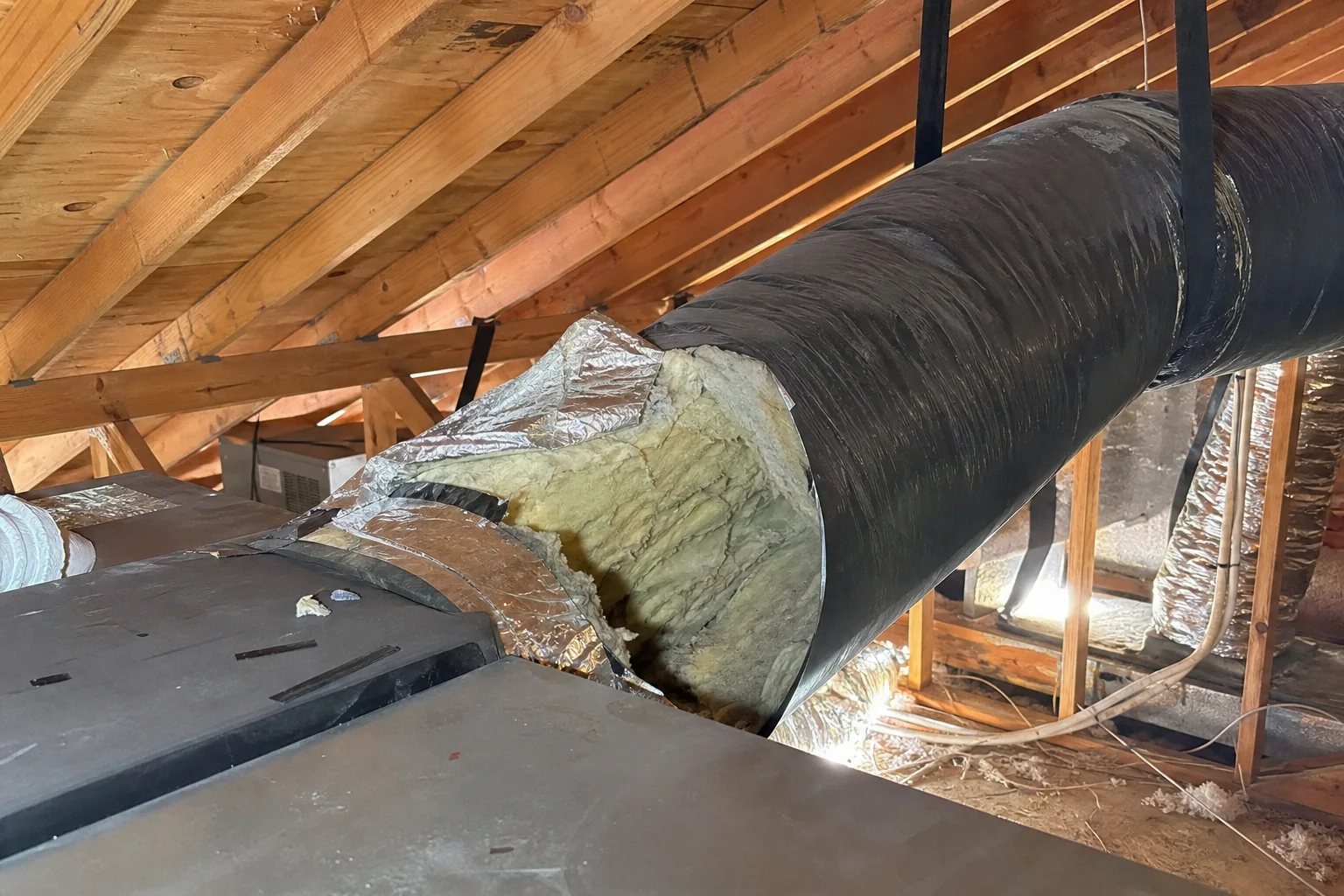
Start with the signs of leaky attic ducts
A single warm room does not prove there is a duct leak. Sun exposure, closed doors, window leaks, insulation, thermostat placement, and an AC issue can also change room temperature. Still, a few patterns make attic ductwork worth checking.
- Some rooms stay warmer than others. A bedroom at the end of a long duct run may not get enough cool air, even when the thermostat says the rest of the home is comfortable.
- Airflow feels weak at a supply vent. If the vent is open but the stream of air seems low, the duct may be leaking, pinched, disconnected, or blocked.
- The AC runs for long stretches without reaching the set temperature. Lost air may be part of the reason. The equipment may also need service, so do not assume the ducts are the cause.
- A room feels stuffy. Poor air delivery can leave a room feeling stale, especially with the door closed.
- Cooling bills seem higher than expected. A bill alone cannot identify a duct leak. Pair it with comfort changes, weak vents, or visible duct damage before drawing a conclusion.
- You notice attic-like dust or odors near a vent. A return duct leak can pull air from an attic or garage area into the system. Bring this up during an inspection.
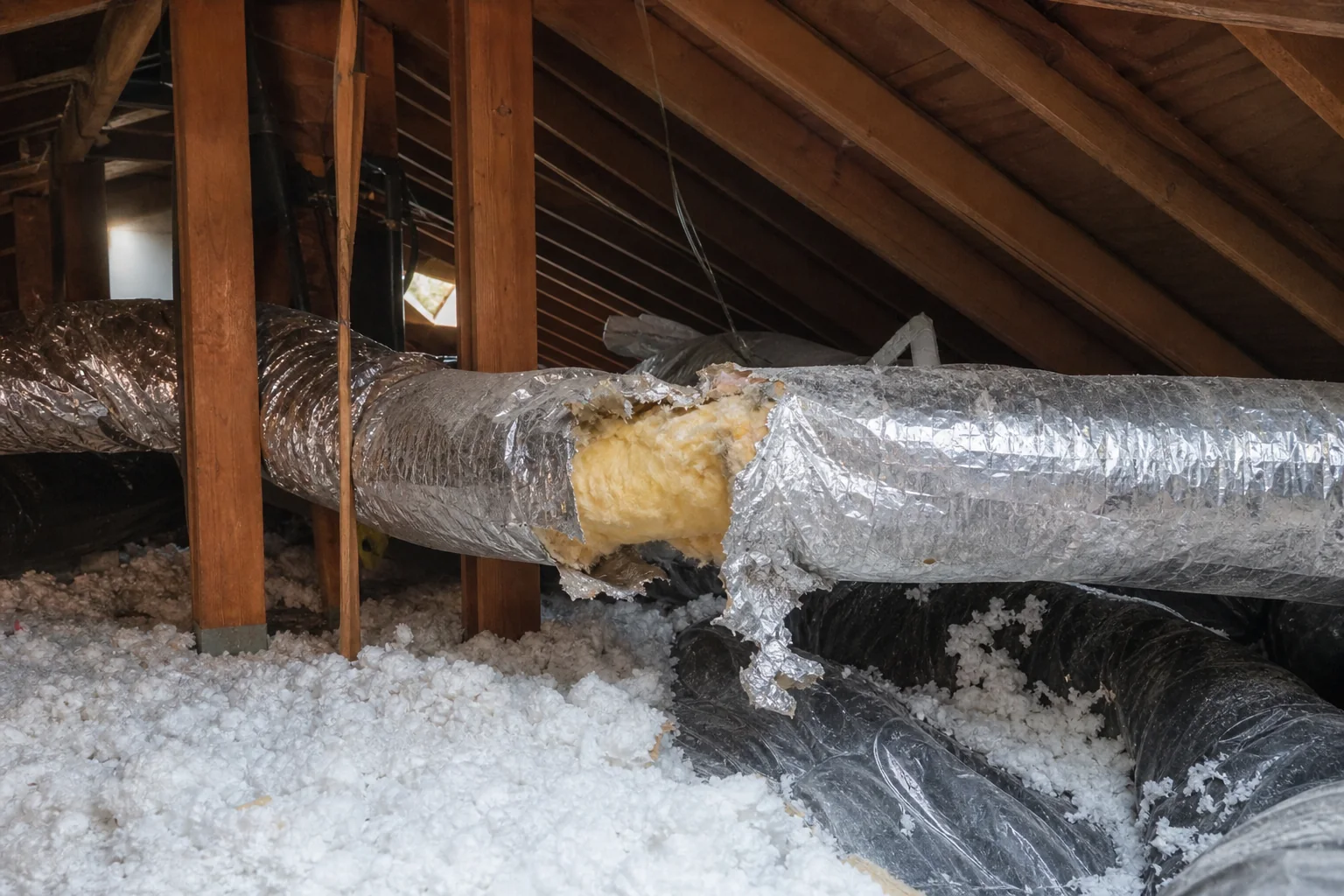
- You can see sagging, kinked, or damaged flexible ducts. ENERGY STAR names attic ducts and kinked flex ducts as warning signs worth attention.
Pay attention to when the trouble starts. If a room struggles only in late afternoon, heat through windows may be the main issue. If it stays uncomfortable through much of the day and its vent has weak airflow, the duct path becomes a stronger suspect.
Why attic duct leaks can affect comfort more
Conditioned air belongs inside the home. When ducts run through an uncooled attic, crawl space, or garage, a gap in the duct lets cooled air escape outside the living area. The system then has to move more air to do the same job.
The U.S. Department of Energy Building America guide notes that duct losses matter more when ducts pass through unconditioned spaces. The guide also notes that leaks can create pressure differences inside a home. Those pressure changes may pull unwanted air into the house through other gaps.
Supply ducts carry cooled air out to rooms. Return ducts bring indoor air back to the equipment. A leak on either side can cause trouble, though the signs may differ.
| Where the leak may be | What you may notice | What to ask about |
|---|---|---|
| Supply duct | Weak airflow or a room that will not cool | Whether air is escaping before it reaches the vent |
| Return duct | Dusty or attic-like smells near vents and uneven comfort | Whether the system is pulling air from outside the living space |
| Crushed or sagging flex duct | Low airflow even when the vent is fully open | Whether the duct needs support, repair, or replacement |
| Loose connection | A sudden change after attic work or other home work | Whether a joint has separated or lost its seal |
Rule out the easy airflow checks first
You can make a few safe checks before booking service. These steps do not require entering a hot attic or taking ducts apart.
- Set the thermostat to cooling and compare airflow at several supply vents while the system is running.
- Make sure supply vents and return grilles are not blocked by rugs, furniture, curtains, or stored items.
- Open the supply vents in the rooms you use. Closing many vents can upset airflow and pressure in the duct system.
- Check the air filter. Replace it if it is dirty, using the filter type and size called for by the system.
- Look only at duct sections you can safely see near the indoor equipment. Note loose tape, disconnected sections, sharp bends, or crushed flexible duct.
- Write down which rooms feel different and when. Mention recent remodeling, attic work, or changes in comfort.
Do not crawl across an attic to chase a leak. Attics can have poor footing, exposed wiring, and damaged insulation. Do not cover duct gaps with ordinary cloth-backed duct tape either. It can fail under attic heat. A technician can decide which sealing material and repair method fits the duct and its location.
Know when sealing may not be enough
Duct sealing is meant for leaks at joints, seams, and small openings in ductwork that is otherwise in usable shape. It is different from duct cleaning, which removes debris but does not close air leaks.
A damaged system may need more than sealing. Crushed runs can restrict air even after gaps are sealed. A disconnected section must be reconnected. Brittle or badly deteriorated duct material may need repair or replacement. Poor insulation around attic ducts can also affect the temperature of the air moving through them.
Ask for the condition of the ducts to be explained in plain language. A useful assessment should identify the location of the problem, whether the ducts are reachable, and whether sealing, repair, replacement, or another HVAC fix fits the findings. No one can promise energy savings without knowing what is happening in your home.
Prepare for a ductwork inspection
If the basic checks do not change the problem, arrange a professional look at the duct system before blaming the air conditioner alone. Pioneers Heating & Air offers duct sealing in Pasadena and the Greater Los Angeles area. Its service includes checking ductwork and airflow before deciding on the work needed.
Before the visit, make it easier to get a clear answer.
- List the rooms with poor cooling and the times they feel worst.
- Tell the technician where the attic access, indoor unit, and any visible duct runs are located.
- Clear stored items away from access panels and equipment if it is safe to do so.
- Share any recent changes such as roofing work, attic storage, remodeling, or a new thermostat.
- Ask whether the problem is a leak, a restriction, insulation trouble, equipment trouble, or a mix of issues.
A good next step is based on what can be found and reached. Some ducts are easy to inspect from an attic. Others are behind finished ceilings or walls, which can limit access and change the repair plan.
Questions homeowners often ask
Can I tell if a duct is leaking by feeling around it?
You may feel air at an exposed joint while the system runs, but many leaks are hidden and small leaks can still affect airflow. Feeling around ducts is not a full test. Avoid touching damaged insulation, electrical wiring, or duct surfaces in a hard-to-reach attic.
Will duct cleaning fix leaky attic ducts?
No. Cleaning and sealing do different jobs. Cleaning addresses dust and debris inside ducts. Sealing closes openings where air escapes or enters. If both are suggested, ask what condition supports each service.
Could a dirty filter cause the same symptoms?
Yes. A clogged filter can reduce airflow throughout the system and make rooms less comfortable. Check the filter before assuming there is duct damage. If a clean filter does not improve a room with weak airflow, have the duct path and HVAC equipment checked.
Is a garage duct leak worth mentioning?
Yes. Tell the technician about any ducts that run through or near a garage. The location can affect what air is drawn into the system and how the ductwork should be inspected.
If uneven cooling, weak vents, or long AC cycles are making your home uncomfortable, call Pioneers Heating & Air at (626) 217-0559 to schedule duct sealing service and have the ductwork checked.