What Does AC Cleaning Include, and When Is It Worth Scheduling?
AC cleaning removes buildup from key cooling parts. Learn the signs that point to cleaning, routine maintenance, or a repair...
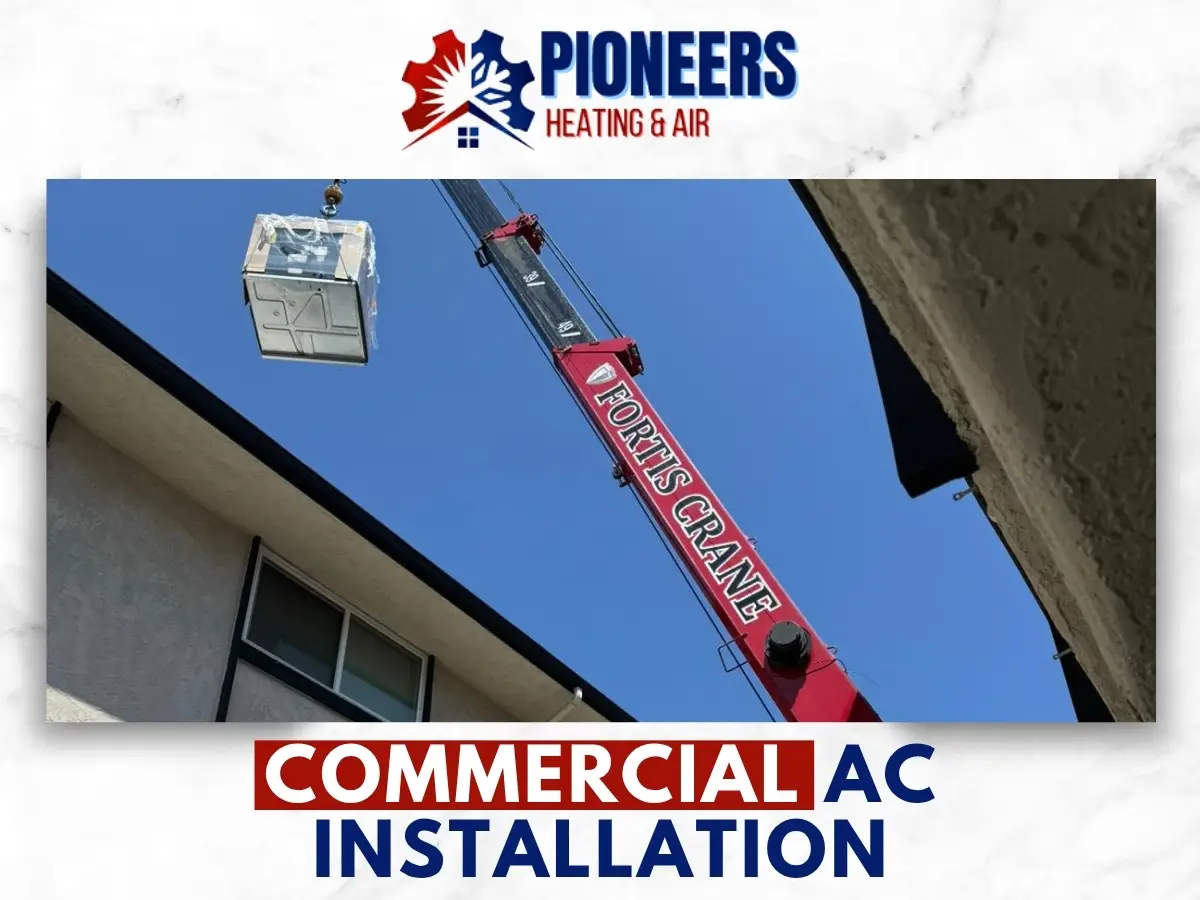
Commercial AC Installation that fits your building, your hours, and your comfort needs.
Pioneers Heating & Air provides Commercial AC Installation in Pasadena that keeps your team productive and your customers comfortable during hot CA days. We handle Commercial AC Installation in Pasadena from equipment selection to final startup, with clean work practices and clear communication. We plan around your schedule and focus on steady, even cooling across your space.
Need Help? Call Pioneers Heating & Air near you
Commercial AC Installation covers design, equipment placement, and proper startup for business spaces. Commercial AC Installation is more than swapping a unit and walking away. For restaurants, offices, retail stores, medical suites, and warehouses, the system has to match the building use, heat load, and occupancy patterns.
Pioneers Heating & Air looks at the full picture in Pasadena, California. That includes airflow, duct layout, electrical needs, drain routing, controls, and where outdoor equipment can sit without causing noise or access issues.
Commercial buildings often have real world needs that change the plan. Do you have customer facing areas that must stay quiet. Do you have back rooms that run hotter because of equipment. Do you need after hours work to avoid disruptions. Those details matter.

You may need a new commercial AC system when comfort, reliability, or control becomes a daily problem. A new install is often the right move when repairs keep stacking up or when the space is not cooling evenly. Many businesses call us after they have spent too many afternoons arguing with the thermostat.
If your staff brings fans from home, the system is sending you a message.
Many cooling problems come from sizing mistakes and airflow limits, not bad luck. Wrong size equipment is a top reason commercial cooling fails to meet expectations. Too small can run nonstop and still fall behind. Too large can short cycle and struggle with humidity.
Airflow issues are another major cause. A great rooftop unit cannot fix undersized ducts, blocked returns, or poorly placed supply vents. Controls also matter. A thermostat in the wrong spot can run the whole building based on one drafty corner, which is why we often pair installs with airflow balancing or commercial duct balancing.
A good installation plan deals with these items before the new equipment shows up.
Our site visit focuses on layout, load needs, and a clear plan before installation day. We start by learning how you use the building and where comfort complaints show up. Then we check the existing system, ducts, and electrical service to see what should stay and what should change. Many projects also benefit from a formal commercial HVAC inspection and tune up approach before final scope is set.
We also talk through options that help day to day operations. Do you want better zoning through HVAC zoning setup. Do you need better ventilation control through ventilation upgrades. Do you need stronger filtration because of the work done in the space.
Equipment selection is based on usage patterns, zoning needs, and service access. The best system for a small office is not always the best system for a kitchen heavy restaurant. We help you pick an approach that matches how the space actually runs, whether that is a full commercial HVAC system installation or a targeted central AC installation service where it fits.
We also plan for maintenance access. Filters, belts, panels, and drains need to be reachable. A system that is hard to service tends to get ignored, and ignored systems tend to complain loudly, which is why we recommend ongoing commercial AC maintenance.
Need Help? Call for Heating & Air Services
A clean installation depends on correct duct connections, electrical work, and proper condensate routing. A commercial install has many parts that must work together. If one part is rushed, comfort suffers later.
You should not have to clean up a mess after your HVAC crew leaves. We keep work areas organized and aim to limit dust, debris, and disruptions.
Startup and testing confirm the system cools evenly and runs the way it should. A system is not done when it turns on. It is done when it runs correctly under real conditions, which is why we may include HVAC troubleshooting and diagnostics as part of the final verification.
We also show you basic operating points. Which settings should your staff leave alone. What filter type does the system use. Where is the shutoff. Those small details prevent big headaches.
You can choose install options that match your schedule and building needs. Some businesses need a simple replacement. Others need a system change that fixes long standing comfort problems, sometimes with commercial HVAC system integration to coordinate controls and zones.
Not sure what matters most. Tell us what frustrates you today. We will connect the dots between comfort complaints and practical changes.
Timelines depend on equipment type, access, and whether duct or electrical changes are needed. Many installs move quickly once equipment and site details are confirmed. Others take longer because the building needs updates to support the new system, and we will explain the steps tied to commercial HVAC system maintenance needs after startup.
If you have a must hit date, tell us early. We can plan the work sequence around business hours and occupant needs.
Safety matters because commercial systems involve high voltage, refrigerant, and rooftop access. Commercial cooling equipment is not a weekend project. Even simple mistakes can lead to equipment damage or unsafe conditions, and urgent issues may require commercial emergency HVAC services.
If your system is on the roof, avoid opening panels or stepping near equipment without proper training and fall protection. No one wants a service call plus an ER visit.
Preparing your business helps the install go smoother and protects your operations. A little preparation reduces downtime and keeps your staff informed. We will coordinate details with you, and we can also coordinate pre install cleaning with commercial AC cleaning when buildup is part of the problem.
If you are in a multi tenant building, it also helps to notify property management about access, parking, and any planned shutoffs.
Pioneers Heating & Air
After installation, simple habits help keep cooling steady through Pasadena summers. Your new system will perform best with consistent filter changes, clear supply vents, and smart thermostat habits. If comfort starts drifting, quick attention prevents larger issues later, and a scheduled HVAC tune up can help catch small issues early.
Want a practical tip. Keep a short comfort log for the first two weeks. Note time of day and which areas feel off. That makes any follow up adjustments faster and more accurate.
Pasadena specific factors include sun exposure, mixed use buildings, and long cooling seasons. Pasadena buildings see strong afternoon heat, especially on west facing glass and top floors. Mixed use spaces also create unique loads. A storefront might be comfortable until the back prep area heats up from equipment, lights, and staff movement.
Older buildings in Pasadena, California can also have tighter chases, limited duct routes, and electrical panels that were not sized for modern loads. Some properties have strict rooftop appearance rules or limited condenser placement options.
We plan with these realities in mind. We look for ways to improve airflow, control comfort by zone, and place equipment where it can breathe and be serviced. When ducts are part of the issue, we may recommend commercial air duct testing to confirm what the building is really doing.
This quick comparison helps pick the right direction for your space. Different systems solve different problems. The best choice depends on layout, existing ducts, and how you use the space.
| System type | Best fit for | Main advantage | Watch outs |
|---|---|---|---|
| Rooftop package unit | Many retail and office buildings | Compact and common with existing ducts | Roof access and curb condition matter |
| Split system | Spaces needing flexible indoor placement | Strong performance with flexible layouts | Line set routing and indoor space needed |
| Ductless | Add ons, offices, server rooms, zoned areas | Zoned comfort and minimal duct work | Indoor head placement and condensate routing |
| Zoned controls | Buildings with mixed schedules | Better comfort control and less thermostat arguing | Requires setup and staff buy in |
Not sure which direction fits. We can walk the space and talk through what you want the system to do on your busiest day, then connect the plan to commercial HVAC system replacement or new installation scope as needed.
Pioneers Heating & Air keeps the process clear, organized, and focused on your day to day needs. You need an HVAC contractor who respects your business hours and the people in your building. Our team communicates schedules, protects work areas, and keeps decisions tied to comfort and reliability. If issues come up later, we can support you with commercial HVAC system repair.
Do you want fewer comfort complaints. Do you want more consistent temperatures across the whole floor. Tell us what better looks like, and we will build around that.
These services can support comfort, airflow, and long term reliability for commercial buildings in CA and California.
Schedule your commercial AC installation with a team that knows Pasadena, CA buildings. If you are ready to plan a replacement or a new system for a build out, we can help. Pioneers Heating & Air handles Commercial AC Installation for businesses that want dependable comfort and a smooth project from start to finish. For Commercial AC Installation in Pasadena, call (626) 217-0559 or book through our Contact Us page.
AC cleaning removes buildup from key cooling parts. Learn the signs that point to cleaning, routine maintenance, or a repair...
An AC that keeps running but leaves rooms warm may have an airflow, coil, duct, thermostat, refrigerant, or equipment problem....
A ductless mini-split may cool a garage, ADU, or sunroom without extending central ductwork, but the room, electrical setup, drainage,...