What Does AC Cleaning Include, and When Is It Worth Scheduling?
AC cleaning removes buildup from key cooling parts. Learn the signs that point to cleaning, routine maintenance, or a repair...
Commercial Rooftop Unit Services In Pasadena from Pioneers Heating & Air for repair, maintenance, and replacement to keep your business comfortable fast
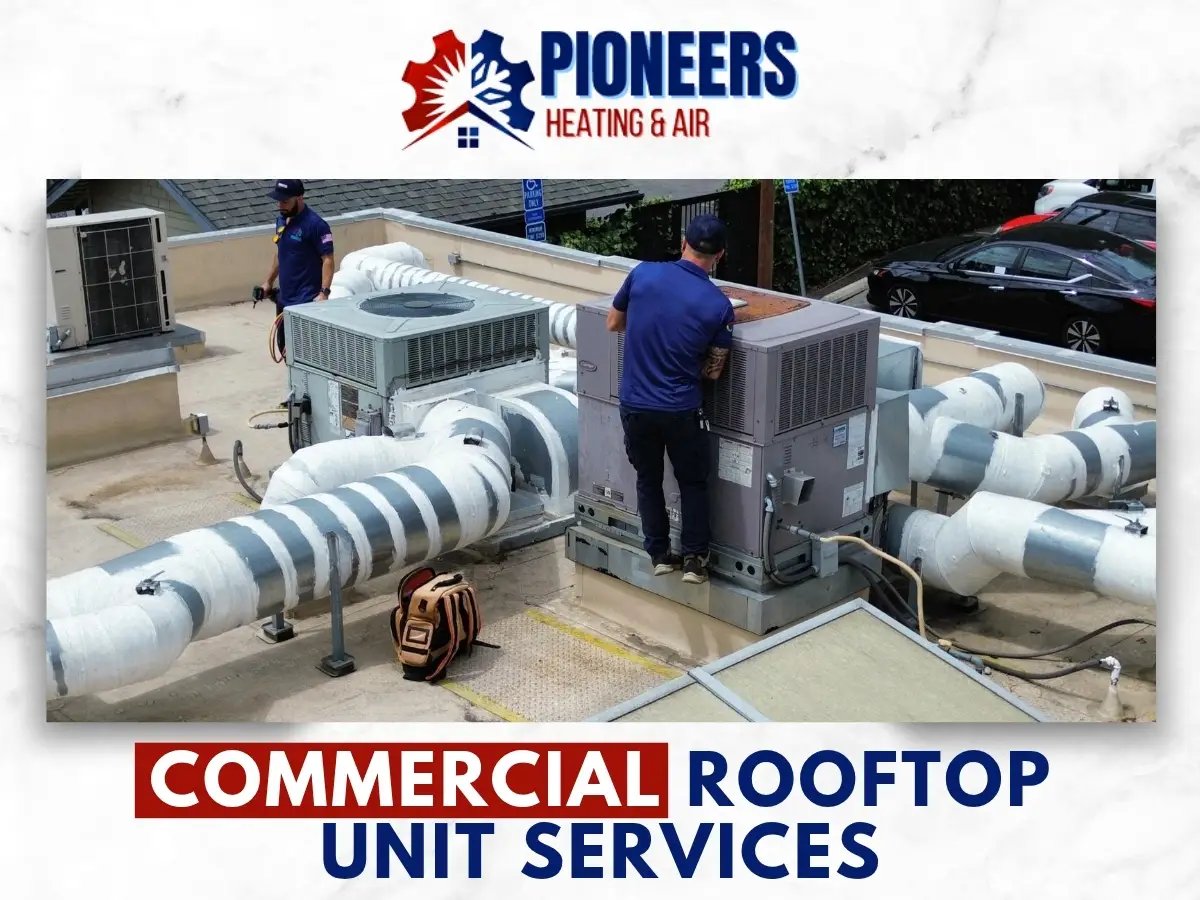
Commercial Rooftop Unit Services that keep your building comfortable and your schedule on track
Commercial rooftop units heat, cool, and ventilate your business from the roof, and they work hard in Pasadena’s weather swings. Pioneers Heating & Air provides Commercial Rooftop Unit Services in Pasadena for repairs, maintenance, and replacement planning, with clear communication and practical solutions that reduce downtime and comfort complaints.
Commercial rooftop unit service covers comfort, airflow, and control across your whole building.
Need Help? Call Pioneers Heating & Air near you
A rooftop unit RTU usually handles a big share of your building’s heating and cooling, plus outside air and filtration. When it is running right, tenants, staff, and customers do not think about it. When it is not, everyone suddenly becomes an indoor climate expert.
For building wide performance, we often pair RTU work with commercial HVAC inspection and tune up and targeted commercial HVAC troubleshooting and diagnostics so the symptoms match the real cause.

Do you manage one RTU or a whole row of units on a flat roof. Either way, we help you get control of comfort and avoid surprise breakdowns. When the scope is larger, we can also align your plan with commercial HVAC system maintenance for consistent site wide results.
You may need service if comfort complaints increase or your unit sounds different than usual.
A rooftop unit usually gives warnings before it quits. The trick is noticing them early. If you are hearing from staff, tenants, or customers, that is already a clue.
If you are thinking, It still runs, but it is not right, that is often the best time to call. For fast triage that ties symptoms to causes, our commercial HVAC troubleshooting and diagnostics approach helps reduce guesswork.
The usual causes include airflow restrictions, electrical wear, and control problems.
Rooftop units operate in tough conditions. Heat, sun, wind, and rooftop debris all add up. Parts wear out, wires loosen, and airflow gets restricted. Small issues can stack into a bigger failure at the worst time, usually on a busy day.
A lot of these problems do not show up from inside the building. Roof level inspection and testing is where answers start. If airflow is part of the complaint, we may also recommend commercial duct balancing or commercial air duct testing based on what we find.
Our visit starts with safety, a clear symptom review, and targeted testing.
We begin by getting the facts straight. What is the building doing, what changed, and when did the problem start. That short conversation often saves time on the roof.
We keep the focus on restoring stable operation first, then addressing the underlying cause so you are not calling again next week. When needed, we can also align next steps with commercial HVAC system repair for broader building issues beyond a single unit.
Repairs focus on restoring safe operation first, then improving reliability.
Repairs are not just swap a part and leave. A rooftop unit can fail for more than one reason, and fixing only the loudest symptom can waste time and money later.
Do you need the unit back up fast for business hours. Let us know your building schedule. For urgent situations, ask about commercial emergency HVAC services so we can prioritize communication and timing.
Maintenance reduces breakdowns by handling the boring stuff that causes big problems.
Most rooftop failures start with airflow, dirt, and small wear. Maintenance keeps those from snowballing. It also helps you plan rather than react.
If your building has multiple units, consistent maintenance also helps you compare performance from unit to unit. That is useful when deciding what to fix now and what to plan for later. Many sites also benefit from commercial AC maintenance that complements RTU upkeep.
Need Help? Call for Heating & Air Services
Replacement planning helps you avoid emergency decisions on the hottest day.
Sometimes a unit is repairable but no longer makes sense to keep patching. Other times, the building needs better comfort control or improved ventilation, and the current setup is holding you back.
If replacement is the right call, we coordinate the plan so the changeover is organized, not chaotic. Planning can include commercial HVAC system replacement guidance and, when appropriate, commercial HVAC system installation coordination.
Economizers and outside air issues are common, and they affect comfort more than people expect.
Economizers can lower cooling run time when outdoor conditions allow, but only if they work correctly. A stuck damper or bad sensor can pull in too much hot air, too much cold air, or not enough fresh air. That can lead to comfort complaints and stale conditions.
If people complain the building feels off even when the temperature looks fine, outside air control can be part of the story. For comfort control updates, commercial HVAC control and zoning setup can support better results.
Duct, airflow, and filtration checks help solve hot spots and dust complaints.
A rooftop unit can be running correctly and still deliver uneven comfort if airflow is not balanced or if duct issues exist. Filters also play a bigger role than many people think, especially in dusty conditions or high traffic commercial spaces.
If you are hearing, It’s freezing in the front and warm in the back, airflow testing and basic balancing checks are often the next step. We may recommend airflow balancing or ductwork inspection depending on what we see.
Timing depends on access, unit condition, and whether parts are needed.
Many service visits can be completed in a single visit if the issue is straightforward. Some problems take longer because commercial RTUs are systems with several sections working together.
If you manage multiple tenants or a busy facility, we can coordinate service windows that respect your operations. If the situation escalates, emergency HVAC services may be the right fit for time sensitive needs.
Safety matters on rooftops, and some situations mean you should stop and call.
RTUs combine high voltage, moving parts, gas heat sections on many units, and rooftop conditions. It is not the place for guesswork. If something looks unsafe, pause and call a pro.
Also, avoid removing panels while the unit is running. Fans and belts do not care how busy your day is. For general background on rooftop HVAC equipment, see Rooftop unit.
You can prepare by improving access, gathering notes, and clearing the area.
A little prep makes service smoother and can shorten downtime. It also helps us arrive ready to solve the right problem.
If your building has multiple RTUs, labeling thermostats to match unit numbers can save time and reduce mix ups. It is a small step that pays off. If controls and schedules are part of the issue, commercial thermostat programming can help align comfort with business hours.
After service, you should watch for steady temperatures and normal run cycles.
You do not need to hover over the thermostat all day, but a quick check helps confirm the fix is holding. It also catches any related issues early.
If something seems off, note the time of day and outdoor conditions. That info helps pinpoint causes faster. If problems return, a focused commercial HVAC system repair visit may be the next step.
A simple service decision guide helps you choose repair, maintenance, or replacement planning.
Use this quick guide to decide what to do next. It is not a rulebook, but it helps you act before a minor issue turns into a closure.
| What you are seeing | Most likely next step |
|---|---|
| Comfort complaints started suddenly | Diagnostic visit and targeted repair |
| Unit runs but struggles on hot afternoons | Airflow, coil condition, and refrigerant checks |
| Repeated service calls for different parts | Reliability review and replacement planning |
| Dust, odors, or stuffy rooms | Filtration, outside air, and airflow evaluation |
| Water stains or ceiling tile issues | Drain and condensate inspection |
Not sure which bucket you are in. Describe the symptoms and we will help you sort it out. If you want a broader baseline check first, consider HVAC inspection to identify building wide contributors.
Pioneers Heating & Air keeps communication clear and focuses on what your building needs.
You need an HVAC contractor who respects your business hours, keeps you informed, and solves the real cause. We aim to be easy to work with and straightforward, even when the equipment is not cooperating.
We also know that facility issues never happen at a convenient time. Rooftop units seem to prefer acting up right before a meeting or during your busiest shift. Funny how that works. If your site uses packaged equipment, commercial package unit services may also apply to your setup.
Commercial Rooftop Unit Services help businesses stay open, comfortable, and productive.
If your RTU is failing, underperforming, or causing complaints, the goal is simple, restore comfort and keep it consistent. Pioneers Heating & Air handles diagnostics, repairs, and maintenance with a building first approach that fits commercial needs.
If you need Commercial Rooftop Unit Services, we are ready to help. For Commercial Rooftop Unit Services in Pasadena, call us when issues show up, or set a plan to reduce surprises. For long term planning, commercial HVAC system integration can help align controls and equipment across the building.
Schedule service with Pioneers Heating & Air for your Pasadena commercial rooftop unit.
If you want fewer comfort complaints and fewer Why is it 82 in here moments, let’s take a look. Call (626) 217-0559 to schedule Commercial Rooftop Unit Services in Pasadena, or use our Contact Us page to request an appointment.
AC cleaning removes buildup from key cooling parts. Learn the signs that point to cleaning, routine maintenance, or a repair...
An AC that keeps running but leaves rooms warm may have an airflow, coil, duct, thermostat, refrigerant, or equipment problem....
A ductless mini-split may cool a garage, ADU, or sunroom without extending central ductwork, but the room, electrical setup, drainage,...