Why Upstairs Rooms Stay Hot With AC
Hot upstairs rooms can point to attic heat, air leaks, duct losses, or airflow trouble instead of an AC problem...
Commercial Attic Insulation Removal In Pasadena by Pioneers Heating & Air. Safe clean removal for offices and buildings. Get a fast quote today

Commercial attic insulation removal clears out old, damaged, or contaminated insulation so your building can breathe easier and your HVAC system is not fighting a dusty attic. Pioneers Heating & Air handles Commercial Attic Insulation Removal in Pasadena with careful containment, controlled removal, and a clean wrap up. For Commercial Attic Insulation Removal in Pasadena, we plan around your tenants, your roof access, and your mechanical systems.
Need Help? Call Pioneers Heating & Air near you
Commercial attic insulation removal removes problem material instead of hiding it. Old attic insulation can hold dust, moisture stains, pest debris, and odors that keep circulating through a building. Covering it with new insulation can trap the problem underneath and make future repairs harder. Removal gives you a clean starting point for improvements that actually stick.
Commercial properties add extra layers of risk and detail. You may have multiple suites, shared returns, rooftop units, data lines, fire devices, and duct runs that crisscross the attic. That is why our process focuses on control, visibility, and protecting the systems that keep your building operating. For a broader building review, consider an HVAC inspection.
Are you dealing with tenant comfort complaints that never fully go away? Does dust come back fast even after cleaning? When the attic is dirty or disturbed, it can affect ducts, returns, and the ceiling plane. Pairing cleanup with commercial air duct cleaning may help when dust is traveling through the system.

You may need insulation removal if you notice odors, dust, pests, or comfort swings. Attic insulation usually fails in ways you can see or smell from inside the building. If you manage an office, retail space, or light industrial property, these are common signals that removal is worth looking into. If airflow complaints are part of the issue, airflow balancing can be a helpful next step after the attic is clean.
If your building has had remodels, pay attention. Construction debris and disturbed insulation often get pushed aside and left behind. Over time, that temporary mess becomes a permanent air quality issue. After removal, commercial attic insulation replacement can restore consistent coverage.
Moisture, pests, and air leaks are the most common reasons insulation turns into a problem. Most commercial attic insulation does not fail all at once. It usually starts with one issue and stacks into several. If leakage is suspected, commercial attic air sealing is often the follow up that helps keep the new setup stable.
Moisture is a big one. A small roof leak can soak insulation, and wet insulation loses its ability to resist heat. It can also create odors and staining that spread. Air leaks are another. Warm indoor air can leak into the attic through ceiling gaps, then condense on cooler surfaces. Pests follow quickly if entry points exist. More background on attic behavior and heat flow is available on Wikipedia.
Common causes we see around Pasadena, California include the items below. If duct leakage is part of the picture, duct sealing may be worth planning after the attic is cleaned out.
Commercial buildings also tend to have more penetrations than homes. Every line set, curb, pipe, and conduit is another place for air and moisture to sneak through. If the building also struggles with heat buildup, commercial attic ventilation upgrades can be a practical next step.
Our on site plan starts with access, safety, and clear communication. A good removal job starts before any insulation is touched. We look at how the attic is accessed, what areas are sensitive, and how to keep dust and debris under control. If you want the attic work coordinated with system condition checks, commercial HVAC inspection and tune up can align well with removal planning.
Do you have restricted work hours or tenant sensitive spaces like a medical office or studio? Tell us up front so we can plan the cleanest workflow. For urgent comfort problems during extreme weather, commercial emergency HVAC services may be needed alongside cleanup planning.
Commercial Attic Insulation Removal is a controlled process with careful collection and cleanup. Commercial attic spaces can be tight, awkward, and full of surprises. The goal is to remove the insulation without spreading debris through the building or damaging anything tied into the ceiling space.
Attics have a strange sense of humor. The spot you need most is often the tightest corner with the lowest clearance. We plan for that reality so the job stays controlled. If the attic cleanup reveals duct issues, commercial air duct repair can address damaged or disconnected runs.
Need Help? Call for Heating & Air Services
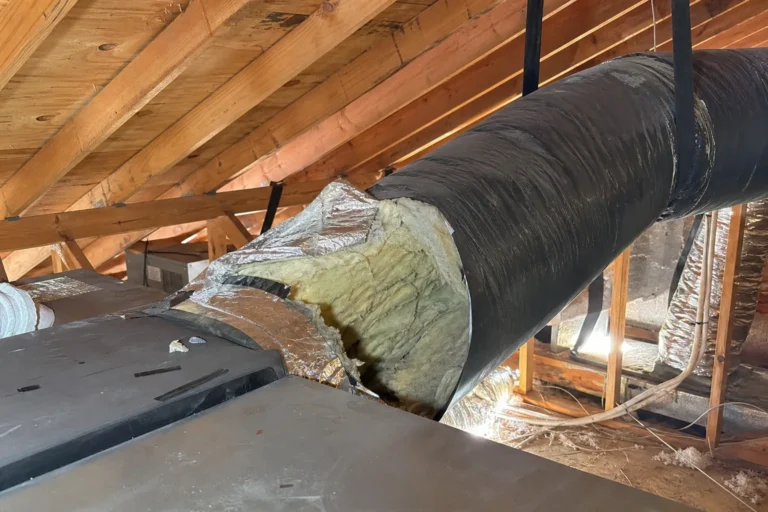
We work around ducts, wiring, and ceiling systems that are common in commercial buildings. Commercial attic spaces are rarely empty. Ductwork, conduit, junction boxes, fire sprinkler lines, and low voltage cabling can all be present. Removal needs to respect those systems. When duct layout is complex, ductwork inspection can help confirm routing and problem areas once the attic is clear.
If we spot a duct that is disconnected or damaged, we will point it out. A clean attic makes those issues easier to see and fix. In some buildings, commercial duct balancing may be useful after repairs and re insulation.
These insulation types are common in Pasadena commercial attics, and removal varies by material. Most buildings have one main insulation type, but remodels can create mixed layers. Mixed layers matter because the lower layer can be missed if the top layer is pulled too quickly. After removal, choosing the right reinstall method such as commercial blown in attic insulation installation can match the space and access.
| Insulation type | Common appearance | What it changes during removal |
|---|---|---|
| Blown in fiberglass or cellulose | Loose fill across the attic floor | Fast collection, strong dust control needed |
| Fiberglass batts | Rolls or rectangles between joists | Slower removal, careful bagging and handling |
| Rigid board sections | Flat foam panels in select areas | Often selective removal around roof deck zones |
| Mixed layers | Batts with loose fill on top | Requires staged removal so nothing gets left behind |
Not sure what you have? Many facility teams are not, and that is normal. Once we see it, the plan becomes much clearer. For a full reset, commercial attic insulation replacement can follow removal.
Timing depends on access, contamination, and how complex the attic layout is. Most commercial attic removal projects are predictable after a site review. The schedule usually depends less on square footage and more on how the attic is built and what condition it is in. If the attic work is part of a wider building plan, commercial HVAC system maintenance can be scheduled around the same window.
If you are coordinating other improvements, removal is often the best first step. It clears the space so air sealing, duct repairs, and new insulation work can be done without guessing. Follow up options often include attic air sealing and attic insulation replacement depending on the site.
Safety risks in commercial attics are real, and some situations should stop the job immediately. Attics can look harmless from the access hatch, then turn into a maze of trip hazards. There can be exposed nails, unstable walk boards, and spots where one wrong step puts a boot through a ceiling tile. If you are unsure about system condition tied to these areas, HVAC troubleshooting and diagnostics can help narrow the source after the attic is accessible.
A controlled approach protects your occupants and protects the building. It also reduces the chance of turning a cleanup into a much bigger repair. For ongoing operational stability, consider HVAC maintenance once attic issues are resolved.
Simple preparation steps help the job go smoother with fewer interruptions. You do not need to shut down your building to get this work done, but a few basic steps help keep things tidy and organized. If your building has duct dust concerns, pairing this planning with duct sanitizing after removal may be helpful when appropriate.
Do you have network cables or camera lines running through the attic? If yes, point them out. Those cables can be easy to snag if nobody knows they are there. If ventilation paths are part of the issue, ventilation upgrades may be a smart follow up.
Pioneers Heating & Air
After removal, the attic becomes easier to evaluate, repair, and maintain. Once the insulation is removed, the attic stops hiding problems. You can see the ceiling plane, duct runs, penetrations, and trouble spots clearly. That visibility is a big win for facility planning. If comfort issues were tied to system performance, commercial HVAC troubleshooting and diagnostics can help confirm what needs correction.
If odors or dust return after cleanup, that usually points to an active source. Common sources include a roof leak, an exhaust fan venting into the attic, or an open gap pulling air from a dirty area. In many cases, commercial attic air sealing helps reduce future attic to occupied space transfer.
Pasadena, CA buildings often have layered remodels that make attic insulation issues worse. Many commercial buildings around Pasadena have been updated more than once. Each remodel can add ductwork, wiring, and ceiling changes, while the attic insulation gets pushed aside and forgotten. When attic heat load is part of the complaint, commercial radiant barrier installation can be considered after removal.
If your building has multiple rooftop units serving different suites, the attic can turn into a busy corridor of ducts and lines. Clean, careful work matters even more in that environment. Rooftop coordination may also connect with commercial rooftop unit services.
Pioneers Heating & Air handles attic insulation removal with an HVAC contractor’s mindset. Commercial insulation problems are often tied to HVAC performance. Dirty or displaced insulation can affect comfort, raise run time, and feed dust into occupied areas through ceiling gaps and return pathways. If the building is also due for service, commercial HVAC system repair can be addressed separately as needed.
If your goal is a clean attic so the next step is straightforward, this service supports that goal. For background on who we are, visit About Us.
Commercial Attic Insulation Removal in Pasadena starts with a site review and a clean plan. A quick walkthrough can tell you if your insulation is clean enough to keep, or if removal is the smarter move. Pioneers Heating & Air provides commercial attic insulation removal in Pasadena for offices and commercial buildings that need safe, controlled cleanup with careful handling around HVAC and building systems.
These services are often scheduled near attic insulation removal for better comfort, cleaner airflow, and a more stable building envelope.
Call (626) 217-0559 to schedule commercial attic insulation removal, or use our Contact Us page to request a site review in Pasadena CA and across California.
Hot upstairs rooms can point to attic heat, air leaks, duct losses, or airflow trouble instead of an AC problem...
Uneven room temperatures, weak airflow, dust near vents, and long AC cycles can point to leaky attic ducts. Check the...
AC cleaning removes buildup from key cooling parts. Learn the signs that point to cleaning, routine maintenance, or a repair...