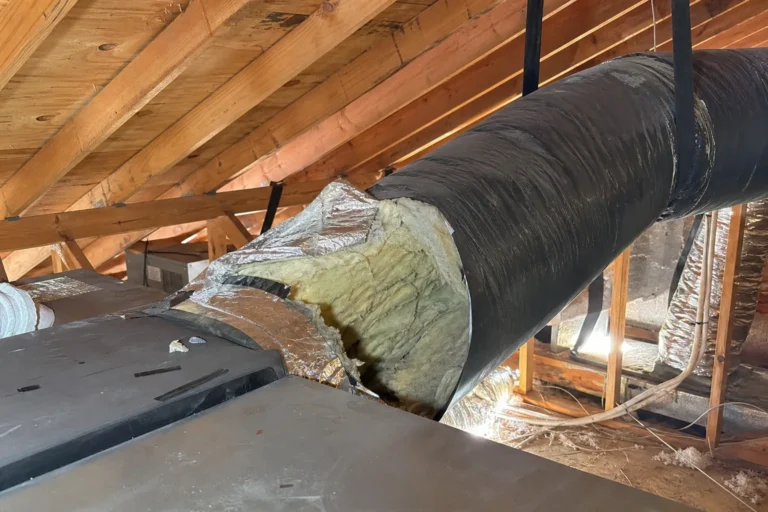
Why Upstairs Rooms Stay Hot With AC
Hot upstairs rooms can point to attic heat, air leaks, duct losses, or airflow trouble instead of an AC problem...
Book Commercial Air Duct Testing In Pasadena with Pioneers Heating & Air for accurate airflow checks and clear reporting. Fast scheduling for businesses in Pasadena
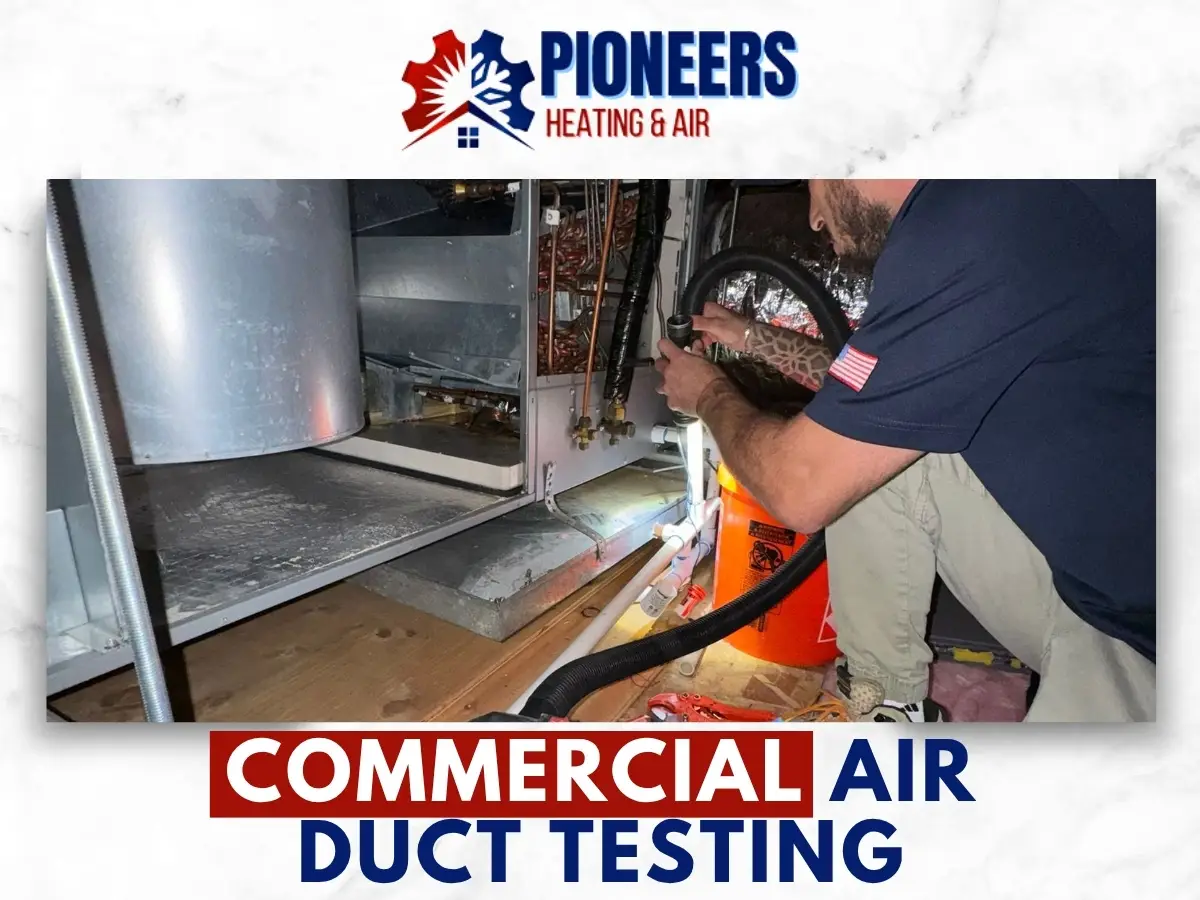
Commercial air duct testing checks how air moves through your building and where it gets lost, restricted, or unbalanced. Pioneers Heating & Air performs Commercial Air Duct Testing in Pasadena to confirm airflow, pressure, and system performance, then provides clear findings you can use for comfort, indoor air quality, and HVAC planning. We schedule around business hours in Pasadena, CA in California.
Commercial air duct testing measures airflow, pressure, and delivery to each space. Commercial Air Duct Testing is the practical way to find out if your HVAC system is delivering the air it is supposed to deliver. It is not a cleaning and it is not a repair by itself. It is testing, measurement, and reporting so you can make smart next steps.
Need Help? Call Pioneers Heating & Air near you
In a commercial building, small duct problems turn into big comfort complaints fast. A few offices feel stuffy. A retail area has hot spots. A conference room becomes a sweater required zone. Testing helps you stop guessing and start working from facts, then decide whether commercial duct balancing or duct sealing is the right next step.
Do you know which areas in your building get the most complaints. That is often the best place to start, especially when you are already planning a ductwork inspection.

Commercial buildings often need testing after changes, complaints, or system upgrades. Airflow problems rarely show up on day one. They show up when your building use changes, or when equipment gets replaced, or when a space gets remodeled and the air distribution did not keep up. Testing pairs well with a commercial HVAC inspection and tune up when you want a fuller picture.
If your thermostat seems right but the space feels wrong, the duct system is a likely suspect. The thermostat is only hearing one spot, and HVAC troubleshooting and diagnostics can help confirm what to address first.
Common airflow problems come from leakage, restrictions, and poor balancing. Most duct issues are not mysterious. They are physical problems, setup problems, or building changes that made the original design less effective. When the data points to duct defects, commercial air duct repair is often the next move.
If multiple rooms on the same branch are weak, think restriction or damper setting. If one isolated area struggles, think diffuser, local damper, or a disconnected run. If you want a targeted starting point, begin with commercial air duct testing in the worst zone and compare it with one normal zone.
Our on site visit follows a repeatable process built for occupied businesses. We arrive ready to test with minimal disruption. Commercial spaces are busy, and nobody wants HVAC testing to feel like a construction project. If you are also evaluating performance issues, we can coordinate with commercial HVAC troubleshooting and diagnostics.
If your business has sensitive areas like medical offices, labs, or server spaces, tell us up front. We can plan the testing path and timing around those needs, and we can also advise when ventilation upgrades may be part of the solution.
We measure airflow and static pressure to see what the system is truly doing. Airflow and pressure tell the real story, even when the unit seems to run fine. A system can heat and cool while still delivering poor comfort if the duct network is not cooperating. When results point to buildup, you may want to pair findings with commercial air duct cleaning.
If you have ever heard someone say the unit is fine so it must be the thermostat, this is where testing helps settle that debate politely. If control issues show up, commercial thermostat programming may be worth reviewing.
Need Help? Call for Heating & Air Services
We inspect accessible duct sections, dampers, and returns while testing. Measurements matter most, but visible conditions also matter. A duct run can look okay and still leak, and a damper can be set wrong even if it moves freely. If gaps or failed seals show up, duct sealing may be recommended.
Sometimes the fix is not glamorous. It can be as simple as reopening a return path that got covered during a layout change. Your chairs do not care about airflow, but your staff does, and the next step may be airflow balancing.
Reporting turns test results into clear next steps for facility decisions. A good test is only useful if you can act on it. We keep the reporting clear and tied to real outcomes like comfort, equipment performance, and operational consistency. If the problem is broader than ducts, we may suggest commercial HVAC system maintenance planning.
If you manage multiple suites or multiple buildings, this kind of clarity helps you prioritize. Not every issue needs major duct changes. Some need balancing and return improvements first, such as commercial duct balancing.
This simple table shows what different readings often point to. Below is a quick guide that helps explain why we look at both airflow and pressure. These are common patterns, not promises, but they help frame the results.
| What we see during testing | What it often suggests | What we may recommend next |
|---|---|---|
| Low airflow in several rooms on one branch | Restriction, closed damper, crushed duct | Damper check, duct correction, balancing |
| High static pressure at the unit | Duct restriction or undersized return | Return path review, duct changes, filter strategy |
| One room weak, neighbors fine | Local damper, diffuser issue, disconnected run | Ceiling check, damper setting, reconnect run |
| Strong supply but poor comfort | Air distribution or load issue | Diffuser direction, zoning review, load review |
| Returns pulling poorly | Return blocked or undersized | Add return capacity, remove blockages |
Pressure tells you how hard the blower is working. Airflow tells you what you get for that effort.
Testing options can focus on a problem area or cover the full building. Commercial spaces vary a lot, so testing should match the real need. A small office suite is different from a multi-tenant retail property. If complaints are building wide, you may want to include commercial HVAC inspection and tune up planning at the same time.
Pioneers Heating & Air can talk through your building layout and pick the least disruptive starting point. Sometimes the smartest first step is testing the worst zone and one normal zone for comparison, then booking commercial air duct maintenance if the data supports it.
Commercial duct testing usually takes a few hours, but access can change timing. Most testing can be done in a reasonable window, especially if ceiling access is straightforward and equipment is reachable. The biggest time factor is how easy it is to reach diffusers, returns, dampers, and key duct sections.
We coordinate with whoever runs the site so testing does not turn into a scavenger hunt. If you have a building engineer on-site, that can speed things up, and it can support follow up work like commercial HVAC system repair if needed.
Safety matters because ducts and rooftops are not the place for guesswork. Commercial HVAC systems involve moving parts, electrical sections, and sometimes rooftop access. You also have indoor air quality concerns if ceiling spaces contain dust, insulation, or old debris. If you want general background on air ducts, see duct in HVAC.
We keep testing practical and controlled. Nobody needs a ladder surprise during a busy workday, and when urgent issues show up you can shift to commercial emergency HVAC services.
Pioneers Heating & Air
Preparing your space helps us test faster and produce cleaner results. A little planning makes the data better and keeps disruption down. You do not need to shut down your business, but a few small steps help.
If you have multiple thermostats, tell us which one seems in charge and which ones get ignored. Thermostats have feelings too, but we focus on facts, and we can also review thermostat programming when it affects comfort.
After testing, small operational changes can protect comfort and system performance. Once you have airflow information, you can keep things stable with a few habits. Many comfort problems return because someone changes a diffuser, blocks a return, or closes a damper to fix a draft. If results suggest contamination, consider duct sanitizing as a follow up.
If you manage a facility team, consider logging changes to diffuser direction or damper positions. Small adjustments done without a plan can create big complaints later, and periodic HVAC maintenance can help keep settings stable.
Pasadena, CA buildings have patterns that make duct testing especially useful. Pasadena has a mix of older buildings, remodeled spaces, and newer construction, often within the same block. That mix can create duct systems that have been modified more than once. When changes are significant, commercial air duct installation may be part of a longer term plan.
If your building sits near busy roads, you may also notice odor or dust concerns that feel like the HVAC. Testing helps separate duct delivery issues from ventilation and filtration needs, and it can support decisions about whole home air purifier installation where appropriate.
And yes, we know California weather can be polite most of the time. Then it hits you with a week that makes every conference room feel like a greenhouse.
Businesses choose Pioneers Heating & Air because we keep testing practical and clearly explained. You need a contractor who can work around tenants, staff, customers, and tight schedules. You also need clear explanations that help you make decisions without getting buried in jargon. If you want to know more about our team, see About Us.
If you are tired of hearing it should be fine, testing is the fastest way to replace that with real measured results. If repairs are needed afterward, we can discuss commercial air duct replacement versus targeted corrections.
Schedule commercial air duct testing and get clear direction for your next HVAC move. If comfort complaints are stacking up or you have had recent changes to your space, testing is a smart starting point. Pioneers Heating & Air handles Commercial Air Duct Testing in Pasadena for offices, retail spaces, and multi-tenant properties across Pasadena, CA in the state of CA.
Ready to stop guessing and start measuring. Call (626) 217-0559 or use the Contact Us page to schedule Commercial Air Duct Testing in Pasadena.
Hot upstairs rooms can point to attic heat, air leaks, duct losses, or airflow trouble instead of an AC problem...
Uneven room temperatures, weak airflow, dust near vents, and long AC cycles can point to leaky attic ducts. Check the...
AC cleaning removes buildup from key cooling parts. Learn the signs that point to cleaning, routine maintenance, or a repair...