Why Upstairs Rooms Stay Hot With AC
Hot upstairs rooms can point to attic heat, air leaks, duct losses, or airflow trouble instead of an AC problem...
Commercial Attic Ventilation Upgrades In Pasadena by Pioneers Heating & Air. Improve airflow and comfort, cut moisture and heat. Schedule a site visit today
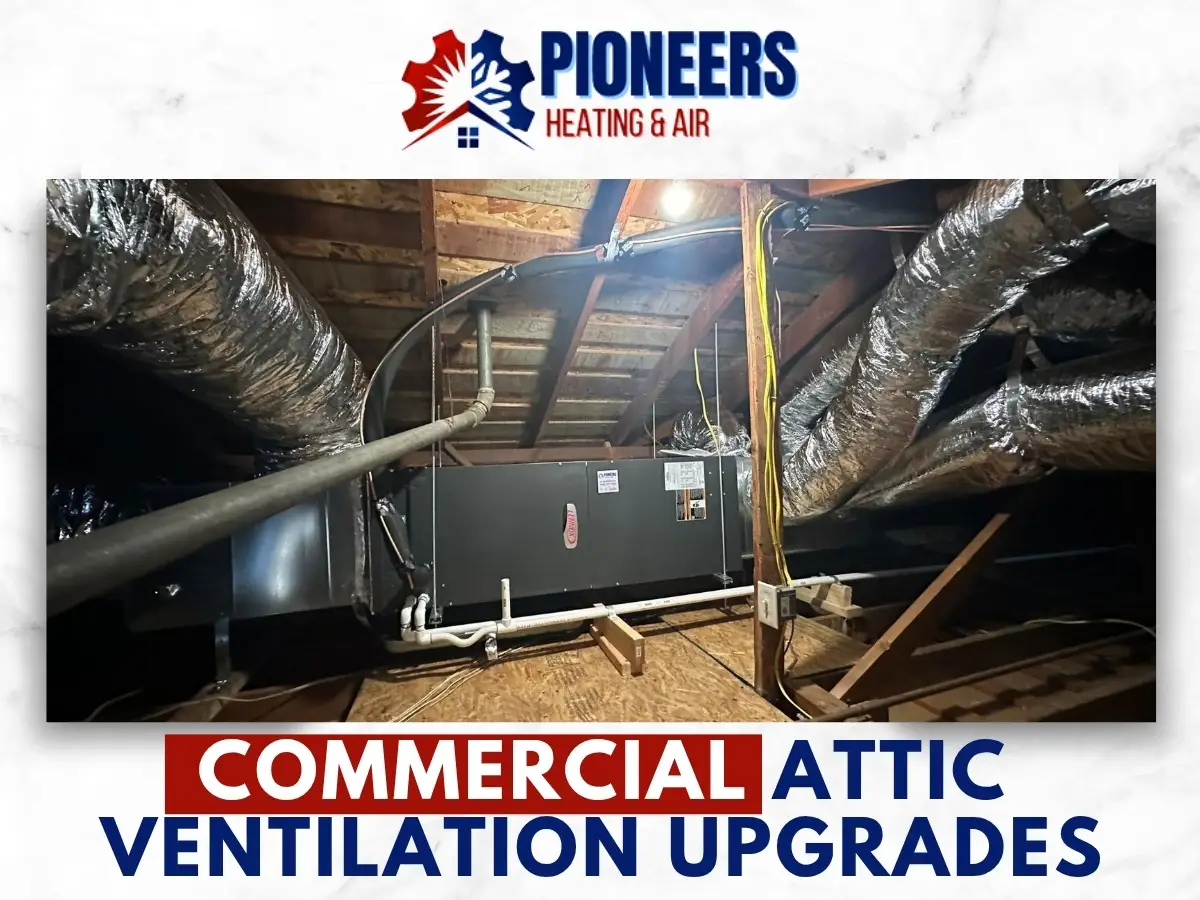
Commercial Attic Ventilation Upgrades in Pasadena help commercial buildings move hot stale attic air out and bring in cleaner outside air. Pioneers Heating & Air inspects your attic and roof venting, finds airflow bottlenecks, and upgrades the system so heat and moisture do not hang around. Commercial attic ventilation upgrades in Pasadena also support steadier indoor comfort.
Need Help? Call Pioneers Heating & Air near you
Commercial attic ventilation upgrades improve attic airflow, reduce heat load, and help protect your building. Hot attic air acts like a space heater sitting above your ceiling. Better ventilation gives that heat a place to go. It also helps push out moisture that can linger around insulation, roof decking, and mechanical equipment.
For many commercial properties, attic ventilation gets overlooked until comfort complaints show up. Tenants feel stuffy. Offices vary room to room. Rooftop units run longer than expected. A ventilation upgrade addresses a common root cause trapped heat and damp air in the attic space.
Do you have a building where the upstairs zones always seem harder to cool. Do you notice that your HVAC works harder in late afternoon. Those are common signs that attic airflow needs attention. For system performance context, an HVAC inspection can help confirm how attic conditions are affecting equipment and ductwork.

Commercial attic ventilation upgrades cover intake, exhaust, and airflow balance, not just adding a vent. A good system is not about stuffing the roof with random vents. It is about creating a clear path for air to enter low and exit high, without short-circuiting.
If intake is weak, exhaust vents cannot do much. If exhaust is weak, intake vents just let air drift in and stall. Balance matters. When ventilation planning overlaps with the rest of the building system, ventilation upgrades can be coordinated alongside attic changes.
You may need an upgrade if heat, odors, or moisture problems keep coming back. Attic ventilation issues often show up as repeat complaints, not one big failure. Many building owners and facility teams notice patterns first.
If you have had ceiling stains or repeated odor calls after damp weather, ventilation is worth a closer look. Moisture does not need a big leak to cause trouble. It just needs time and trapped air. If comfort complaints persist, commercial HVAC troubleshooting and diagnostics can help separate ventilation issues from equipment issues.
Trapped attic heat often comes from blocked intake, weak exhaust, or airflow short paths. Commercial attics are full of obstacles that can quietly ruin ventilation performance. A vent can be present and still not be effective.
Sometimes the problem is not the vent hardware. It is the layout and the air path. Air is lazy. It will take the easiest route, even if that route does not cool the attic. When duct placement and leakage affect attic pressure, duct sealing can be an important part of the fix.
Pasadena, CA sees long warm stretches where attic temperatures rise quickly under sun exposure. Many commercial buildings also have architectural features that create uneven attic zones. These patterns are common in California properties with mixed rooflines and retrofit mechanical work.
If your building sits in full sun most of the day, attic ventilation tends to matter more. The roof absorbs heat and the attic holds it. Better airflow gives that heat an exit route. If your building uses rooftop equipment, pairing attic work with commercial rooftop unit services can support steadier performance.
Our site visit starts with a practical inspection of vents, attic conditions, and HVAC interactions. We start by looking at the whole system, not just one vent. That includes the attic space, the roof vent types, and how the HVAC system may be affected.
If the attic is hard to access, we plan around it. Commercial buildings sometimes hide attic access behind panels, storage rooms, or tenant spaces. We coordinate to reduce disruption.
Need Help? Call for Heating & Air Services
We look for ventilation balance because too much exhaust or too much intake can both cause issues. Balanced ventilation means the attic can breathe without pulling air from the wrong places. An attic should not steal conditioned air from offices, hallways, or ceiling cavities.
If exhaust is added without enough intake, the attic can go into negative pressure. That can pull air through ceiling gaps, can lights, access hatches, and duct leaks. That air is air you already paid to cool. Nobody wants that. If needed, ductwork inspection can help locate leakage paths that worsen pressure problems.
If intake is added without strong exhaust, air may not move fast enough to clear heat. You can end up with a vented attic that still runs hot. For buildings with broad comfort variation, airflow balancing may be recommended alongside attic corrections.
This table summarizes what issues can look like and what we check first. For background on attic ventilation as a concept, see attic ventilation.
| Attic Ventilation Issue | What You Might Notice | What We Check First |
|---|---|---|
| Not enough intake | Hot attic whistling dust pulled from ceiling gaps | Soffit or lower edge vent openings and insulation blocking |
| Not enough exhaust | Heat buildup at peak odors lingering | Ridge or roof exhaust location and vent free area |
| Short-circuit airflow | Vents exist but attic stays hot | Intake and exhaust spacing and internal air paths |
| Moisture trapped | Musty smell damp insulation rust | Bathroom or breakroom exhaust routing attic humidity signs |
Upgrade options range from clearing existing paths to adding new intake and exhaust where it actually works. Every building is different, so we focus on what will move air through your attic, not just add more holes in the roof.
Some buildings benefit from passive ventilation changes. Others need a powered solution for specific zones. We will explain what fits your roof structure, attic layout, and occupancy needs. When insulation conditions are part of the blockage problem, commercial attic insulation replacement may be discussed as a separate step.
We coordinate ventilation upgrades with your HVAC system so both work better together. Attic ventilation and HVAC performance are linked. If ducts and air handlers are in the attic, the attic becomes part of the HVAC environment, even if it should not be.
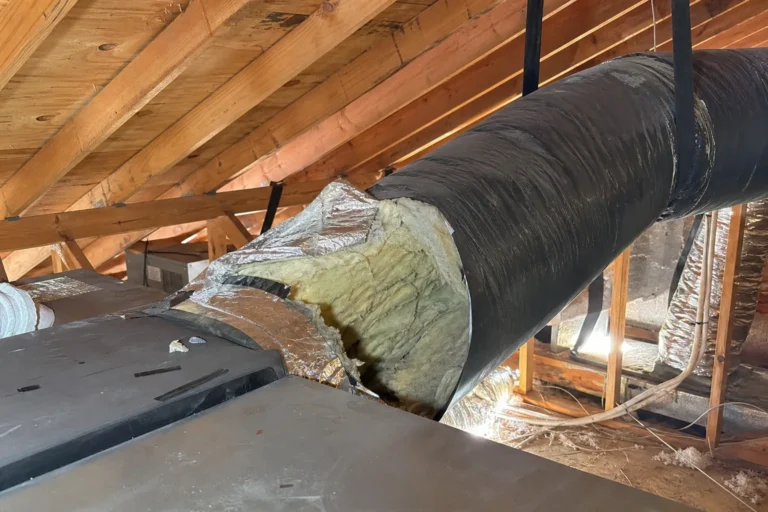
If your ductwork is leaking into a hot attic, cooling output drops and run times climb. Ventilation will not fix duct leaks by itself, but planning both together avoids wasted effort. If you suspect system strain, commercial HVAC system maintenance can help keep performance steady as the building envelope improves.
Do you know if your main supply trunks run through the attic. If you are not sure, we can verify during the visit and document what we see alongside any needed HVAC troubleshooting and diagnostics.
The work plan focuses on safe access, clean execution, and minimal disruption to tenant spaces. Commercial properties have real-world constraints. You may have tenants working, customers visiting, or inventory stored near access points. We plan the job to keep things orderly.
If we need roof access, we follow site rules and coordinate entry. If your building has multiple roof levels, we plan for safe movement and staging. If the project ties into broader mechanical updates, commercial HVAC system integration may be considered where it fits the scope.
Most projects take a day or two, but roof access and attic conditions can extend timelines. Time depends on how much of the ventilation system needs to be changed and how accessible the attic is. Some upgrades are straightforward. Others involve multiple roof sections and long attic runs.
We will give you a clear plan for what happens first and what depends on access or building conditions. No surprises, no mystery steps. If a broader mechanical refresh is needed, commercial HVAC system replacement can be discussed separately based on what you want to achieve.
Pioneers Heating & Air
Safety matters because attics hide heat stress, electrical hazards, and fragile ceilings. Commercial attics can be punishing spaces, especially in warm California weather. Heat stress is real. So are hidden nails, low-clearance framing, and exposed electrical lines.
Also, avoid moving insulation around without a plan. It is easy to block intake vents accidentally or uncover ceiling gaps that pull conditioned air into the attic. If indoor air concerns are part of the complaint trail, commercial air duct testing may help clarify what is circulating through the building.
Preparing for our visit helps us move faster and keeps tenant areas neat. You do not need to do much, but a few steps make the visit smoother. If you manage a property, these items help us get right to the issue.
If tenants are involved, a quick heads-up helps. Nobody likes surprise attic work above their office. Even if the work is quiet, people notice. If your team is also planning duct service, combining the visit with commercial air duct maintenance can reduce repeat site coordination.
After the upgrade, you should watch for steadier comfort and fewer moisture signals. Ventilation improvements often show up as less temperature swing on upper levels and fewer odor complaints. You may also notice the HVAC system cycles more normally during hot afternoons.
If another contractor works in the attic later, ask them to avoid blocking intake areas with insulation or stored materials. The attic is not a storage closet, even if it tries really hard to become one. If odor and dust issues continue, duct sanitizing can be a separate follow-up step depending on what the building needs.
Commercial buildings benefit when ventilation upgrades reduce attic strain on roof materials and mechanical systems. A hot damp attic can put extra stress on several parts of your building at once. Ventilation is one of the few changes that supports multiple systems without changing how occupants use the space.
If your maintenance team keeps chasing the same comfort complaint, ventilation is a smart place to look. Sometimes the fix is not at the thermostat. It is above it. When comfort control is part of the solution, commercial HVAC control and zoning setup can help stabilize upper floor zones.
Pioneers Heating & Air focuses on clear recommendations and solid field work for commercial properties. You need practical answers, not guesswork. We explain what we find in plain language, show you the problem areas we can access, and talk through upgrade options that fit the building.
If you are comparing options, ask this simple question will the proposed changes create a clear low to high airflow path through every attic zone. If the answer is fuzzy, the results often are too. If your building also needs cooling support, commercial AC maintenance can pair well with envelope and ventilation improvements.
Commercial Attic Ventilation Upgrades in Pasadena start with a site visit and end with an attic that can breathe. If your building feels hotter upstairs, smells musty after damp weather, or keeps pushing HVAC equipment hard, we can help. Pioneers Heating & Air handles commercial attic ventilation upgrades in Pasadena with practical inspection, clear options, and careful install work that respects your property.
Call (626) 217-0559 or schedule a site visit through our Contact Us page.
Hot upstairs rooms can point to attic heat, air leaks, duct losses, or airflow trouble instead of an AC problem...
Uneven room temperatures, weak airflow, dust near vents, and long AC cycles can point to leaky attic ducts. Check the...
AC cleaning removes buildup from key cooling parts. Learn the signs that point to cleaning, routine maintenance, or a repair...