Why Upstairs Rooms Stay Hot With AC
Hot upstairs rooms can point to attic heat, air leaks, duct losses, or airflow trouble instead of an AC problem...
Commercial Air Duct Installation In Pasadena by Pioneers Heating & Air. Expert duct design and install for better airflow and efficiency. Request a quote today
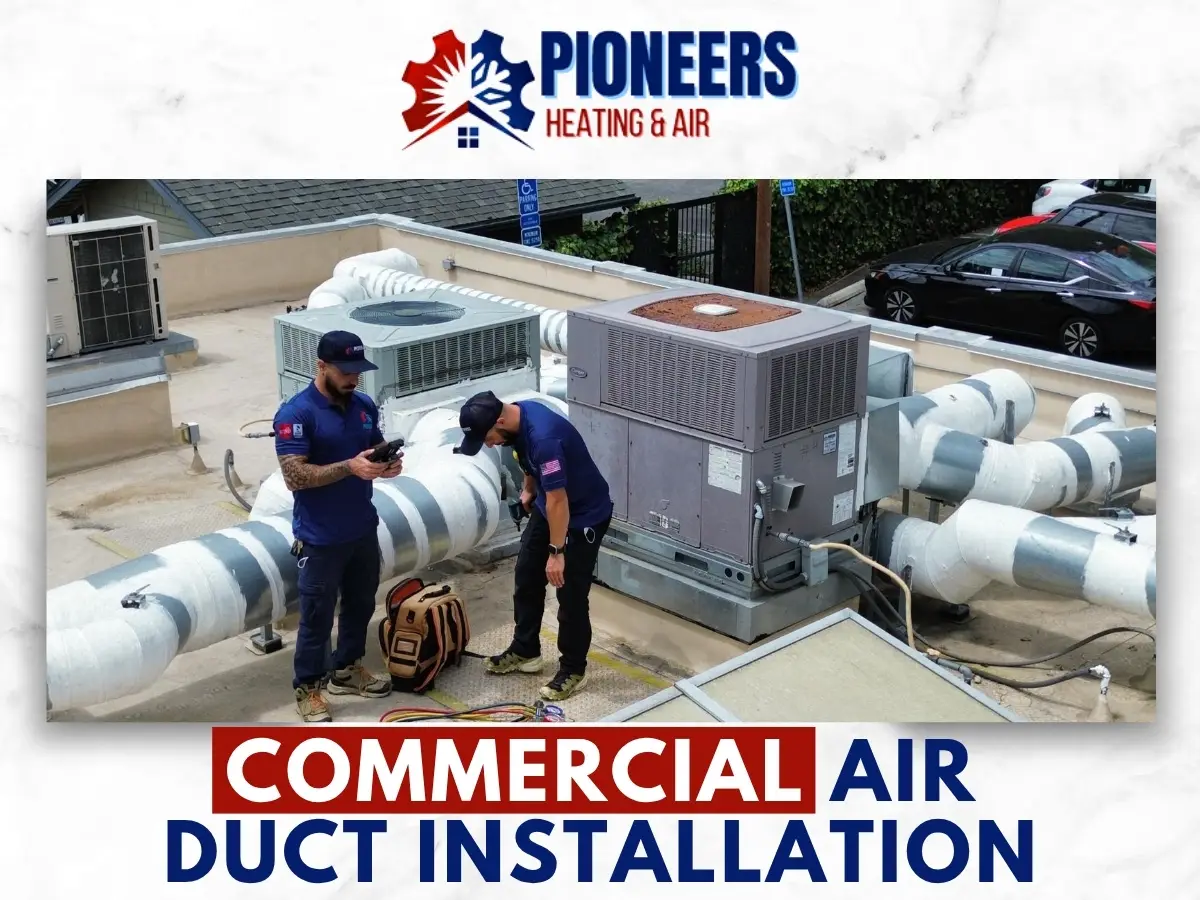
Commercial duct installation sets the airflow path for your whole building, and we install it the right way.
Pioneers Heating & Air provides Commercial Air Duct Installation in Pasadena for offices, retail spaces, restaurants, and multi-tenant buildings so heated and cooled air reaches the right areas. From layout through start-up, we focus on steady airflow, consistent comfort, and ductwork that supports your HVAC equipment rather than forcing it to work harder.
Need Help? Call Pioneers Heating & Air near you
Pioneers Heating & Air handles new ductwork, duct changes, and proper connections to your HVAC equipment. Commercial Air Duct Installation means planning, fabricating, and installing the duct system that carries supply air to rooms and returns air back to the unit. It also includes supports, sealing, insulation where needed, and correct air balancing points.
A duct system is not just metal in the ceiling. It is the distribution network for comfort and indoor air quality. If it is undersized, leaky, or routed poorly, your HVAC unit can seem weak even when it is running fine.
Do you have rooms that never match the thermostat. Do some areas feel stuffy even with the fan running. Duct layout is often the reason.

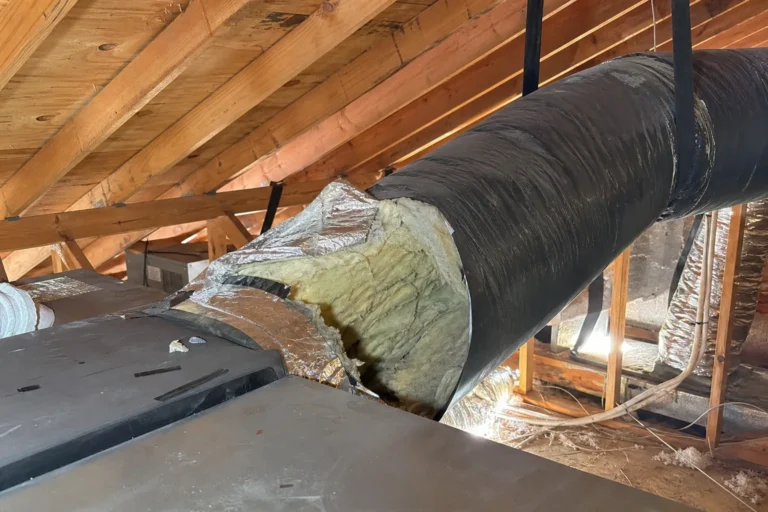
You may need new commercial ductwork when airflow is uneven, noisy, or hard to control. Commercial buildings tend to show duct problems as comfort complaints and mystery hot and cold spots. A quick look above a drop ceiling can also reveal duct sections that were pieced together over time, and a ductwork inspection can help confirm what is happening.
If your system cycles on and off quickly or seems loud in one wing, it may be duct sizing or return placement. The equipment is only part of the story, and commercial air duct testing can help verify airflow issues.
Many duct issues come from quick changes over the years, not from a single bad part. Most commercial duct problems are built over time. A new wall goes up, a suite is divided, diffusers get moved, and the duct system becomes a patchwork. The HVAC unit may still run, but the air path no longer fits the space, and commercial air duct repair may only be a short term step if the layout is no longer right.
A building can also have competing air paths. One area pulls return air so hard it steals air from nearby spaces. That can make doors hard to open and close, which is funny only the first time.
Our commercial duct install process starts with understanding the building use and ends with verified airflow. Every building has a purpose, and the duct system should match it. A small office needs different airflow patterns than a restaurant or retail space with frequent door openings, and commercial duct balancing helps dial in the final results.
What areas are most critical for comfort or operations. Which rooms can tolerate minor temperature swings, and which cannot.
Duct design decisions focus on airflow, static pressure, and access for maintenance. Good ductwork does not happen by accident. It is a set of practical choices that help the HVAC unit deliver its rated performance without extra strain, and it often goes hand in hand with commercial HVAC system integration for the building.
Proper duct sizing keeps the system from struggling. Correct sizing helps reduce noise, improves comfort, and supports stable temperatures. Undersized ducts create high static pressure. Oversized ducts can reduce velocity and mixing, which can leave pockets of warm or cool air.
If you have ever heard a diffuser that sounds like it is trying to whistle a tune, that is often high pressure at the grille.
Return air planning prevents comfort complaints and door pressure issues. Returns matter as much as supplies. A space can have plenty of supply air but still feel off if return paths are poor, and commercial air duct testing can help pinpoint where return flow is restricted.
Need Help? Call for Heating & Air Services
Access and serviceability reduce future headaches. A duct system should not block lighting, sprinklers, access panels, or maintenance paths. We aim for clean routing that respects other trades and keeps key components reachable, which also supports future commercial air duct maintenance.
Installation options range from full replacement to targeted duct additions, depending on your space. Not every building needs a complete rip and replace. Some projects need a new main trunk and better returns. Others need added branches to serve new rooms, and in some cases commercial air duct replacement is the best path when the existing network is damaged or poorly built.
We also coordinate with your building needs. Some businesses need quiet scheduling. Others need work done in phases, area by area.
Duct materials and components are chosen for durability, airflow, and building use. Commercial spaces vary widely. A fitness studio has different needs than a medical office. A kitchen needs a different approach than a conference room, and we consider how ducts affect both comfort and ventilation upgrades.
| Component | What it affects | What we watch for |
|---|---|---|
| Main trunk duct | Total airflow delivery | Size, straight runs, support spacing |
| Branch ducts | Room comfort | Length, turns, balancing capability |
| Returns | System stability | Return size, placement, door undercuts |
| Diffusers and grilles | Comfort and noise | Throw pattern, velocity, location |
| Sealing and insulation | Efficiency and condensation control | Joint sealing quality, insulation placement |
Timeline depends on building size, access, and whether you stay open during work. Most commercial duct installs are planned in steps so your business can keep operating when possible. The schedule depends on ceiling type, working hours allowed, and how much duct is being replaced, and we can coordinate around related work like commercial HVAC system maintenance when it helps reduce downtime.
We will talk through practical staging. Would you rather finish one area at a time, or complete all overhead work before ceiling close-up. What times of day can we work without interrupting customers.
Safety matters because ducts share space with electrical, sprinklers, and ceiling systems. Commercial duct installation is overhead work, often in tight spaces. Safety is about protecting people, the building, and other systems that must keep working, and we also coordinate when a building needs commercial HVAC inspection and tune-up as part of a larger service plan.
If you smell burning, see water staining near ceiling penetrations, or hear sudden loud vibration in ductwork, stop using the system and call a pro. Those signs can point to an immediate issue that should not wait, and if needed we can help with commercial emergency HVAC services.
You can prepare your space by clearing access points and sharing key building details. A little preparation makes the install smoother and reduces interruptions. We do not need you to do anything complicated, just a few basics, and we may also recommend commercial HVAC troubleshooting and diagnostics if there are mixed comfort symptoms.
If your building has multiple tenants, a quick heads-up to neighbors can prevent confusion. People notice ceiling work, and they also notice when nobody told them.
Pioneers Heating & Air
After installation, comfort improves most when you keep filters clean and watch for early warning signs. New ductwork should make the system feel more even and predictable. Still, a commercial building changes over time. Staying ahead of small issues helps protect performance, and periodic commercial air duct maintenance supports long term results.
Pasadena building layouts and climate patterns make good duct routing and returns especially important. Pasadena, California has warm periods that push cooling needs, plus cooler nights and seasonal swings. Many commercial buildings also mix older construction with modern tenant buildouts. That combination makes airflow planning a real factor in comfort, and it pairs well with commercial AC maintenance to keep performance steady.
A smart duct layout helps your HVAC system handle these shifts without constant thermostat battles.
Businesses choose Pioneers Heating & Air because we focus on airflow details that make systems work. Commercial ductwork is easy to hide and hard to ignore once it is wrong. We pay attention to sizing, routing, sealing, and return planning so your HVAC unit can do its job, and we can align duct changes with commercial HVAC system installation when needed.
If your building has problem rooms, tell us which ones. If you have a space that must stay comfortable for customers or equipment, tell us that too.
Get help with commercial duct installation by talking with a local HVAC contractor who can plan the whole system. Commercial Air Duct Installation in Pasadena works best when the ductwork, diffusers, and equipment connections are treated as one system. Pioneers Heating & Air handles new installs, replacements, and remodel duct changes with a focus on steady airflow and practical building needs, and we can also support commercial HVAC system repair if duct issues are tied to system performance.
Call (626) 217-0559 or use the Contact Us page to schedule a site visit and discuss your Commercial Air Duct Installation.
Hot upstairs rooms can point to attic heat, air leaks, duct losses, or airflow trouble instead of an AC problem...
Uneven room temperatures, weak airflow, dust near vents, and long AC cycles can point to leaky attic ducts. Check the...
AC cleaning removes buildup from key cooling parts. Learn the signs that point to cleaning, routine maintenance, or a repair...