What Does AC Cleaning Include, and When Is It Worth Scheduling?
AC cleaning removes buildup from key cooling parts. Learn the signs that point to cleaning, routine maintenance, or a repair...
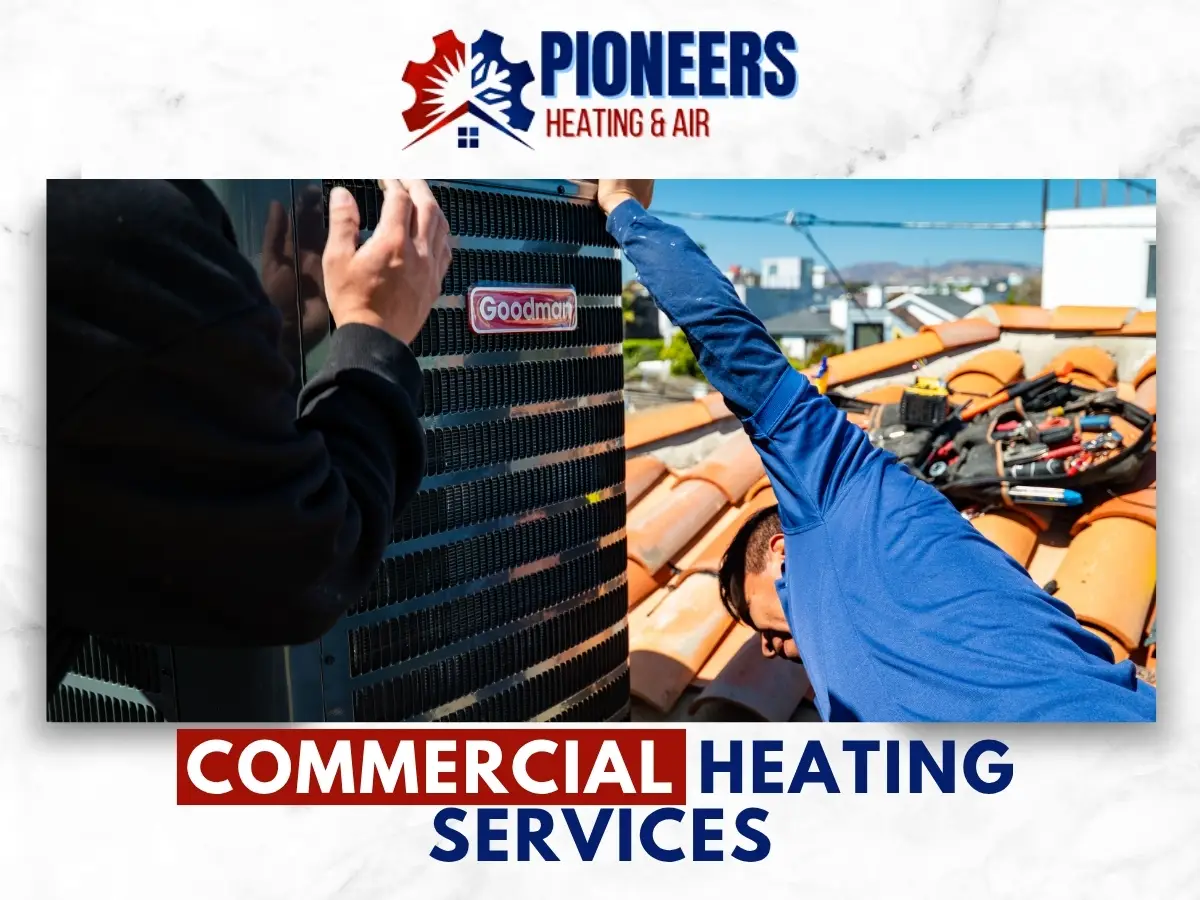
Commercial heating keeps your building comfortable, safe, and productive during cooler Pasadena days.
Pioneers Heating & Air provides Commercial Heating Services In Pasadena for offices, retail spaces, restaurants, and other facilities across Pasadena, CA. We handle heating repair, system replacement, and maintenance with clear communication and jobsite friendly scheduling. Expect practical options, clean work, and heat that shows up on time.
Need Help? Call Pioneers Heating & Air near you
Commercial heating services keep people comfortable while protecting equipment and inventory. Commercial heat is not only about warm air. It supports employee comfort, customer experience, and stable indoor conditions for sensitive items. A struggling heater can also drive up utility use and cause uneven temperatures that lead to complaints.
We focus on the systems most common in commercial buildings, including packaged rooftop units, split systems, heat pumps, and gas fired furnaces. If you manage multiple suites or a single storefront, the goal stays the same, reliable heat with fewer surprises across Pasadena and nearby California communities.

You may need service when comfort problems start affecting operations. Small issues tend to show up during the first cold mornings, then turn into full breakdowns at the worst time. If any of the signs below sound familiar, it is smart to schedule a visit before the next busy day hits.
You likely need heating repair if the system cannot keep setpoint. If your thermostat is set to 70 and the space hovers at 62, something is wrong. You might notice longer run times, air that feels lukewarm, or hot and cold pockets across the floor. If symptoms persist, commercial heating repair is usually the next step.
You may have airflow issues if some rooms feel fine and others feel frozen. Airflow problems can come from dirty filters, blocked returns, failing blower motors, or duct issues. In multi tenant buildings, airflow can also be affected by changes to walls, doors, or tenant layouts. If uneven comfort looks like a duct problem, commercial air duct testing and commercial duct balancing can help pinpoint what is happening.
You should call right away if you smell gas or see signs of overheating. A gas odor, scorch marks, repeated tripped breakers, or buzzing electrical sounds are stop and call situations. If the unit shuts down and you smell something hot, do not keep resetting it. When response time matters, commercial emergency HVAC services may be the right fit.
Most commercial heating problems come from a short list of repeat culprits. Even though buildings vary, the failures we see in Pasadena often trace back to the same causes. Getting the root cause right is what keeps the issue from returning next week.
Dirty filters and poor maintenance can choke performance quickly. A filter that is packed with dust can reduce airflow and push the system into high limit trips. That leads to short cycling, uneven heat, and extra wear on components. If your team needs a consistent plan, commercial HVAC system maintenance can reduce surprise no heat calls.
Ignition and gas heating issues often show up as no heat calls. On gas furnaces and rooftop units, ignition failures, flame sensing problems, and gas valve issues can stop heat production. These problems might start as it works sometimes, then become it never works. Targeted commercial HVAC troubleshooting and diagnostics helps confirm the failure before parts are replaced.
Electrical and control problems can mimic bigger failures. A bad contactor, failing capacitor, loose wire, or control board issue can cause random shutdowns. Thermostat and zone control problems can also make it look like the heater is weak, when the real issue is signal, scheduling, or sensor placement. If controls are part of the issue, commercial HVAC control and zoning setup may be worth reviewing.
Duct and ventilation problems can waste heat you already paid to make. Leaks, disconnected ducts, crushed flex runs, and poor balancing can leave some areas cold while others overheat. Restaurants and shops with frequent door openings can also create pressure issues that pull in cold air. In those cases, duct sealing and ventilation upgrades can support steadier comfort.
Our visit follows a clear process so you know what is happening and why. A commercial service call should not feel like a mystery tour. We keep it straightforward, document what we find, and explain options in plain language.
Do you need the system back up fast for customer hours. Tell us upfront. We will work with your schedule and site access rules, and we can coordinate an HVAC inspection approach when multiple issues need to be prioritized.
We offer repair, replacement, and maintenance that fits commercial realities. Commercial spaces have constraints that homes do not. That includes roof access, tenant needs, noise limits, and after hours work rules. Our job is to keep the plan realistic.
Heating repair restores function while addressing the actual cause. Repair can be the right move when the core system is in decent condition and the issue is isolated. We focus on fixing the problem and reducing the chance of repeat shutdowns with commercial HVAC system repair aligned to what the equipment actually needs.
Need Help? Call for Heating & Air Services
Heating replacement improves reliability when the old unit is at the end of its run. Replacement becomes a smarter path when repairs pile up, comfort never stabilizes, or parts are failing often. For commercial properties, replacement planning should consider roof curb fit, electrical capacity, gas sizing, duct connections, and how downtime affects tenants. When it is time, commercial HVAC system replacement keeps the scope clear.
Preventive maintenance reduces surprise breakdowns and helps planning. Maintenance is where many commercial problems get prevented. It keeps burners clean, checks safety controls, catches failing electrical parts early, and maintains airflow. A seasonal commercial HVAC inspection and tune up is a practical baseline for many sites.
If you manage multiple locations, we can help standardize what gets checked so each site stays consistent using commercial HVAC system maintenance planning.
The right service plan depends on your equipment type and building needs. Different systems fail in different ways. We work on the common commercial heating setups found across Pasadena and nearby California communities.
Rooftop units are common in retail and office buildings and need roof ready service. RTUs face sun, wind, and debris year round. Access can be the biggest challenge, so we coordinate entry, roof hatches, and safety rules. Many RTU problems tie back to ignition, controls, and airflow restrictions that trigger safety shutdowns. For system specific support, see commercial rooftop unit services.
Heat pumps need careful diagnosis because it runs does not mean it heats. Heat pumps can move heat efficiently, but performance depends on refrigerant health, defrost control, outdoor coil condition, and proper airflow. If the unit blows cool air in heating mode, the cause could be defrost issues, refrigerant problems, or reversing valve control. When needed, troubleshooting and diagnostics helps narrow it down.
Split systems often hide problems in ductwork and zoning. With split systems, the air handler, duct layout, and zoning controls matter a lot. Uneven heat in a suite can come from duct restrictions, poorly placed sensors, or a zone damper issue. If ductwork is suspected, ductwork inspection can be a useful starting point.
Timelines depend on access, parts, and how the building is set up. Many repairs can be completed in a single visit once diagnostics are complete. Some jobs take longer when access is limited, roof work needs coordination, or specialized parts are required. For planned work, commercial HVAC system installation may be part of a larger schedule.
If you are a property manager, having a point of contact for access and tenant notices helps everything move faster, especially when emergency service is needed.
Safety comes first, and some situations call for an immediate stop. Commercial heating equipment mixes gas, electricity, moving parts, and hot surfaces. That is not the place for guesswork. For general safety background, see HVAC concepts.
If your staff is tempted to just keep it running, remind them that downtime is annoying, but unsafe operation is worse.
A little preparation helps your appointment go smoother and faster. You do not need to do much, but a few steps can cut time and reduce back and forth.
If you have service history or photos of the unit nameplate, that helps too, and it can support faster diagnostics.
After service, a few habits help keep heat steady through the season. Once the system is running, the goal is stable performance, not constant tweaking. If comfort is still uneven, it is worth tracking patterns rather than guessing.
Pasadena conditions can stress heating systems in specific ways. Pasadena, CA has mild winters compared to colder states, but commercial heaters still work hard during chilly mornings and damp days. Many buildings also see big temperature swings between shade and sun, especially around large windows and older construction. In Southern California, planning for those swings can be as important as planning for the coldest day.
Does your front door open constantly during peak hours. If so, we can look at airflow, zoning, and thermostat placement so the system does not overreact using duct balancing and commercial thermostat installation when needed.
Pioneers Heating & Air
Maintenance checklists help busy managers stay ahead of problems. A simple checklist can prevent many no heat calls.
| Task | Who can do it | How often |
|---|---|---|
| Check and replace air filters | Staff or HVAC tech | Monthly to quarterly, based on dust and traffic |
| Confirm thermostat schedule matches hours | Staff | Monthly or after schedule changes |
| Listen for new noises at startup | Staff | Weekly during heating season |
| Full heating system inspection and testing | HVAC tech | Seasonal |
If you want, we can help you set a schedule that fits your building use and the equipment you have through commercial HVAC maintenance planning.
Businesses choose Pioneers Heating & Air because we communicate clearly and work cleanly. You need straight answers, not runaround. We explain what failed, what it affects, and what your next options are. We also respect your space, tenants, and time. If you want to know more about our company, visit About Us.
If you are managing multiple decision makers, we can provide concise notes you can share with owners or facility teams after a commercial HVAC inspection and tune up.
Call now to schedule commercial heating service for your Pasadena property. If your building needs dependable heat, Pioneers Heating & Air is ready to help with Commercial Heating Services that fit real business hours and real building constraints. For Commercial Heating Services In Pasadena, call (626) 217-0559.
If your heater quit today, what is the biggest impact, uncomfortable staff, unhappy customers, or a tenant calling every hour. Tell us what you are dealing with, and we will take it from there. Use our Contact Us page to request scheduling.
AC cleaning removes buildup from key cooling parts. Learn the signs that point to cleaning, routine maintenance, or a repair...
An AC that keeps running but leaves rooms warm may have an airflow, coil, duct, thermostat, refrigerant, or equipment problem....
A ductless mini-split may cool a garage, ADU, or sunroom without extending central ductwork, but the room, electrical setup, drainage,...