Why Upstairs Rooms Stay Hot With AC
Hot upstairs rooms can point to attic heat, air leaks, duct losses, or airflow trouble instead of an AC problem...
Commercial HVAC System Replacement In Pasadena by Pioneers Heating & Air. Upgrade efficiency with expert planning, install, and financing options. Call now
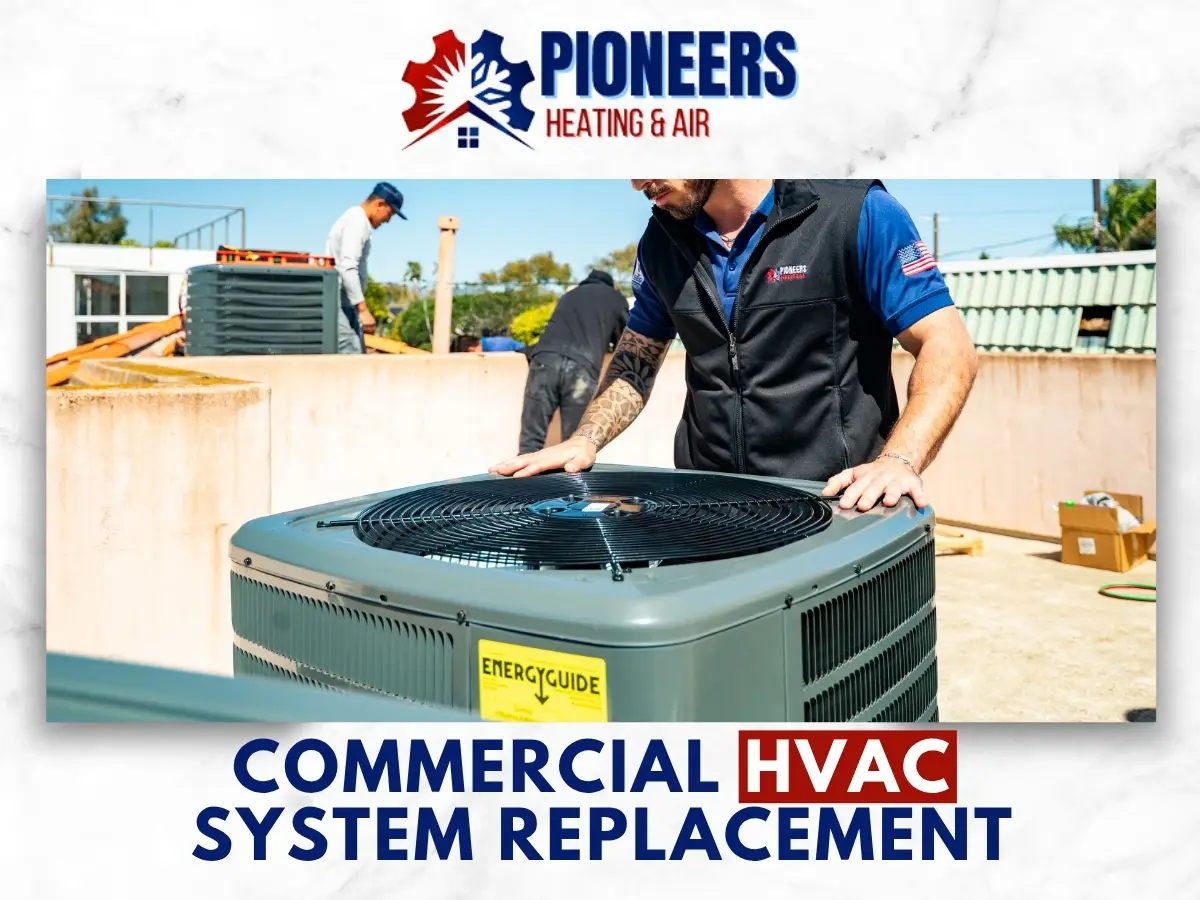
Commercial HVAC System Replacement in Pasadena keeps your building comfortable, dependable, and easier to manage when an old unit is failing or no longer fits your needs. Pioneers Heating & Air handles planning, removal, installation, and start up so your new system matches your space and schedule. Commercial HVAC System Replacement in Pasadena is our focus.
Commercial HVAC replacement means swapping an aging system for one that fits your building today. A full replacement removes the existing rooftop unit, split system, or packaged system and installs new equipment sized for your current layout and load. It also includes the pieces that make the equipment work in real life, not just on paper.
Need Help? Call Pioneers Heating & Air near you
If you are tired of constant repairs, uneven temps, and complaints from staff or tenants, a new system can bring sanity back. Nobody wants to hear It’s freezing in the lobby and It’s stuffy in the back office on the same day.
If you want a broader building wide plan, we can coordinate your changeout with commercial HVAC system installation needs and keep future commercial HVAC system maintenance in mind from day one.

You may need replacement when repairs keep stacking up and comfort keeps dropping. A commercial system can limp along longer than it should, especially in busy buildings that cannot shut down. The catch is that small problems start piling into bigger ones.
Have you had to explain to customers why the space feels uncomfortable? If comfort is affecting business, replacement is not just a mechanical decision. It is an operations decision. When you need clarity fast, we can start with commercial HVAC troubleshooting and diagnostics and compare repair versus changeout alongside commercial HVAC system repair.
Replacement is often driven by capacity changes, worn components, or duct and airflow limits. Many commercial systems fail early for reasons that are not obvious. A unit can be working while still being wrong for the building.
If the duct system cannot move the air, even the best equipment will feel weak. Think of it like trying to drink a milkshake through a tiny straw. The cup is fine, the straw is the problem. If airflow limits are suspected, we may recommend commercial duct balancing or commercial air duct testing to confirm what the system can actually deliver.
Our site visit focuses on your building use, equipment condition, and what it takes to install cleanly. We start with what matters to you. Comfort complaints, hours of operation, noise concerns, tenant requests, and access rules all change the best plan.
If needed, we can pair the visit with a commercial HVAC inspection and tune up to document condition and help you compare options.
We plan replacements to reduce disruption and keep your building running. A commercial changeout is not only about installing equipment. It is also about coordinating people, access, and time.
Pasadena sites vary a lot. Some rooftops are wide open. Others have tight ladders, limited staging areas, or neighbors close by. Planning prevents a we will figure it out up there moment, which is not the kind of surprise anyone enjoys. For buildings that need backup coverage, we can also discuss commercial emergency HVAC services planning during the swap.
Replacement options depend on the system type, zoning needs, and how your space is used. Most commercial buildings we serve in CA have either rooftop units, split systems, or a mix of both. The right choice depends on your layout, ventilation needs, and control goals.
If your building has multiple tenants, zoning and scheduling matter. Do you want one schedule that annoys everybody, or zones that follow how the space is actually used? We can support control decisions through commercial HVAC control and zoning setup and updates like commercial thermostat installation.
Need Help? Call for Heating & Air Services
Rooftop unit replacement is often the fastest route when ductwork is staying put. A rooftop unit changeout can be efficient when the existing duct connections and curb are solid. Still, small details can cause big delays if they are ignored.
Vibration isolation, tight panels, and correct airflow setup help keep sound levels reasonable for offices and retail. For RTU focused projects, we can align scope with commercial rooftop unit services so access and roof details are handled cleanly.
Split system replacement works well when you need flexibility or have tricky roof layouts. Split systems separate the outdoor and indoor equipment. That can help with space limits and zoning, but it adds line set and drainage details that must be done right.
Line sets are not set it and forget it. If the old lines are contaminated, kinked, or undersized, they can cause problems for the new equipment. We will walk you through what we find and what it means for reliability. If your site fits the format better, we can also discuss commercial split system services as part of the replacement plan.
A clear schedule comes from matching the job steps to your building access and work hours. Most replacements follow a predictable flow, but timing depends on equipment type, lifting needs, and site conditions.
If your building cannot shut down during business hours, tell us. We can plan around it, including staged work where practical. For buildings already struggling, we can coordinate interim support through commercial AC repair.
Safety matters because commercial HVAC combines electricity, gas, refrigerant, and rooftop work. Replacement work involves hazards that should not be improvised. That is why the job should be handled by a trained crew with the right tools and job planning.
Rooftops add their own risks. Access, edge distance, and weather conditions matter. If your maintenance team is thinking about just taking a quick look, make sure it is actually safe to do so. For general background on refrigerant handling and safety, see refrigerant.
You can prepare for replacement by clearing access and sharing the rules of your site. A smooth job starts with good access and clear communication. A few small steps can prevent delays.
Do you have strict rules about ladder use, roof traffic, or sign in procedures? Tell us up front. We will follow your process so your day stays on track. If duct access will be affected, we can align timing with commercial air duct maintenance needs as well.
After installation, simple habits help your new system run better for longer. A new unit still needs regular attention. Filters, drains, and airflow checks are the basics that protect comfort and keep run time under control.
If you manage multiple locations, write down the filter sizes and change dates. It sounds boring because it is boring. It also prevents a lot of Monday morning calls. Keeping up with commercial AC maintenance and periodic commercial AC cleaning helps protect your investment.
System sizing and airflow checks help prevent hot spots, short cycling, and high run times. Correct sizing is not a guess. A unit that is too small runs constantly and still cannot keep up. A unit that is too large can short cycle and struggle with steady comfort.
If you have a space that changed use, like a storage area becoming a gym or salon, call that out. Use changes are often why the old system never felt right. When sealing or distribution issues show up, we may recommend duct sealing or airflow balancing as part of the overall solution.
Controls and thermostats can improve consistency when schedules and zones are set correctly. Controls are where comfort meets daily operations. Even great equipment will feel bad if schedules fight your actual hours.
Ever notice a thermostat placed in direct sun or near a hot copier? That thermostat is basically voting for discomfort. We look for those issues during planning and can support follow up like commercial thermostat programming.
Pioneers Heating & Air
Pasadena conditions call for equipment choices and installation details that match heat, dust, and mixed use buildings. Pasadena, California weather brings warm stretches where systems run hard, plus shoulder seasons where mornings and afternoons can swing. Buildings here also vary from retail corridors to offices, medical spaces, and light industrial.
If your building sits near heavy traffic, you may see filters load faster. If you are near landscaping or roof debris, coil cleaning planning matters too. Air distribution problems may also point to commercial air duct repair or a full commercial air duct replacement.
This quick table helps compare common replacement paths in commercial buildings. Below is a simple view of what usually drives each option. We confirm fit after a site visit.
| Replacement path | Often chosen when | Main planning focus |
|---|---|---|
| Rooftop unit RTU changeout | Existing ductwork is usable and roof access is workable | Curb fit, lifting plan, duct transitions |
| Split system changeout | Zoning needs are higher or roof layout is limited | Line set condition, drainage, indoor access |
| Multiple zones or multiple units | Different areas have different loads and schedules | Control setup, balancing, tenant coordination |
To keep performance steady after the changeout, we can build a plan that includes commercial HVAC system maintenance and periodic commercial HVAC inspection and tune up visits.
Our team stays organized so your staff and tenants are not left guessing. Commercial jobs go better when communication is simple. You should know who is arriving, what areas are affected, and what to expect at start up.
We also respect that your building is not a workshop. It is your workplace. We keep disruptions as limited as the job allows. If you need building wide coordination, we can also tie in commercial HVAC system integration for controls and multi unit sites.
Commercial HVAC System Replacement focuses on long term reliability, not quick patches. Sometimes a repair makes sense. Sometimes it is just buying time for equipment that is already on its last leg. We will talk through the practical pros and cons based on what we see.
If you are unsure, start with the symptoms and your goals. We will help you decide whether a changeout is the smart next step. Some sites begin with commercial HVAC system repair or a broader commercial HVAC system replacement comparison once the full picture is clear.
Commercial HVAC System Replacement in Pasadena should start with a real conversation about your building and your priorities. Every site has its own quirks, and your schedule matters as much as the equipment. Pioneers Heating & Air works with property managers, business owners, and facility teams to plan clean installs and steady comfort.
If you are ready to talk through options for Commercial HVAC System Replacement in Pasadena, call (626) 217-0559 or schedule through Contact Us.
Hot upstairs rooms can point to attic heat, air leaks, duct losses, or airflow trouble instead of an AC problem...
Uneven room temperatures, weak airflow, dust near vents, and long AC cycles can point to leaky attic ducts. Check the...
AC cleaning removes buildup from key cooling parts. Learn the signs that point to cleaning, routine maintenance, or a repair...