What Does AC Cleaning Include, and When Is It Worth Scheduling?
AC cleaning removes buildup from key cooling parts. Learn the signs that point to cleaning, routine maintenance, or a repair...
Need Commercial HVAC System Repair In Pasadena? Pioneers Heating & Air delivers prompt commercial AC and heating fixes, diagnostics, and upkeep. Call now today
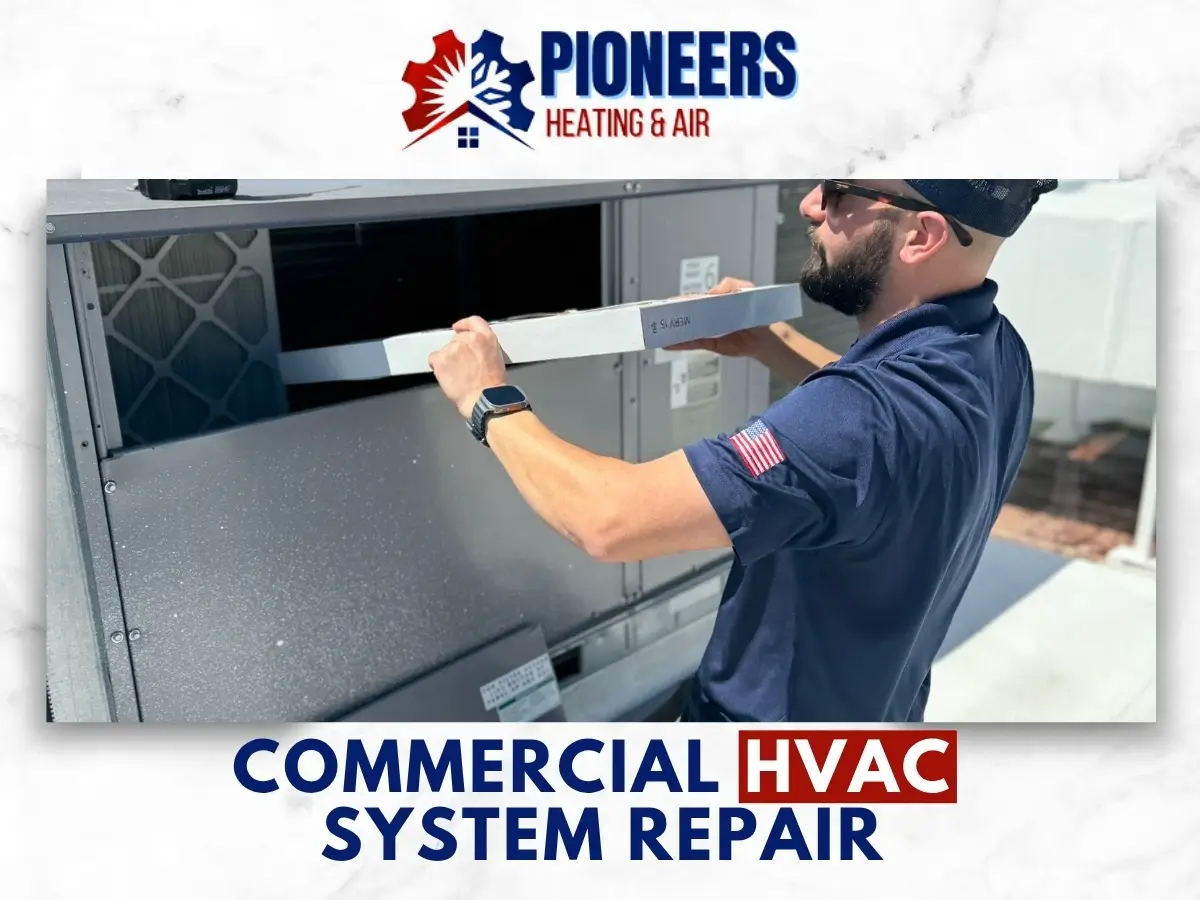
Commercial HVAC System Repair that gets your building comfortable again, fast.
Commercial HVAC System Repair in Pasadena keeps your tenants, staff, and customers comfortable when your system stops doing its job. Pioneers Heating & Air finds the real cause, explains your options, and repairs commercial heating and cooling equipment with practical fixes that fit your building. For Commercial HVAC System Repair in Pasadena, call when comfort drops at (626) 217-0559.
Need Help? Call Pioneers Heating & Air near you
You get more than a quick patch when the problem is diagnosed correctly. Commercial HVAC trouble rarely stays small, and a rushed fix can make the next breakdown worse. Our goal is to restore reliable heating and cooling and reduce repeat issues. We focus on the parts that actually failed, plus the conditions that caused the failure.
Is your building getting complaints from multiple zones, or only one area? That detail changes the direction of the diagnosis right away. If you suspect control issues, Commercial HVAC Troubleshooting & Diagnostics is often the fastest path to a stable fix.

Commercial systems we repair include rooftop units, split systems, and more. Commercial HVAC equipment varies by building size, use, and layout, and repairs should match that setup. We work on common commercial heating and cooling systems used across Pasadena and nearby areas in CA.
Rooftop package units are common and often fixable on site. Rooftop units often serve retail, offices, and light industrial spaces. Many repairs can be completed without removing the unit. Access, roof rules, and weather can affect timing. For unit specific work, see Commercial Rooftop Unit Services and Commercial Package Unit Services.
Split systems and heat pumps need careful refrigerant and airflow checks. Split systems can hide issues because the problem may be at the outdoor unit, indoor coil, controls, or ductwork. A proper repair often includes verifying refrigerant charge, coil condition, and airflow. If you also need system care between repairs, plan for Commercial AC Maintenance.
Multi zone setups need control troubleshooting, not only mechanical work. When some zones cool and others do not, the issue may be dampers, zone boards, sensors, or programming. Fixing only the loud part is tempting, but it does not solve comfort complaints. If zoning is part of the issue, Commercial HVAC Control & Zoning Setup can support a longer term solution.
You should schedule service when comfort, noise, or run time changes. Small symptoms in commercial buildings can turn into lost productivity and angry phone calls. If anything feels off, it is usually worth getting it checked before you are forced into after hours triage. For urgent situations, consider Commercial Emergency HVAC Services.
Do you hear complaints mostly during the afternoon? That can hint at load, airflow, or condenser issues. A targeted Commercial HVAC Inspection & Tune-Up can help confirm what is changing as conditions shift.
Most failures come from airflow problems, electrical faults, and control issues. Commercial HVAC equipment works hard, and minor weaknesses stack up. Many repairs trace back to a few repeat categories. Finding which category fits your symptom saves time and prevents part swapping.
A quick note that saves headaches, a refrigerant top off without leak diagnosis often leads to the same call again. Leaks do not heal on their own, sadly. If duct leakage is part of the pattern, duct sealing may be worth discussing after the repair.
Need Help? Call for Heating & Air Services
Our visit follows a clear process so you know what is happening and why. Commercial calls need structure, especially when multiple people have input. We keep it straightforward so you can approve the right repair and plan around building operations.
If access to the roof requires a specific entry point or permission, tell us early. It keeps the visit smoother and helps avoid awkward locked ladder moments. If you want a dedicated diagnostic visit first, Commercial HVAC Troubleshooting & Diagnostics fits this approach.
Troubleshooting focuses on the system path, not guesses. A commercial unit is a chain of parts. If the chain breaks, the best fix starts by finding where the signal or airflow stopped. That approach avoids replacing parts that were never the problem.
Electrical problems are handled with safety and clear verification. Loose connections and failing components can cause short cycling, no start, or intermittent operation. We look for heat marks, worn contacts, and unstable readings. We also confirm proper voltage and control signals before condemning a part. If a general service call is needed, HVAC repair can cover related issues beyond the commercial unit.
Airflow problems get attention because they create other failures. Low airflow can freeze coils, overheat heat exchangers, and strain motors. We check filter condition, blower operation, belts, coils, and obvious duct issues. We also look for blocked returns or supply diffusers that were temporarily covered and then forgotten. If distribution is the bigger problem, Commercial Duct Balancing may be part of the follow up plan.
Refrigerant issues are confirmed with measurements and a leak aware mindset. If cooling is weak, it is easy to blame refrigerant. We confirm the system is moving air correctly first. Then we check pressures and temperatures and look for signs that point to a leak or restriction. If the issue overlaps with cooling performance overall, Commercial AC Repair may be the best service match.
Repairs we commonly perform restore operation and reduce repeat breakdowns. Commercial HVAC System Repair often involves the parts that wear out under load, plus cleanup that allows the equipment to breathe. The right repair depends on what failed and why it failed.
If your building has repeated service calls for the same unit, ask yourself this question has anyone confirmed airflow and controls, or only swapped the last part that failed? When controls are part of the story, Commercial Thermostat Programming can help lock in stable operation.
A simple table helps you match symptoms to likely problem areas. This quick reference can help your staff describe what they see. It also helps us bring the right plan for the visit.
| What you notice | Likely area to check | Why it matters |
|---|---|---|
| Unit runs, little cooling | Airflow, coils, refrigerant, compressor | A restriction or low charge can limit heat removal |
| Short cycling | Controls, sensors, electrical, airflow | Rapid starts stress motors and compressors |
| Water around unit | Drain line, pan, trap, coil freeze | Overflow can damage ceilings and shut systems down |
| Loud rattling or grinding | Fan, motor, mounts, panels | Mechanical wear can lead to sudden failure |
| Some rooms fine, others bad | Dampers, zoning, duct leakage | Comfort complaints often start with air distribution |
If air distribution keeps showing up in complaints, a ductwork inspection can reveal leaks, damage, and restrictions that a quick mechanical repair might not solve.
Time to repair depends on access, parts, and how clear the symptoms are. Many repairs are completed in a single visit once the fault is confirmed. Some issues take longer because commercial systems can hide the real cause until testing under load.
If you can share the make, model, and any error codes ahead of time, that often speeds up the visit. If the system is aging and repairs are stacking up, Commercial HVAC System Replacement may be worth planning for.
Pioneers Heating & Air
Safety comes first, and some situations call for shutting the unit down. Commercial HVAC involves high voltage, moving parts, refrigerant circuits, and hot surfaces. If your staff is unsure, it is better to stop and call than to push buttons and hope.
If someone says it will probably be fine, that is usually your cue to pause and get it checked. For general background on refrigerant handling concepts, see refrigerant.
You can prep the site in a few minutes and save real time. A little prep helps the repair go faster and keeps your team out of the way. It also reduces back and forth calls while we try to locate access points.
Have multiple tenants? Let them know we may need quick access to a few spaces for temperature checks. If ventilation is part of the complaint, ventilation upgrades can support comfort after the repair.
After the repair, a few habits help your system stay stable. Commercial HVAC does better with steady conditions and basic upkeep. You do not need a complicated routine. You need consistent attention to airflow, drains, and settings.
If you run extended hours one week and normal hours the next, tell us. Schedule changes can reveal control issues that look like equipment problems. For ongoing stability, Commercial HVAC System Maintenance can reduce surprise shutdowns.
Pasadena conditions can stress commercial HVAC in specific ways. Pasadena, California weather swings and building types create patterns we see often. Older buildings may have duct layouts that were changed over time. Retail spaces may have frequent door openings and high heat loads in the afternoon.
If your unit cools fine in the morning but struggles later, it may not be getting tired. It may be facing higher load, airflow limits, or condenser heat rejection problems. In some cases, airflow balancing is the missing piece.
Building owners and managers choose Pioneers Heating & Air for clear communication and practical repairs. You deserve a contractor who respects your time and your building. We focus on clear findings, simple explanations, and repairs that match commercial use. You will know what failed, what we did, and what to watch next.
Do you manage multiple locations in Pasadena or nearby? We can help you standardize what gets checked first so small problems stop turning into urgent calls. If you need broader support beyond repair, consider Commercial Heating Services.
Schedule Commercial HVAC System Repair in Pasadena with one call. Commercial HVAC System Repair in Pasadena is easier when you work with a team that shows up ready to troubleshoot and fix the real issue. Pioneers Heating & Air is ready to restore comfort, reduce downtime, and get your system running the way it should. Call (626) 217-0559 to get started.
To schedule service, call (626) 217-0559 or use our Contact Us page.
AC cleaning removes buildup from key cooling parts. Learn the signs that point to cleaning, routine maintenance, or a repair...
An AC that keeps running but leaves rooms warm may have an airflow, coil, duct, thermostat, refrigerant, or equipment problem....
A ductless mini-split may cool a garage, ADU, or sunroom without extending central ductwork, but the room, electrical setup, drainage,...