What Does AC Cleaning Include, and When Is It Worth Scheduling?
AC cleaning removes buildup from key cooling parts. Learn the signs that point to cleaning, routine maintenance, or a repair...
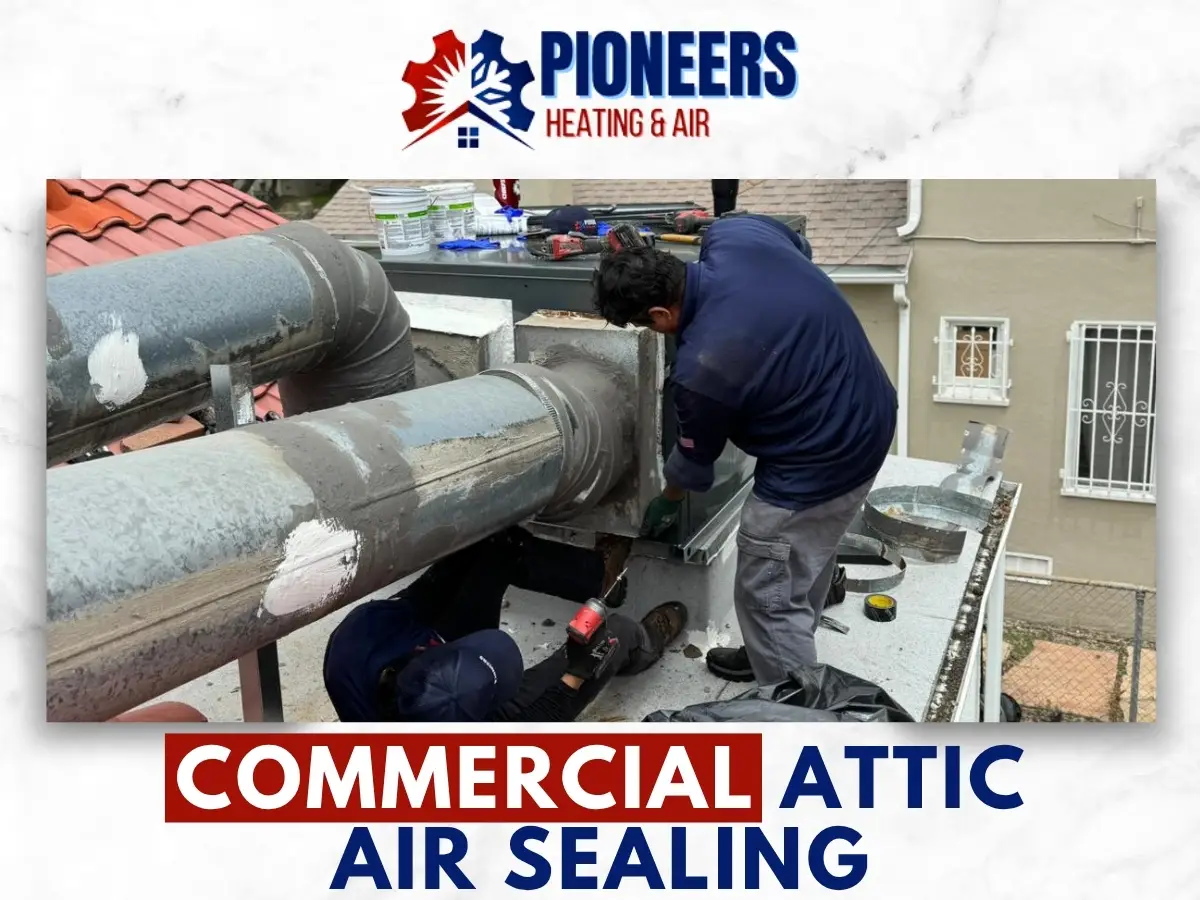
Commercial attic air sealing closes the hidden gaps that let conditioned air escape and hot attic air sneak in.
Pioneers Heating & Air handles Commercial Attic Air Sealing In Pasadena by finding leaks above offices, retail spaces, and light industrial areas, then sealing them with the right materials for the surface and use. You get fewer drafts, steadier comfort, and less HVAC strain in Pasadena, CA and across California.
Need Help? Call Pioneers Heating & Air near you
Commercial attic air sealing stops air leaks at the top of your building where energy loss often starts. Commercial attics commonly have dozens of small openings that act like a giant straw. Your HVAC system pushes air into the space, and that air finds its way up and out. At the same time, hot attic air and dust can get pulled down into the occupied areas.
Air sealing focuses on the pressure boundary between the conditioned space and the attic. The goal is simple. Keep indoor air indoors, and keep attic air out.
If you manage a property, you already know comfort calls can pile up. Would it help if your HVAC system stopped fighting leaks you never see. If comfort complaints persist, pairing attic work with commercial HVAC troubleshooting and diagnostics can help confirm the real driver.

Commercial Attic Air Sealing helps your HVAC system work smarter, not harder. Leaky ceilings and attic bypasses can make even a well sized system feel weak. Conditioned air escapes, thermostats call for more cooling or heating, and the building may still feel uneven.
Air sealing also helps ventilation and filtration do their job. If attic air is being pulled into return paths through gaps, you can get dust and odors that have nothing to do with your occupied space. Closing those pathways helps you control what air enters the system.
We focus on practical improvements that reduce complaints and reduce wear on equipment. When needed, we can also connect findings to commercial HVAC system maintenance planning.
You may need attic air sealing if comfort and operating issues keep repeating. Many commercial buildings show the same warning signs. They are easy to miss because they feel like normal building problems.
If your team keeps adjusting thermostats without getting relief, the issue might be above the ceiling plane, not in the thermostat. A targeted HVAC inspection can help separate air leakage from equipment issues.
The most common causes are ceiling penetrations, duct openings, and poorly sealed access points. Commercial ceilings are full of paths for air to move. Some are obvious, like attic hatches. Many are hidden, like wire chases and plumbing penetrations.
Building changes can add new leaks. A new data drop, a new sign, a remodel, or a tenant improvement can create fresh openings. Those gaps add up faster than most people expect. When duct paths are part of the problem, ductwork inspection can pinpoint where the air path breaks down.
Our on site visit starts by confirming where the air is moving and why. We begin by understanding the building use, problem areas, and access options. Then we inspect the attic and ceiling plane where practical and safe.
We keep it clear and direct. If the real issue is a duct break or a return path problem, we will tell you. Air sealing works best when the whole air path makes sense. If we see system level concerns, we may recommend commercial HVAC inspection and tune up steps alongside sealing.
We seal leaks using materials that match the surface, temperature, and building needs. Attics can be hot, dusty, and full of framing angles that make sloppy work easy to spot later. We use proven sealing approaches that hold up under attic conditions.
We also pay attention to what not to seal. Sealing the wrong spot can cause moisture issues or ventilation problems. That is why inspection comes first. When airflow and exhaust pathways are part of the plan, ventilation upgrades may be a helpful next step.
Attic access sealing is often the quickest win because hatches and doors are frequent leak sources. Many commercial attic access panels are basically a loose lid on a box. If you can see light around the edges, air can move through it.
A tight access point also helps keep attic dust from falling into corridors and storage rooms. Nobody wants the ceiling to shed every time the wind kicks up. If insulation is disturbed during access work, we may suggest commercial attic insulation replacement to restore coverage.
Need Help? Call for Heating & Air Services
Duct and register openings at the ceiling plane are sealed to reduce bypass and pressure problems. Your duct system is supposed to carry air where it belongs. If the ceiling openings around boots and grilles are not sealed, the system can pull attic air into returns or dump supply air into the attic.
If you have a space that always smells dusty after the system starts, ask yourself this. Could the return be pulling air from a ceiling cavity that is connected to the attic. If the issue is duct related, commercial air duct repair or commercial air duct testing may be part of the fix.
Lighting, electrical, and plumbing penetrations are sealed with careful attention to heat and clearance. Commercial buildings often have older lighting types, transformer boxes, and wiring routes that were installed fast during build out. Those spots are classic air leaks.
Yes, we have seen some creative holes cut in ceilings. No, we do not leave them that way. If sealing reveals larger ceiling cavity airflow issues, airflow balancing can help dial in performance afterward.
Exhaust fans and ventilation pathways are checked so sealing improves control instead of creating new issues. Bathrooms, breakrooms, and janitor closets often vent into the attic if the duct is loose or missing. That adds moisture and odors where you do not want them.
Air sealing should support a clean airflow plan. Exhaust air should go outside, not into the attic. If you need help tightening overall air quality control, air purifier installation may be considered for certain commercial spaces.
The work plan focuses on the biggest leaks first so you get noticeable change without guesswork. Commercial spaces have schedules, tenants, and rules about access. We keep the plan realistic.
This order matters. Sealing a hundred tiny gaps but leaving an open chase is like locking your windows but leaving the front door wide open. If insulation needs to be moved or replaced to finish correctly, commercial attic insulation removal can be part of the scope.
Here is a quick view of common leak points and what they affect. This table helps connect what we find to what your building feels day to day.
| Leak point | What you may notice | Why it matters |
|---|---|---|
| Attic hatch or access door | Drafts in hallways, dusty ceiling edges | Big opening, often unsealed |
| Open chases above walls | One area always hotter or colder | Air moves between attic and rooms |
| Recessed lights and fixture gaps | Hot spots under the ceiling | Many small leaks add up |
| Unsealed duct boots | Weak airflow, higher run time | Air goes where it should not |
| Exhaust fan leaks | Odors, moisture, musty smell | Humid air ends up in attic |
Most commercial attic air sealing projects take a planned block of time, and access is what usually slows it down. The total time depends on attic size, ceiling height, the number of penetrations, and how easy it is to move safely in the attic.
We will talk through scheduling and access early so you can plan around building use. Retail and office spaces often need specific timing to avoid disruptions. If equipment issues appear during the visit, we can discuss commercial HVAC system repair options.
Safety comes first because attics can hide electrical hazards, weak framing, and air quality issues. Attics are not friendly spaces. They can have exposed wiring, sharp fasteners, and unstable walk paths. We use safe access methods and avoid stepping where there is no support.
If something looks off, it probably is. It is better to address hazards before sealing everything up. If urgent problems show up, commercial emergency HVAC services may be appropriate.
Pioneers Heating & Air
You can prepare by clearing access, sharing problem zones, and noting operating schedules. A little prep saves time and keeps the visit focused.
Do you have multiple suites with different comfort complaints. Point them out. Mixed feedback often signals air leakage combined with airflow balance issues, which may call for commercial duct balancing.
After sealing, you should watch for steadier temperatures and fewer mystery drafts, then fine tune controls if needed. Air sealing changes how air moves. That is the point. After the work, your system may reach setpoints faster and cycle differently.
If maintenance staff enters the attic later, remind them to close and latch access panels tightly. A hatch left cracked open can undo a lot of good work. If control changes are needed after sealing, commercial thermostat programming can help stabilize operation.
Pasadena conditions make attic leakage more noticeable during heat and wind events. Pasadena, California gets hot spells where attic temperatures climb fast. That heat finds any gap it can. Older commercial buildings and remodel heavy corridors can have extra penetrations in the ceiling plane.
Wind can also change building pressure. When the wind pushes on one side of a structure, it can pull air out of another side. That can increase drafts through ceiling leaks and access panels.
If your building feels fine in mild weather but struggles during hot weeks, attic leakage is a strong suspect. If you are also seeing uneven delivery from vents, air duct installation or repair planning may be part of the larger solution.
Pioneers Heating & Air handles commercial attic air sealing with clear communication and jobsite respect. You need a contractor who can work around tenants, keep areas clean, and explain what was found without making it a science project.
We are an HVAC contractor, so we look at air sealing through the lens of system performance. If the ducts, returns, or ventilation setup need attention, we will bring it up plainly. For larger system goals, we can align findings with commercial HVAC system integration planning.
Commercial Attic Air Sealing In Pasadena is also a smart step before major HVAC changes. If you are thinking about replacing equipment, changing zones, or addressing chronic hot spots, sealing the attic boundary can remove a major variable. That helps you make better decisions about airflow and capacity.
Before you spend time chasing comfort complaints room by room, ask one simple question. Are we losing treated air into the attic and pulling attic air back inside. If equipment replacement is on the table, consider pairing attic work with commercial HVAC system replacement planning.
For building owners and managers, Commercial Attic Air Sealing In Pasadena is often the behind the scenes fix that makes the rest of the HVAC system feel like it finally caught up.
Commercial Attic Air Sealing In Pasadena starts with a site visit and a clear plan you can act on. If you are ready to reduce drafts, improve comfort, and cut wasted run time, let us take a look at the attic and ceiling plane. Pioneers Heating & Air provides Commercial Attic Air Sealing In Pasadena for offices, retail spaces, and other commercial properties across Pasadena, CA.
Call (626) 217-0559 or schedule through our Contact Us page to request an on site estimate today.
AC cleaning removes buildup from key cooling parts. Learn the signs that point to cleaning, routine maintenance, or a repair...
An AC that keeps running but leaves rooms warm may have an airflow, coil, duct, thermostat, refrigerant, or equipment problem....
A ductless mini-split may cool a garage, ADU, or sunroom without extending central ductwork, but the room, electrical setup, drainage,...