What Does AC Cleaning Include, and When Is It Worth Scheduling?
AC cleaning removes buildup from key cooling parts. Learn the signs that point to cleaning, routine maintenance, or a repair...
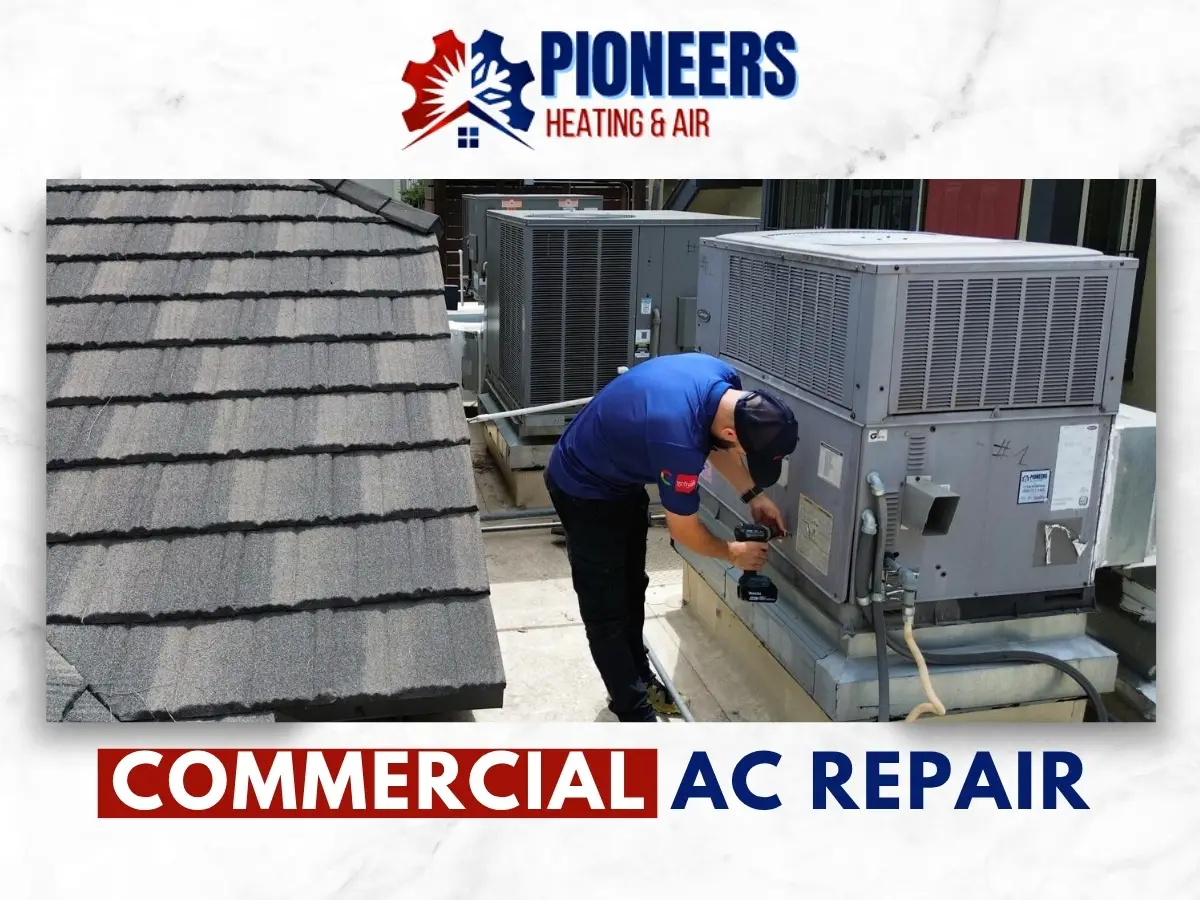
Commercial AC Repair in Pasadena keeps your business comfortable and your equipment protected, and Pioneers Heating & Air helps by finding the real cause fast and fixing it right. If your system is blowing warm air, short cycling, leaking, or tripping breakers, we respond with clear diagnostics, practical repair options, and steps that reduce downtime in Pasadena, CA.
Commercial AC Repair is about restoring cooling, airflow, and control without disrupting your day. Commercial systems work harder than most people realize. They run longer hours, handle bigger spaces, and deal with doors opening all day. When something slips, comfort drops fast and complaints show up even faster.
Pioneers Heating & Air focuses on practical solutions for real businesses. We work on common commercial setups, including rooftop units, split systems, and packaged equipment. We also handle related parts like thermostats, zoning controls, condensate drains, and electrical components tied to the cooling cycle.
Do you need the cold air back today, or do you also need the system to stop breaking down every few weeks? We can help you make that call with facts, not guesswork.
Need Help? Call Pioneers Heating & Air near you
Commercial AC Repair in Pasadena is often needed when comfort complaints start stacking up. If you manage a workspace, you usually hear about it before you feel it. A warm office, a stuffy retail floor, or a muggy break room can turn into lost productivity and unhappy customers.
If you are seeing two or more of these at once, the issue is rarely just low refrigerant. It is usually a chain of causes. When you are ready to compare repair paths, our Commercial AC Repair process starts with clear troubleshooting and a plan that fits your site.

Cooling problems usually come from airflow, electrical, refrigerant, or control issues. Most commercial cooling breakdowns fall into a few buckets. The hard part is that the symptoms overlap. That is why proper troubleshooting matters, including Commercial HVAC Troubleshooting & Diagnostics when the problem is not obvious.
Airflow issues often start with filters, coils, or duct problems. Poor airflow can make a system look weak even if the compressor is fine. It also drives up run time, which raises wear and tear. When airflow problems repeat, Commercial Duct Balancing can help stabilize comfort across areas.
A simple filter swap can help, but it will not fix a dirty coil or a slipping belt. If you have to keep lowering the thermostat to feel cool, airflow is a prime suspect and Commercial AC Cleaning may be part of the fix.
Electrical problems can stop cooling even when the unit powers on. Commercial units rely on multiple electrical parts working in sync. A system may run the fan but never start the compressor, or it may start and then shut down. If you are seeing frequent shutoffs, a full Commercial HVAC System Repair approach may be needed instead of swapping one part.
If you smell a burning odor, hear loud buzzing at start up, or see repeated breaker trips, stop running the system and call a pro. Electrical faults can damage compressors and controls quickly. If you need urgent help, Commercial Emergency HVAC Services may be the right next step.
Refrigerant problems are usually a leak problem, not a top off problem. Low refrigerant causes poor cooling, icing, and long run times. But refrigerant does not get used up in a normal sealed system. In many cases, a combined plan of Commercial AC Repair and follow up checks is what prevents repeat calls.
A correct repair includes finding the leak source, making the repair, and charging to the right level based on the system requirements. That is how you avoid the same call again next month.
Control and thermostat issues can create comfort chaos fast. Controls are the traffic cops of your AC system. If they misread temperature or fail to send the right signals, cooling will be inconsistent. For settings and behavior that do not match your hours, Commercial Thermostat Programming can solve common schedule issues.
If one area feels like a freezer and another feels like a greenhouse, controls and zoning should be checked early. That may include Commercial HVAC Control & Zoning Setup to correct damper or control behavior.
Need Help? Call for Heating & Air Services
Our on site visit starts with fast verification, then step by step troubleshooting. We start by confirming your complaint and checking the basics first. That keeps the process efficient and avoids replacing parts that are not the problem. When deeper testing is needed, we follow the same discipline used in HVAC Troubleshooting & Diagnostics.
We keep communication simple. You will know what failed, what caused it, and what steps reduce repeat issues. If the system would benefit from ongoing care after the repair, we can recommend Commercial AC Maintenance to keep performance steady.
Commercial AC Repair options range from targeted part replacement to system performance corrections. Some repairs are straightforward. Others need a few fixes done together so the unit can operate normally again. If repeated breakdowns point to end of life issues, Commercial AC Replacement may be worth comparing against continued repairs.
Targeted repairs fix the broken component and restore operation. These are common repair actions, and they often overlap with wider Commercial HVAC System Maintenance needs when wear is showing up in multiple places.
When a part fails, we also look for the reason it failed. A capacitor that dies early may point to overheating, airflow problems, or a failing motor. If controls are part of the pattern, we may suggest Commercial Thermostat Installation when existing devices are unreliable.
Performance corrections focus on why the system cannot keep up. If your unit runs all day and the space still feels warm, the repair may involve more than a single part. In many buildings, performance work connects directly to Commercial Air Duct Repair or airflow issues that were never addressed.
This is where comfort usually improves the most. It is also where many quick fixes fall short. If you want a broader look at system condition, consider Commercial HVAC Inspection & Tune-Up after urgent issues are resolved.
Rooftop unit repairs need careful access, safety, and weather awareness. Many commercial properties in Pasadena use rooftop equipment. Roof access, ladder points, and tenant schedules can affect timing. If your site is primarily rooftop based, Commercial Rooftop Unit Services aligns with how these systems are typically supported.
If it is 100 degrees and the roof feels like a skillet, we get it. We still work safely and keep the visit organized.
Downtime depends on the fault type, parts availability, and how the unit is installed. Some repairs are finished in a single visit. Others require additional time, especially if the system has multiple issues. When time is critical, it helps to know whether you are dealing with a single unit or a larger commercial HVAC system repair scope.
If you are managing several spaces, tell us which zones matter most during business hours. That helps us prioritize. If airflow is uneven between suites, Airflow Balancing can be part of a longer term solution.
Safety comes first when AC issues involve electricity, water leaks, or odd smells. Commercial AC units mix high voltage, moving parts, and moisture. A small issue can become a bigger one if the system keeps running under stress. If you need immediate support, Emergency HVAC Services may be appropriate.
If you are unsure, it is better to shut it off and ask. Nobody wants an avoidable shutdown during business hours in California.
Pioneers Heating & Air
You can prepare in a few simple ways that help us move faster on arrival. A little prep can cut down on diagnosis time and reduce disruption to staff and customers. If your building has duct access challenges, noting them up front can support Ductwork Inspection planning.
Do you have multiple thermostats? Let us know which ones control which zones. That saves a lot of back and forth, and it may point toward HVAC Zoning Setup improvements if zones are not behaving.
After the repair, a few habits help keep the system steady through peak heat. Once cooling is back, the goal is to keep it stable. Commercial systems rarely fail at a convenient time, so small maintenance habits make a difference. Many businesses pair repairs with Commercial HVAC System Maintenance to reduce surprises.
If comfort swings return, do not wait until the unit quits again. Small problems are easier to correct when they are still small, and a seasonal HVAC Tune-Up can catch issues before peak demand.
This simple table helps link symptoms to likely problem areas. Use this to guide what you report when you call. Clear details help speed up troubleshooting, especially when combined with HVAC Inspection notes from prior visits.
| What you notice | What it often points to |
|---|---|
| Fan runs, but air is warm | Compressor circuit, capacitor, contactor, refrigerant issue |
| Weak airflow everywhere | Dirty filter, dirty coil, blower problem, duct restriction |
| One area hot, one area cold | Zoning control, damper issue, duct imbalance, sensor issue |
| Unit short cycles | Overheating, airflow restriction, control issue, refrigerant problem |
| Water around unit or ceiling stain | Drain blockage, pan issue, coil icing, pitch problem |
Pasadena, CA properties bring common AC challenges like heat loads, mixed use spaces, and older buildings. Pasadena buildings can vary a lot from block to block. You might have a vintage structure with tight mechanical closets, or a newer space with rooftop units and multiple zones. When older ductwork is involved, Commercial Air Duct Testing can help confirm what is really happening.
If your business is near busy corridors with frequent door openings, your system may be fighting a constant wave of warm air. That is normal, but the equipment must be tuned and repaired correctly to keep up in CA.
Pioneers Heating & Air focuses on clear communication, clean work habits, and practical repair decisions. You need straight answers and a working AC, not a confusing conversation. We explain what we found, what failed, and what needs attention next. We also respect your space and keep disruption low. If you want to know more about our team, you can visit About Us.
If you are coordinating with property management, we can share clear findings so everyone stays on the same page. If the issue expands beyond cooling, we can also coordinate with Commercial Heating Services for all season planning.
Commercial AC Repair in Pasadena should start with a call before a small issue becomes a full shutdown. If your system is struggling, do not wait for the hottest day of the week to make the decision for you. The sooner we see it, the sooner you can get back to normal operations with fewer surprises. If you think the whole system is trending toward replacement, compare options with Commercial HVAC System Replacement.
For Commercial AC Repair in Pasadena, contact Pioneers Heating & Air. Call (626) 217-0559 or use the Contact Us page to schedule service and get your cooling back under control.
AC cleaning removes buildup from key cooling parts. Learn the signs that point to cleaning, routine maintenance, or a repair...
An AC that keeps running but leaves rooms warm may have an airflow, coil, duct, thermostat, refrigerant, or equipment problem....
A ductless mini-split may cool a garage, ADU, or sunroom without extending central ductwork, but the room, electrical setup, drainage,...