
If your dryer takes two cycles to dry, a restricted vent is a likely cause, especially when the clothes get warm but stay damp. Heat alone can't dry a load if moist air can't escape. Still, slow drying doesn't prove the vent is blocked. Load size, settings, and an appliance fault can also leave laundry wet.

Why heat doesn't rule out a vent problem
A vented dryer needs a clear path for warm, moist air to leave the house. A blocked lint screen or restricted exhaust duct can limit that flow. The drum may feel warm even though the dryer isn't moving moisture out well.
The U.S. Consumer Product Safety Commission identifies damp clothes after a typical cycle and longer drying times as possible signs of a blocked lint screen or exhaust duct.
Pay attention to what changed. A load that used to finish on the same setting but now needs another cycle deserves attention. A single oversized load gives you less reason to suspect a new blockage. Neither pattern, by itself, tells you which part needs work.
When to stop using the dryer
Stop using the dryer if you notice a burning smell, unusual heat around the machine, or a damaged exhaust connection. Don't keep adding cycles to work around these signs. Leave the dryer off until the cause has been checked.
Keep home checks limited to parts you can reach safely. Don't remove appliance panels, bypass switches, or run the dryer with its exhaust duct disconnected.
What to check when your dryer takes two cycles to dry
With the dryer off and cool, check the basics before arranging service. These checks help separate a load problem from a visible restriction without taking the machine apart.
-
Clean the lint screen. Remove collected lint and put the screen back in place. Look at the screen itself rather than assuming it was cleaned after the last load. Follow the dryer manual for any washing or deeper screen care.
-
Review the load and setting. Reduce an oversized load so clothes have room to tumble. Check that the chosen cycle fits the fabric and isn't an air-only setting. If the washer left clothes much wetter than usual, note that too. The dryer is starting with more water to remove.
-
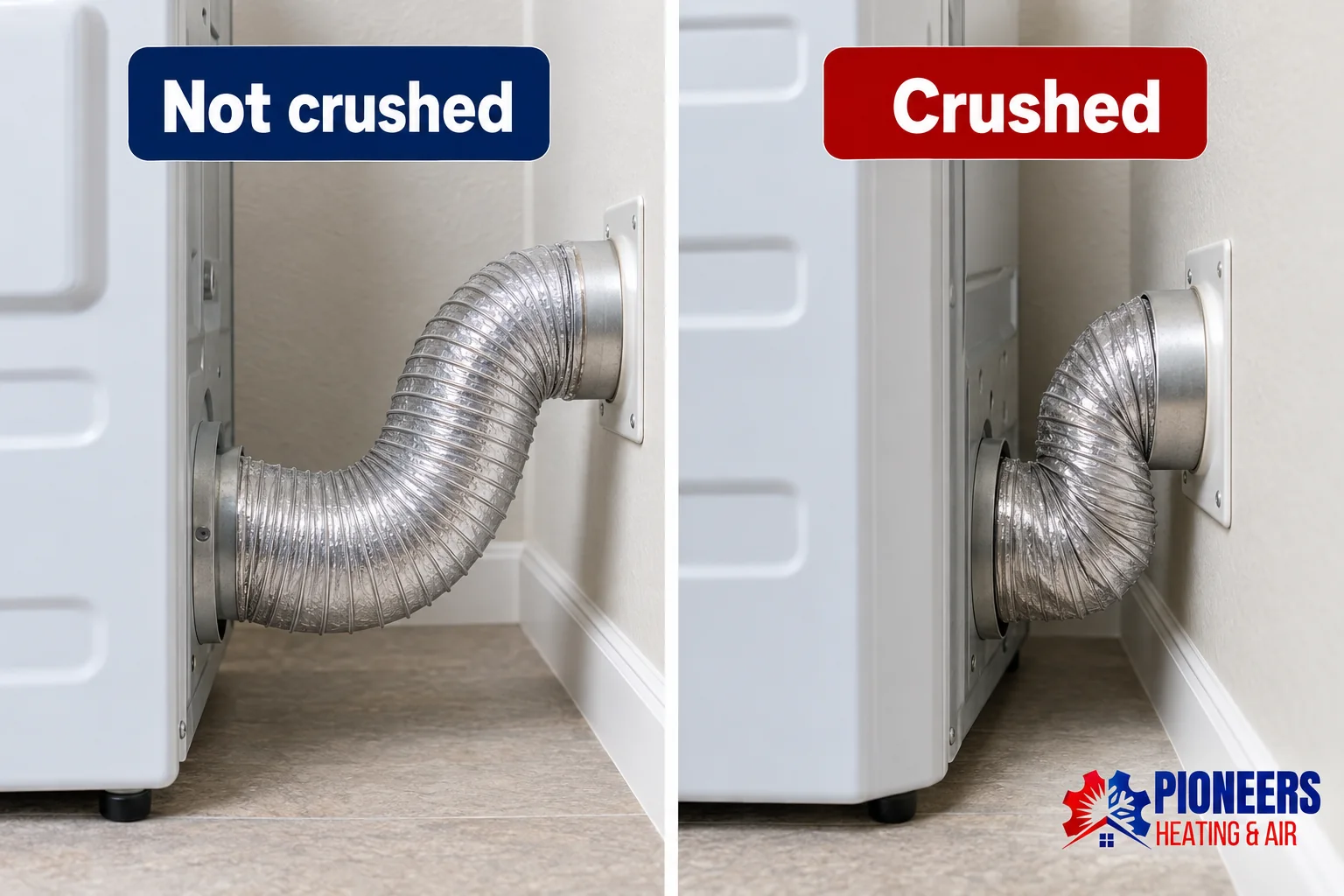
Look at the visible connection. If you can see behind the dryer without moving it, look for a flattened, kinked, loose, or damaged duct. Lint around a joint is worth reporting. Don't push the dryer farther back to make space, since that can squeeze the connection.
Don't pull a heavy dryer away from the wall just to complete this check. A tight closet or a connection you can't see is a reason to leave that part of the inspection to a professional.
Watch the outdoor hood during a normal cycle
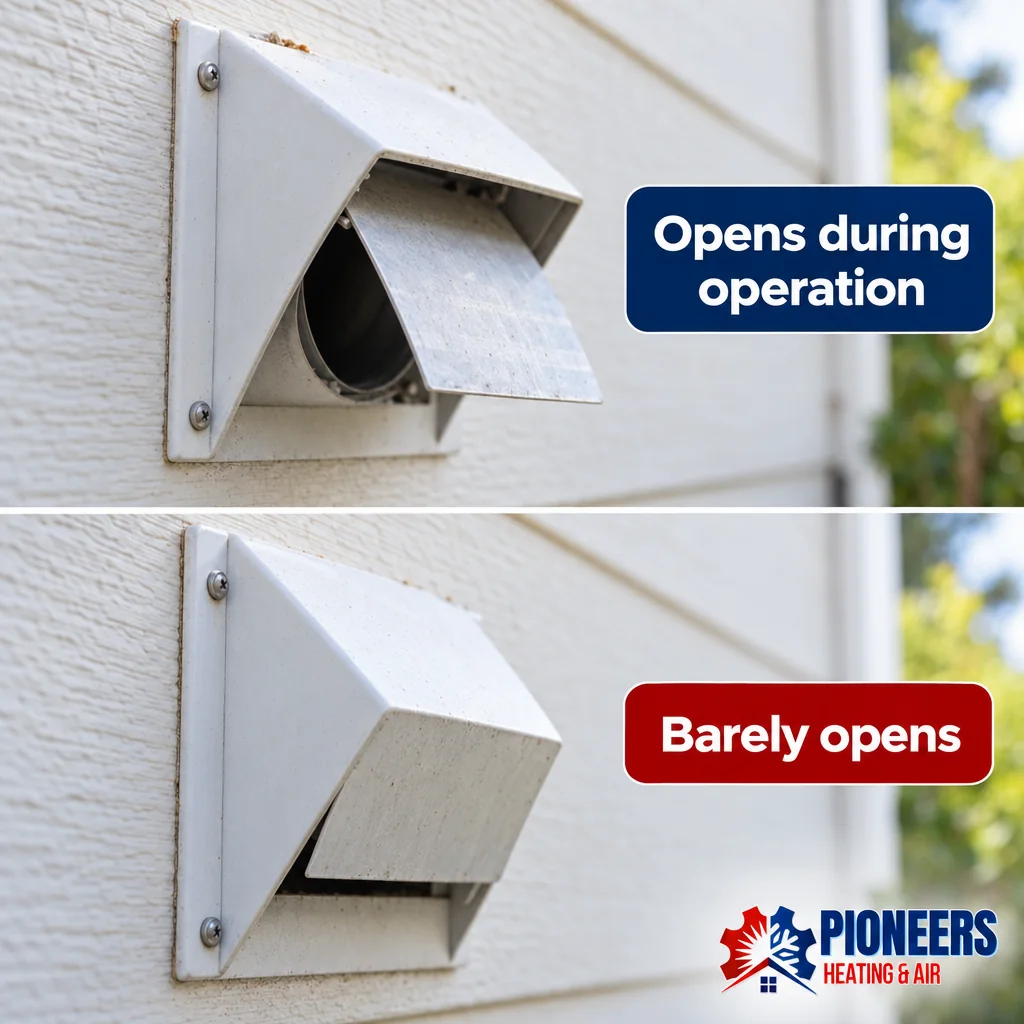
If there are no stop-use signs, observe a safely reachable outdoor hood while the dryer runs with its duct connected. The U.S. Fire Administration says the outdoor vent covering should open during operation.
A flap that barely opens, weak exhaust, or lint collecting at the hood points toward a need for inspection. Note whether nearby plants cover the outlet. Don't put your fingers or tools inside it.
An open flap doesn't prove the whole duct is clear. This is a clue, not an airflow test. Skip this check if the outlet requires a ladder or roof access.
Choose cleaning, vent repair, or appliance service
The next step depends on whether the exhaust path is dirty, damaged, or clear. Those conditions call for different work.
Cleaning fits a lint restriction
When lint buildup restricts an otherwise intact exhaust path, professional dryer vent cleaning is the relevant service. Pioneers Heating & Air offers this work in Pasadena for homes and small businesses. Describe the drying change and any weak exhaust you noticed so the service request focuses on the dryer vent.
Repair fits a damaged path
A crushed connector, separated joint, or damaged duct needs more than lint removal. Cleaning can't restore the shape of a flattened section or reconnect a loose joint. Dryer vent repair addresses those physical problems. Some vents need both cleaning and repair, so these aren't always competing choices.
Appliance service fits a fault inside the dryer
If an inspection finds no vent restriction but drying stays poor, an appliance technician may need to check heat output, controls, or moisture sensing. A dryer that doesn't heat also needs appliance troubleshooting. Don't buy a heating part based only on damp clothes. The symptom doesn't identify a failed part.
A hidden vent route changes what you can check
For a Pasadena home with an interior laundry closet or a laundry area added later, the outdoor hood may not sit directly behind the dryer. The exhaust path can include sections you can't see from either end.
If the route crosses an attic or ends high on an exterior wall, a professional inspection is more useful than guessing from the visible connector alone. When arranging the visit, share where the dryer and outdoor hood are located, if you know. That helps explain the access needed without requiring you to trace hidden ductwork yourself.
More questions about slow drying
For dryer vent cleaning or repair in Pasadena, call Pioneers Heating & Air at (626) 217-0559. Describe the slow drying and what you found during the safe checks, then schedule service to have the exhaust path evaluated.