
For many Southern California homes, the heat pump vs furnace decision starts with a properly sized heat pump. It handles summer cooling and modest winter heating in one electric system. Keep a gas furnace in the comparison if your home already has a suitable gas setup, you prefer furnace warmth, or electrical upgrades would make a heat pump less practical.
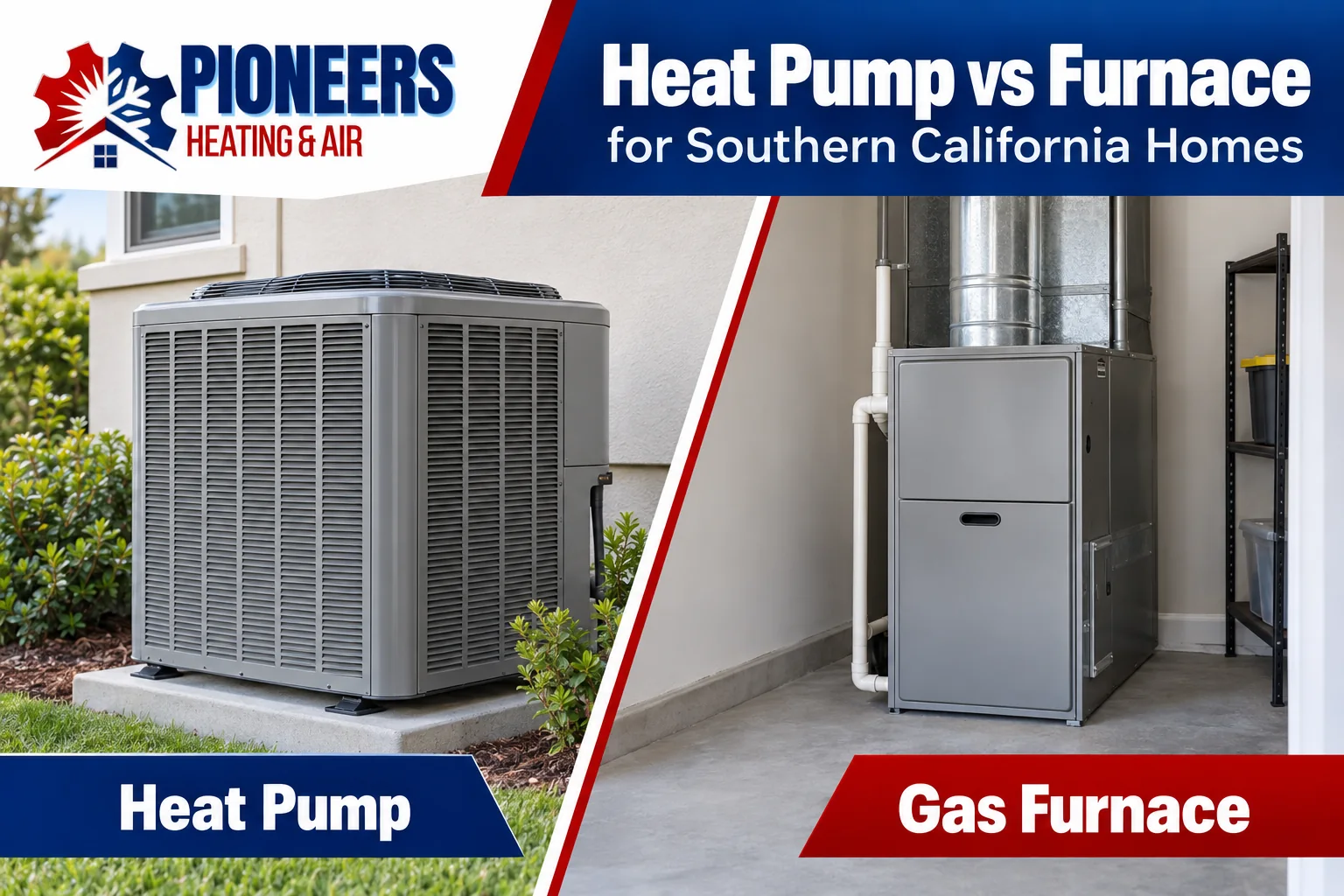
How the two systems warm your home
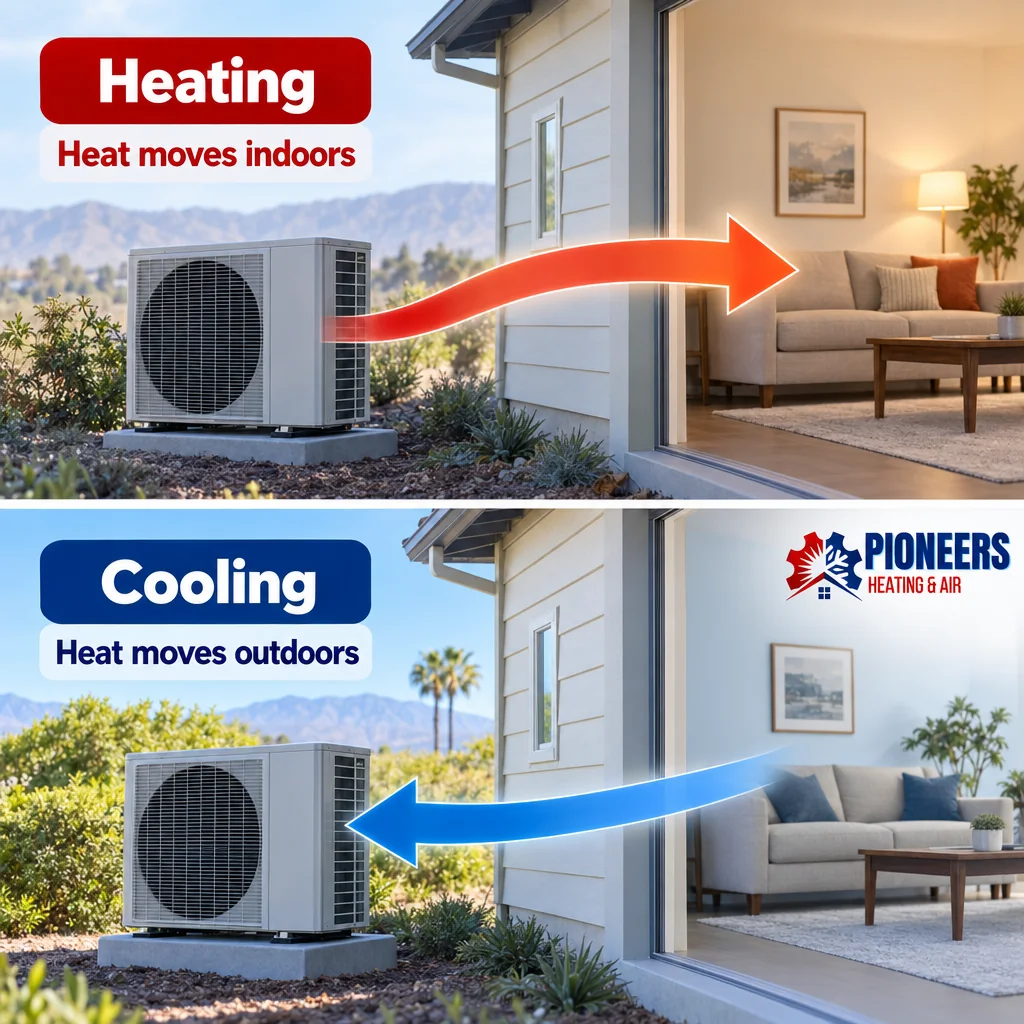
Here, heat pump means an air-source system, and furnace means a gas furnace. A heat pump moves heat from outdoor air into your home in heating mode. In cooling mode, it moves heat outdoors. A gas furnace burns fuel to create heat and sends warmed air through ducts. It needs separate AC for cooling.
The U.S. Department of Energy describes heat pumps as an energy-efficient alternative to furnaces and air conditioners in moderate climates.
Heat pump vs furnace for your replacement plan
When both heating and cooling equipment need replacement, compare a heat pump plan with a furnace and AC plan. A furnace-only quote won't show the cost of replacing both systems. The useful comparison covers the same rooms and the same heating and cooling goals.
If only the furnace needs replacement, the working AC matters. A furnace installation plan should explain whether the cooling equipment can stay. Don't assume either choice can reuse every existing part. The equipment and controls need a compatibility check.
An electrical upgrade is part of the project cost, not proof that a heat pump is the wrong choice. Compare that added work with keeping gas heat and any needed AC replacement. If the electrical work isn't practical for your budget, a furnace can remain a reasonable option.
Comfort matters, too. Tell the installer whether your main concern is uneven room temperatures, how the warm air feels, or how the system runs during the day. Those preferences help define the goal. They don't replace sizing and equipment checks.
Check how the equipment will fit your Pasadena home
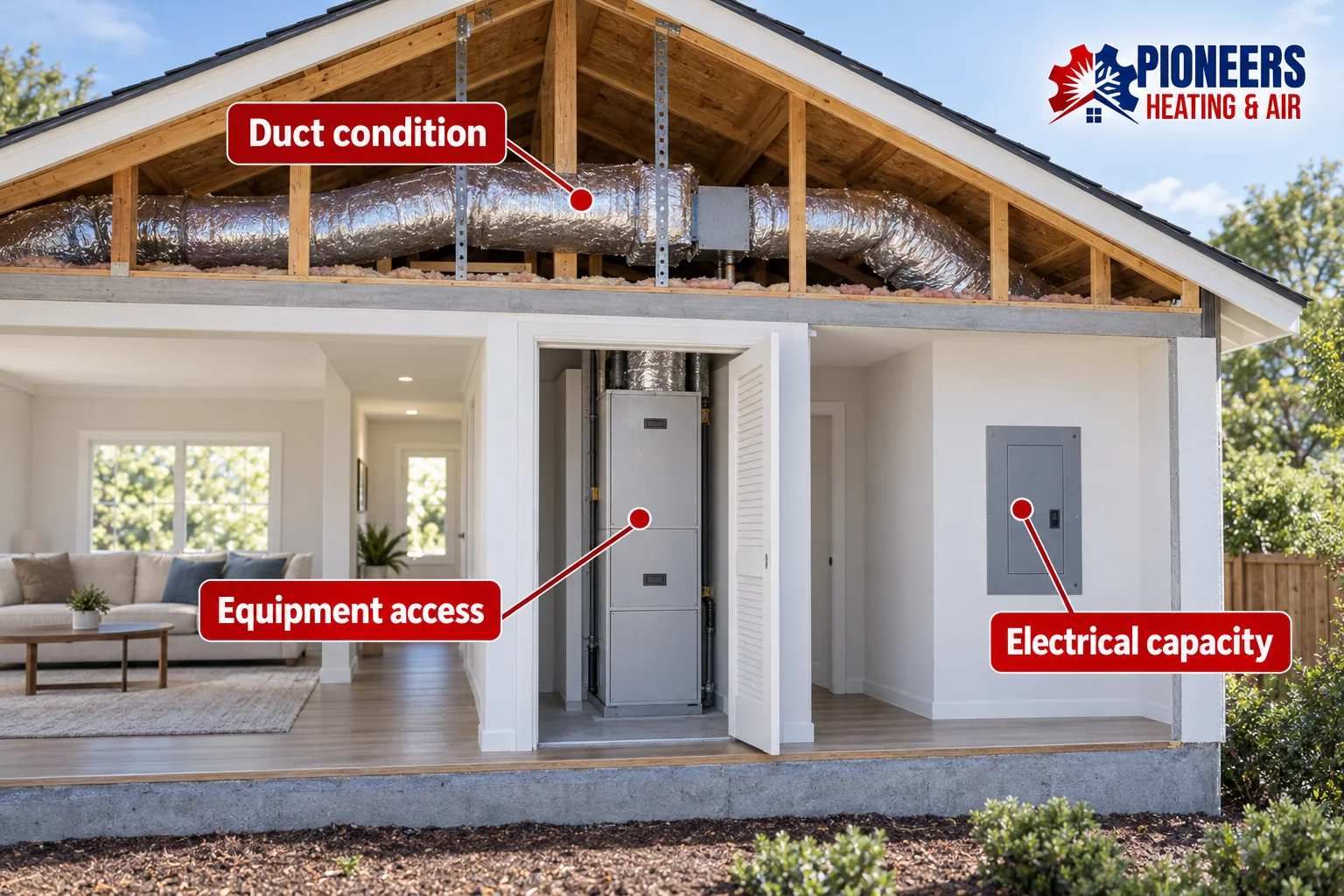
An attic or closet location changes what the installation has to fit. The plan needs space for the selected indoor equipment, access for service, and a route to remove the old unit and bring in the new one. Don't assume the new cabinet will fit because the old one did.
Existing ducts need a condition and airflow check, especially if they're older. The review should identify which ducts can stay and which need work. A new heating system alone doesn't settle whether each room can get enough air.
The electrical review should use the chosen heat pump's requirements and the home's available capacity. The home's age or the panel's appearance can't settle that question. Any needed circuit or panel changes belong in the project scope.
A heat pump plan also needs an outdoor equipment location. It should show where the unit would sit, how it can be reached for service, and what work is needed to connect it to the indoor system.
What a useful replacement estimate includes
-
A size based on your home. ENERGY STAR says contractors should verify sizing with a Manual J load calculation. That's a way to estimate how much heating and cooling the home needs. Insulation and planned changes to the house matter. Copying the old unit's size isn't a substitute.
-
A clear list of the work. The estimate should name the equipment being removed, the equipment staying, and the work required for the proposed setup. Duct repairs, electrical work, and controls should be clear. A heat pump installation estimate needs to cover the complete proposed system, not just the outdoor unit.
-
Required work separated from optional upgrades. Each estimate should distinguish what the selected system needs to run properly from additions you can choose or defer. If an option costs more, the contractor should tie that difference to the equipment or work included. That gives you a reason to choose beyond a brand name.
-
Final testing and a handoff. The written plan should include testing of the equipment and controls. Before the job is finished, the installer should show you how to switch modes, change the temperature, and follow the maintenance directions for the selected system.
Before the assessment, gather recent electric and gas bills and any records that identify the current equipment. Clear access to the indoor unit, outdoor unit, and electrical panel where you can do so safely. You don't need to climb into an attic or remove equipment covers to prepare.
Compare running costs using your rates
An efficient heat pump isn't a promise of a lower bill than gas heat. Running cost depends on electric and gas rates, the selected equipment, the home's heating and cooling needs, and how you use the thermostat. A label rating alone can't settle the comparison.
Compare projected annual heating and cooling costs for each complete setup using the same household needs. Keep that projection separate from installation costs. If a savings estimate doesn't show the rates and energy use behind it, you can't tell whether it applies to your home.
Questions before you choose
Pioneers Heating & Air installs heat pumps and furnaces in Pasadena. Call (626) 217-0559 to book an installation assessment and compare options for your home's heating and cooling needs.