Why Upstairs Rooms Stay Hot With AC
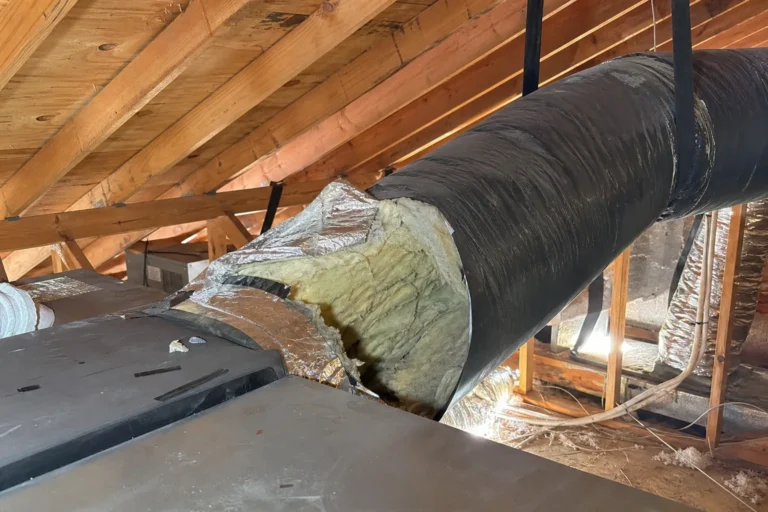
Hot upstairs rooms can point to attic heat, air leaks, duct losses, or airflow trouble instead of an AC problem...
Commercial HVAC Troubleshooting & Diagnostics In Pasadena by Pioneers Heating & Air find issues fast, reduce downtime, restore comfort, request service today
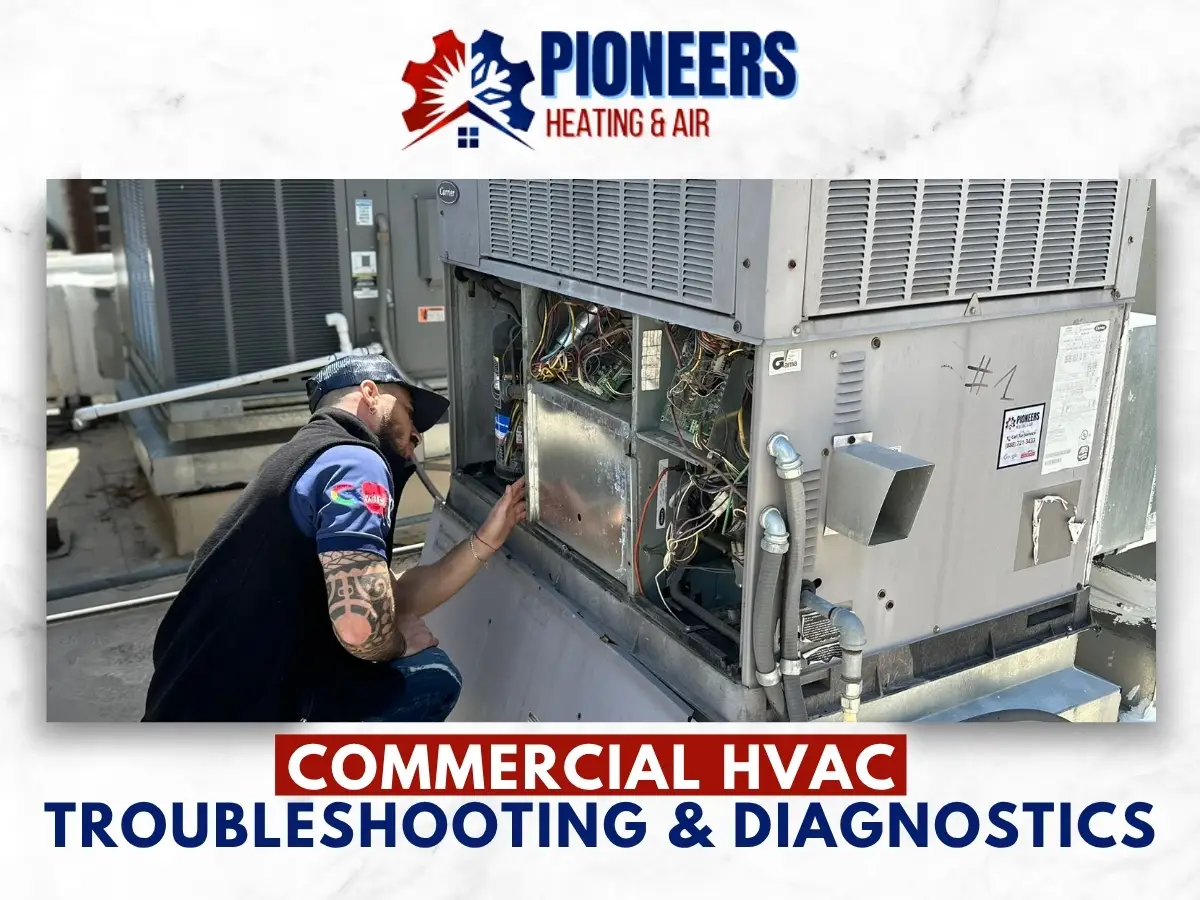
Commercial HVAC Troubleshooting & Diagnostics in Pasadena keeps your building comfortable by finding the real cause of HVAC problems, not just the symptoms. Pioneers Heating & Air handles Commercial HVAC Troubleshooting & Diagnostics in Pasadena with clear testing, smart isolation, and practical repair recommendations. If your system is short cycling, not cooling, or acting strange, we can get you answers fast and reduce downtime.
Need Help? Call Pioneers Heating & Air near you
Commercial HVAC Troubleshooting & Diagnostics is how you stop guessing and start fixing. Commercial HVAC systems fail in frustrating ways. A rooftop unit can run but not cool. A split system can cool one zone and ignore another. A thermostat can look fine while the equipment ignores it like a teenager asked to do chores.
Troubleshooting and diagnostics is the structured process of testing your equipment, controls, and airflow so the problem is confirmed before repairs begin. That matters for cost control, comfort, and avoiding repeat call backs.
At Pioneers Heating & Air, we use a step by step approach that fits real commercial sites in Pasadena, CA in California. That includes offices, retail spaces, restaurants, medical buildings, churches, and light industrial spaces. Different buildings stress equipment in different ways, so our diagnostic approach stays consistent even when the site is not.

You likely need diagnostics when comfort or reliability suddenly changes. Most commercial HVAC issues give warning signs. The earlier you act, the less disruption you deal with.
Do you have staff bringing you the same comfort complaint every day? Are customers mentioning it? That is usually your sign that a deeper issue is brewing. If you need fast triage, consider pairing diagnostics with Commercial Emergency HVAC Services when conditions are urgent.
Many commercial HVAC problems come from a few repeat causes. Commercial equipment is built to run hard, but it still depends on basics. Airflow, refrigerant circuits, controls, and power must all stay within normal ranges. When any of those drift, performance drops.
Some of these are simple. Some require deeper testing. The key is not guessing which one it is. When findings point to a corrective fix, we may recommend Commercial HVAC System Repair to restore stable operation.
Our diagnostic visit focuses on finding the why, not just the what. A proper diagnostic call is organized, documented, and based on measurements. We look for what changed and why it changed.
If your building has multiple units, we can also help you decide whether the issue is isolated or part of a pattern. Sometimes the problem is not Unit 3 is bad. Sometimes it is the building is starving units for airflow because returns are blocked. In those cases, a follow up ductwork inspection can help confirm building wide constraints.
We start with questions that quickly narrow the problem. Good diagnostics begins with listening. The answers help us choose the right tests, not waste your time.
Yes, we will still measure and verify. But those details can point directly to economizer issues, airflow imbalance, or control problems that do not show up in a quick glance. If zoning behavior is part of the story, Commercial HVAC Control & Zoning Setup may be the right next step after diagnostics.
Rooftop units, split systems, and mini splits each fail in different ways. Commercial HVAC is not one size fits all. Diagnostics changes depending on the type of equipment and controls.
Rooftop units often fail at controls, airflow, or economizer operation. Packaged rooftop units have a lot going on in one box. They handle cooling, heating, ventilation, and sometimes economizing. Many problems trace back to a single component that interrupts the whole sequence. For ongoing care, Commercial Rooftop Unit Services can help reduce repeat issues.
Need Help? Call for Heating & Air Services
Split systems often show problems in refrigerant performance or indoor airflow. Split systems depend on proper refrigerant charge, clean coils, and good airflow. A small change in airflow can look like a big refrigeration issue, so we confirm both. If the equipment is a commercial split system, we can coordinate next steps through Commercial Split System Services.
Mini splits and VRF style systems often require careful control checks. Ductless and VRF style systems can be efficient, but they rely heavily on electronics and sensors. If one part loses communication, you can get error codes, poor performance, or total shutdown. If your building uses these systems, Commercial Mini Split system support can follow once diagnostics confirms the cause.
If you have multiple system types on one property, we help you prioritize what impacts comfort and uptime first. A proactive plan like Commercial HVAC System Maintenance can also reduce surprise failures.
We use real measurements to confirm the diagnosis. There is a big difference between it might be low on refrigerant and the data shows the system is underfeeding the coil. Measurements keep the decision making clean.
If the issue is intermittent, we may recommend monitoring steps that make the next visit more effective. Intermittent problems love to hide when a technician shows up. They are shy like that. If you need a broader baseline first, Commercial HVAC Inspection & Tune-Up can help establish normal operation.
Many no cooling calls are actually airflow or control problems. If the building is warm, most people assume refrigerant is low. Sometimes that is true. Many times it is not.
The fix depends on what the testing shows. Diagnostics keeps repairs targeted.
Short cycling is a warning sign that can cause bigger failures. Short cycling means the equipment starts and stops too often. That can wear out compressors, contactors, and motors faster than normal.
If your unit is short cycling, do not ignore it. Ask yourself a simple question how long has it been doing this, and has anything changed in the building use. When equipment age and condition are part of the equation, we can discuss Commercial HVAC System Replacement after diagnostics.
Heating issues in commercial spaces often come down to safeties and ignition. In Pasadena, California, heating still matters. Cold mornings can expose problems that stayed hidden during mild weather. When heating is the priority, we can follow diagnostics with Commercial Heating Services.
For gas heat on packaged units, we often diagnose the following. If you need a repair path after findings are confirmed, Commercial Heating Repair is often the next step.
For heat pumps, we often diagnose the following. For non commercial locations or mixed sites, Heat Pump Repair may apply depending on the system type.
Heating issues are not just comfort problems. They can also cause nuisance shutdowns that impact your whole system.
Water leaks and drain overflows need quick attention to avoid building damage. If you see water near an air handler or dripping from a ceiling, stop and investigate. Cooling systems remove moisture from air, so drains must stay clear. If ductwork and returns are involved, Commercial Air Duct Repair may be part of the solution after we confirm the source.
If you spot water, ask is the system still running, and is the leak getting worse? If yes, it is time to call.
Pioneers Heating & Air
Some problems are electrical and should not be handled by untrained staff. Commercial HVAC uses high voltage power and stored energy in capacitors. A wrong move can injure someone or damage equipment. If you need immediate help, Emergency HVAC Services may be appropriate based on conditions.
You can still do safe basics like checking thermostat settings and replacing filters when your maintenance plan allows it. But leave electrical diagnosis and internal cabinet work to trained techs. For general background on high voltage, see high voltage.
We can often restore operation the same visit, or we can provide a clear repair plan. Diagnostics should lead to decisions. After testing, we explain what is happening in plain language and what options make sense.
If a part is failing but not fully dead yet, we will say that clearly. That helps you plan around tenant needs and business hours. If replacement becomes the best option, we can review Commercial AC Replacement for cooling equipment impacted by repeated failures.
The time needed depends on access, symptoms, and whether the problem is intermittent. Many diagnostic visits can identify the issue in a single appointment. Some take longer when the problem only shows up under certain conditions. A steady program like HVAC Maintenance can reduce the number of urgent troubleshooting calls over time.
If you manage a site, quick access is the simplest way to speed up service. A clear path to the thermostat, electrical panels, and mechanical rooms helps too.
You can prep your site in a few minutes to help the visit go smoother. A little preparation can save time and reduce disruption. If you want a preventive plan after the immediate issue is handled, Commercial HVAC System Maintenance is a good follow up.
If you are a tenant, you can still help by sharing detailed symptoms and access info for your suite.
After diagnostics and repairs, small habits help keep systems stable. Commercial HVAC problems often return when filters stay dirty or vents get blocked by furniture and inventory. A few simple routines help a lot. If indoor air feels stale after issues are resolved, Ventilation Upgrades can be worth considering.
If your business has a maintenance team, we can align with your staff on what to monitor and what should trigger a service call. For background on economizers often discussed in commercial diagnostics, see economizer.
Pasadena conditions can push commercial HVAC hard during warm spells and busy hours. Pasadena, CA sites often deal with warm afternoons, busy retail traffic, and older building layouts. Those factors can create comfort swings and higher load during peak hours. If recurring issues suggest aging equipment, we can compare options for Commercial HVAC System Replacement after we confirm what is failing.
If your building always struggles after 2 pm, tell us. That clue helps us focus on airflow, economizer settings, sun load, and control scheduling.
This quick table shows what symptoms often point to during diagnostics. These are not final answers, but they help explain why testing matters. If symptoms match a recurring pattern, a scheduled HVAC Inspection can help you plan instead of reacting.
| What you notice | What it can point to |
|---|---|
| Unit runs but no cooling | Airflow restriction, control issue, refrigerant problem, compressor issue |
| Short cycling | Sensor problem, airflow issue, pressure switch trips, oversized equipment |
| Water near unit | Drain clog, frozen coil thaw, cracked pan, pump failure |
| Hot and cold spots | Damper issue, duct problem, zoning control issue, return air limits |
| Breaker trips | Motor failure, shorted wiring, failing capacitor, electrical supply issue |
If you tell us the symptom and when it happens, we can usually narrow it down quickly.
Pioneers Heating & Air focuses on clear communication and practical next steps. You need answers you can act on. We explain what we found, what caused it, and what your system needs to get back to stable operation. If you want to learn more about our team, visit About Us.
Do you want the fastest path back to comfort, or are you trying to plan repairs around operations? Tell us your priority and we will work within it.
These services often pair well with commercial diagnostics and follow up repairs in California and CA.
Commercial HVAC Troubleshooting & Diagnostics in Pasadena starts with a simple call. If your system is acting up, do not wait for a full shutdown during a busy day. Pioneers Heating & Air is ready to help with Commercial HVAC Troubleshooting & Diagnostics in Pasadena for rooftop units, split systems, and multi zone setups. Call (626) 217-0559 or use the Contact Us page to request service.
Hot upstairs rooms can point to attic heat, air leaks, duct losses, or airflow trouble instead of an AC problem...
Uneven room temperatures, weak airflow, dust near vents, and long AC cycles can point to leaky attic ducts. Check the...
AC cleaning removes buildup from key cooling parts. Learn the signs that point to cleaning, routine maintenance, or a repair...