
If your AC runs all day but not cooling the house, start with the thermostat, air filter, vents, and outdoor unit. Those checks can reveal an easy airflow problem. If air stays warm, airflow is weak, ice or water appears, or a breaker trips, turn the system off and arrange professional testing. A running unit is not proof that it is removing enough heat.
On a hot Pasadena afternoon, the gap may show up first in an upstairs room, an addition, a room over a garage, or a room far from the thermostat. The pattern matters. Does every room feel warm, or only one part of the home? Does the system cool in the morning but lose ground later? Those clues help narrow down the next step.
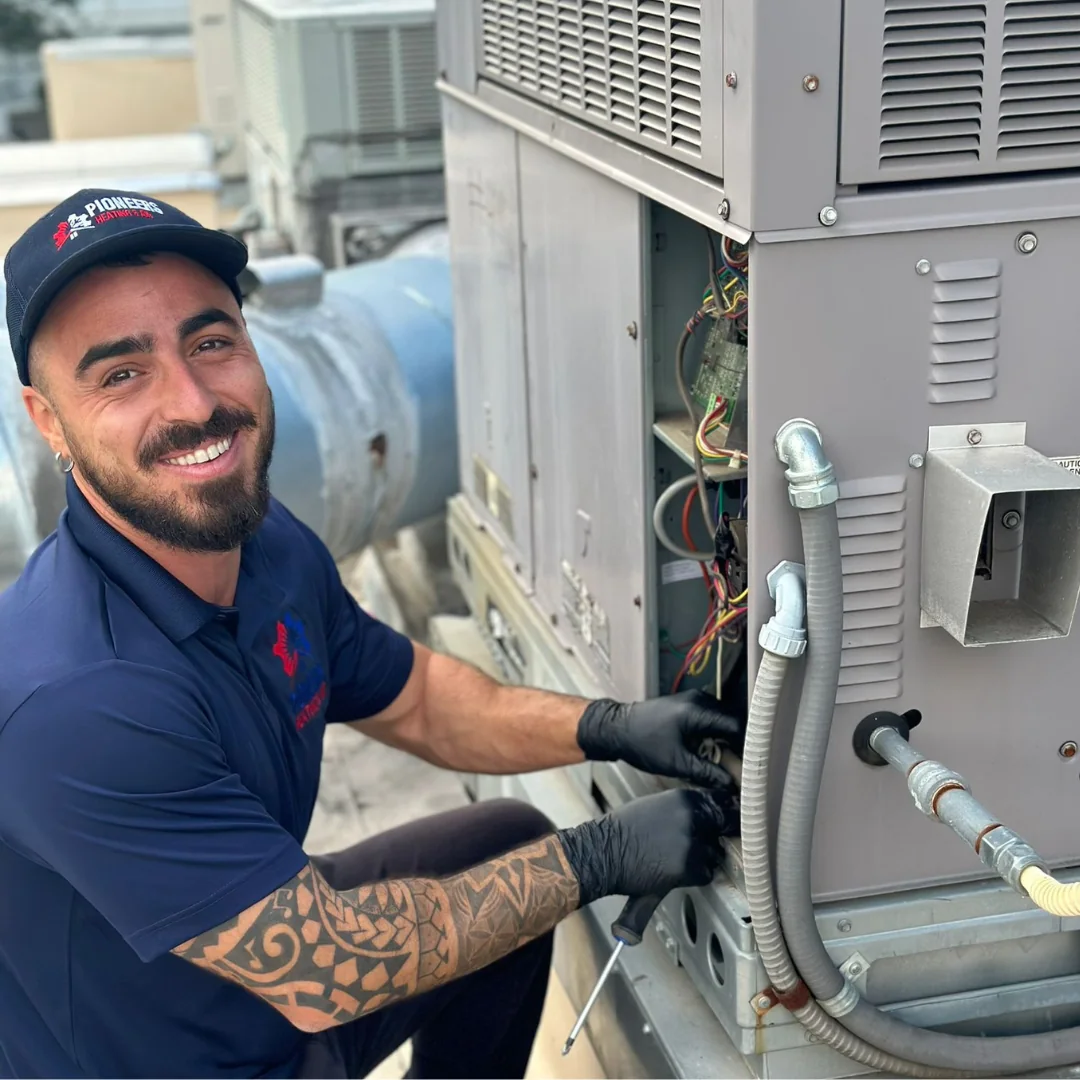
Start with four safe checks
Take a few minutes to check the simple items before changing settings or opening equipment panels.
- Thermostat Check that it is set to Cool and that the set temperature is below the room temperature. Set the fan to Auto. A fan set to On can keep blowing between cooling cycles, which may feel like warm air.
- Filter Look at the return-air filter. If it is gray, packed with dust, or hard to see through, replace it with the correct size and type for your system. A filter that is too restrictive can also limit airflow.
- Vents and returns Open supply vents in the rooms you use. Keep return grilles clear of furniture, boxes, and curtains. Closing many vents does not force more cool air where you want it. It can restrict system airflow.
- Outdoor unit With the power left on, look around the outside unit. Remove loose leaves, grass clippings, and other debris from the area around it. Do not spray inside it, bend the fins, or remove its cover.
Check the filter each month during the cooling season. ENERGY STAR’s maintenance checklist also calls for monthly filter inspection, cleaning, or replacement. It notes that airflow problems can reduce efficiency by up to 15 percent and dirty coils can make a system run longer.
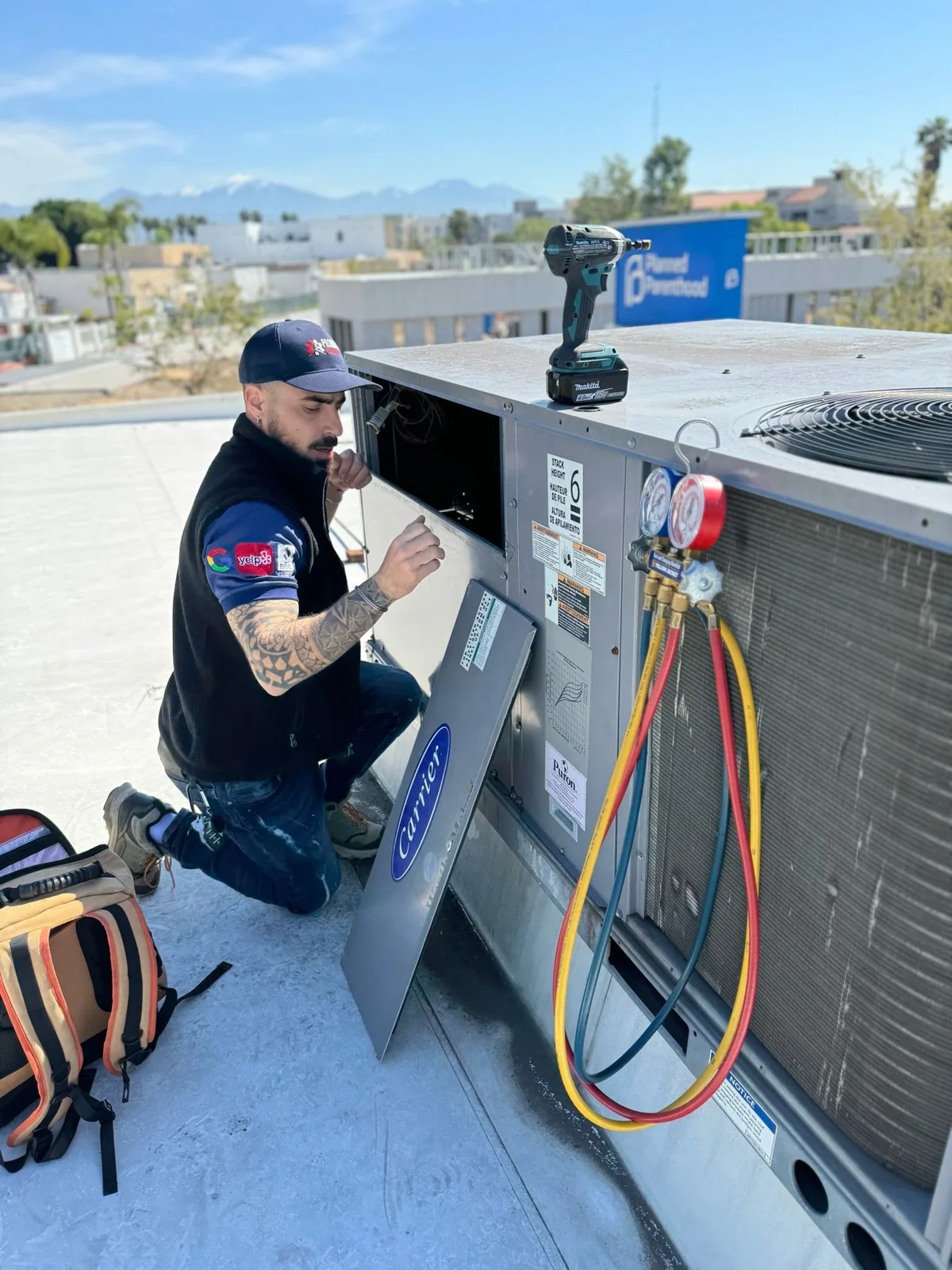
Notice what the air and rooms are telling you
A few details can help separate a whole-house cooling problem from a room-by-room comfort problem. You do not need to take apart the AC to make these observations.
Warm air comes from most supply vents
If the indoor fan is running but air from many vents feels warm or only slightly cool, the system may have a problem with heat removal, refrigerant, controls, or the outdoor unit. A dirty indoor or outdoor coil can also limit cooling. The U.S. Department of Energy lists dirty filters and coils, incorrect refrigerant charge, electrical controls, and airflow issues among common AC problem areas.
Leave the thermostat at a steady setting while you arrange service. Repeatedly lowering it will not make the unit cool faster. It can simply keep the system calling for cooling longer.
Air is cool, but the flow is weak
Weak airflow points toward a blocked filter, a dirty coil, a blower issue, or trouble moving air through ducts. Compare a few vents in different rooms. If airflow is weak everywhere, the indoor side of the system needs attention. If it is strong near the indoor unit but poor in far rooms, duct problems, disconnected ducts, or room layout may be involved.
Do not block return grilles to reduce noise or drafts. The system needs a clear path to pull household air back for cooling.
Only certain rooms stay hot
A single warm room does not always mean the AC has failed. Sun through windows, a hot garage below, an attic above, poor insulation, or long duct runs can add more heat than that room receives in cooling. A recent addition or remodel can also change the cooling load. Check whether the room’s vent is open and whether its door is usually closed. Then report the room pattern during a service visit.
The unit cools early, then cannot keep up later
Peak outdoor heat, direct sun, indoor cooking, and more people in the home can raise the cooling load. If the system struggles only during the hottest part of the day, it still deserves a check if it did not used to behave this way. A technician can determine whether maintenance, duct losses, equipment condition, thermostat location, or system capacity is part of the problem. Capacity cannot be judged by a single hot afternoon alone.
Know when to turn the AC off
Some signs call for a pause rather than more runtime. Turn the cooling system off at the thermostat if you see ice on refrigerant lines or the indoor equipment, hear repeated breaker trips, smell burning, see smoke, or find a growing amount of water near the indoor unit.
- Ice can happen when airflow is too low or when the cooling system has another fault. Running a frozen system can cause more trouble. Set the system to Off and call for help.
- Water may come from a clogged condensate drain or another drainage issue. Keep belongings away from the water and avoid electrical parts nearby.
- A breaker that trips needs attention. Do not keep resetting it to make the AC run.
- Burning smell, smoke, or fire requires immediate action. Leave the area and call 911 first if there is fire or smoke.
A little water at an outdoor unit can be normal condensation. Water around the indoor unit, especially if it spreads, is different and should be checked.
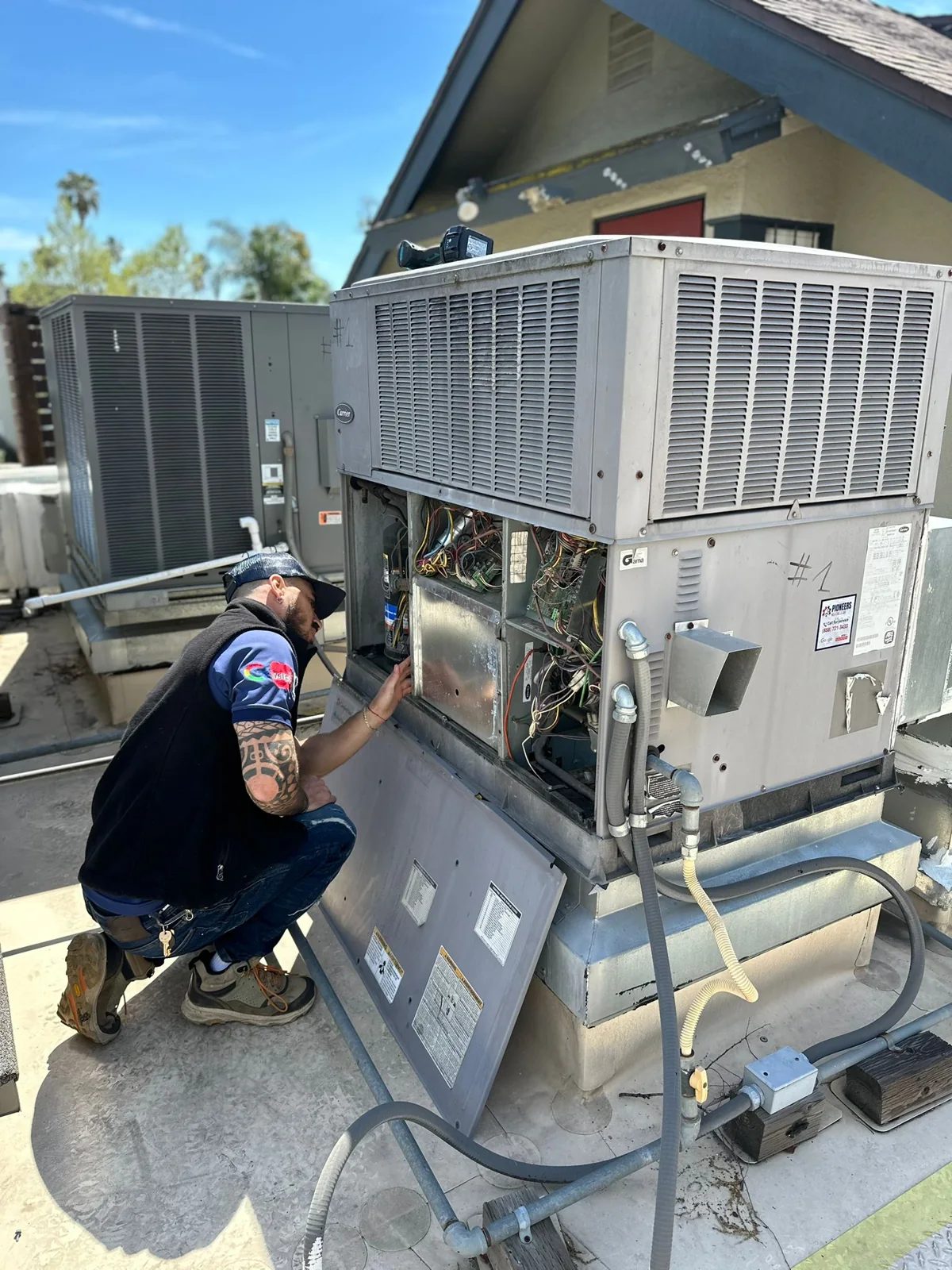
Why a filter change may not solve an AC that runs nonstop
A clean filter is worth doing, but it cannot fix every cause. The cooling process relies on indoor airflow, clean coils, correct controls, a working outdoor unit, intact ducts, and the right refrigerant charge. A fault in any part can leave the AC running without bringing the house to the thermostat setting.
Refrigerant is not a homeowner maintenance item. If testing finds a leak, the U.S. Environmental Protection Agency says technicians should locate and repair the leak instead of repeatedly adding refrigerant. The EPA also says Section 608 certification is required to recharge stationary air conditioning equipment.
That is why a technician needs to test rather than guess. Refrigerant readings alone do not tell the full story. Equipment condition, airflow, coil cleanliness, electrical parts, drain operation, duct delivery, and thermostat controls may all need inspection.
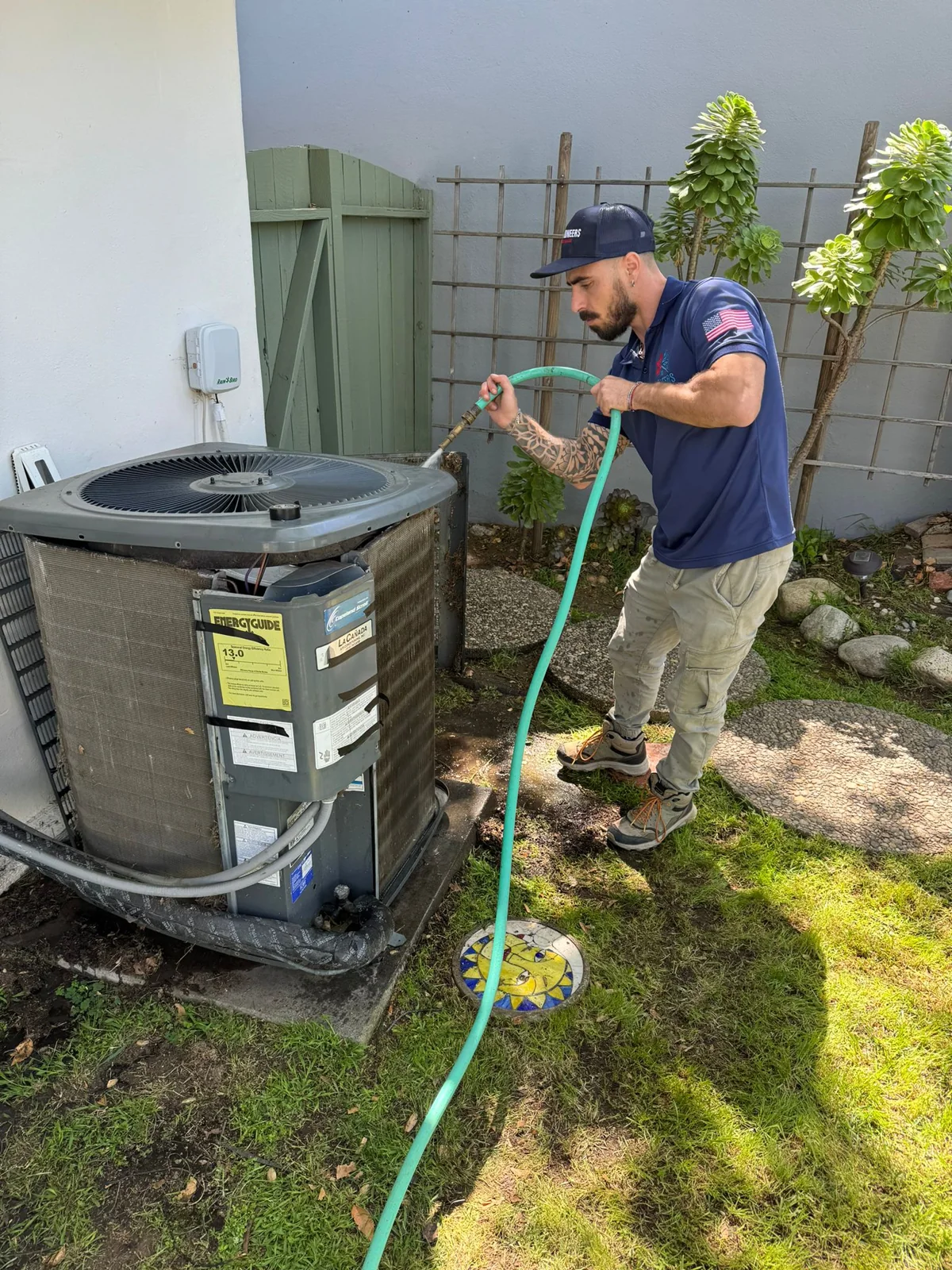
Prepare for an AC troubleshooting visit
A few notes can make the visit more useful and help you get clear repair or upgrade options.
- Write down when the trouble began and whether it happens all day or only later in the afternoon.
- Note which rooms are warm, which vents have weak air, and whether the air feels warm or simply does not move well.
- Tell the technician about ice, water, unusual sounds, odors, or breaker trips.
- Clear a path to the thermostat, indoor equipment, and outdoor unit.
- Share any recent filter change, remodel, roof work, or changes to the home that occurred before the problem started.
For persistent no-cool air, weak airflow, water near the indoor unit, thermostat trouble, or breaker trips, book AC Repair with Pioneers Heating & Air. Their listed service process includes thermostat and control checks, airflow and temperature testing, and indoor and outdoor unit inspection before repair options are explained.
Keep a repeat problem from catching you off guard
If the AC catches up after a filter change but runs longer than usual, do not assume the concern is gone. Watch the next several cooling cycles. Note whether airflow returns to normal and whether rooms reach the set temperature. If the same symptom returns, schedule an inspection before the next period of heavy use.
Annual checkups before the cooling season give a contractor a chance to inspect parts that a homeowner cannot safely check. They also provide a time to ask about dirty coils, drainage, duct condition, and thermostat placement. Routine service does not rule out every failure, but it can catch maintenance needs before a hot day makes them obvious.
Frequently asked questions
Should I set the thermostat much lower to cool the house faster?
No. Most central AC systems cool at the same rate regardless of how far you lower the set temperature. Choose the temperature you want and give the system time to respond. A large setback may make it run longer after the home is already uncomfortable.
Can closing vents help cool the rooms I use most?
Usually, no. Central systems are designed to move a set amount of air. Closing several supply vents can reduce airflow and may worsen comfort. Keep vents open unless a qualified technician has given your system a specific adjustment plan.
Why does my AC run when the outdoor unit is not running?
The indoor blower may be moving air even when the cooling equipment is not operating. Check whether the thermostat fan setting is On rather than Auto. If it is set to Auto and the outdoor unit still does not start during a cooling call, a technician should inspect the controls and equipment.
What information should I have ready before I call?
Have the thermostat setting, the indoor temperature if available, the age or model number if you can find it, and a short description of the symptom. Photos of ice or water can also help, but do not open panels or touch electrical wiring to get them.
If your AC runs all day but the house still feels warm, call Pioneers Heating & Air at (626) 217-0559 for residential or small commercial AC troubleshooting in the Greater Los Angeles area. Describe the airflow, room pattern, and any ice, water, or breaker issue so the team can help you take the next step.