Why Upstairs Rooms Stay Hot With AC
Hot upstairs rooms can point to attic heat, air leaks, duct losses, or airflow trouble instead of an AC problem...
Pioneers Heating & Air delivers Batt & Roll Insulation Installation In Pasadena for attic and wall comfort, energy savings, clean install, and fast quotes today

Batt & Roll Insulation Installation that helps your home feel steadier year round in Pasadena, CA.
Pioneers Heating & Air handles Batt & Roll Insulation Installation in Pasadena with clean prep, careful fitting, and the right coverage for your space, so you get practical comfort gains without a messy project.
Need Help? Call Pioneers Heating & Air near you
Batt and roll insulation adds comfort by reducing heat gain and heat loss. Batt and roll insulation is a common fiberglass insulation product that comes in pre cut batts or long rolls. It sits between framing members in attics, floors, and walls. The goal is simple, keep indoor air closer to the temperature you set.
In Pasadena, CA, that can mean less heat pushing into bedrooms on hot afternoons and less warm air leaking out during cooler nights. Your HVAC system still does the work, but insulation helps it stop fighting a constant uphill battle. If you are also chasing comfort with system adjustments, an HVAC inspection can help confirm what is driving the issue.
Do some rooms feel harder to heat or cool than others. Does your system run longer than you expect. Insulation is often part of the answer.

Batts and rolls work best when they fit snugly without being crushed. Insulation needs full, even contact to perform well. If it is compressed, bunched up, or left with gaps, it loses effectiveness. If it is installed with the wrong facing direction, it can trap moisture in the wrong place.
We focus on fit, coverage, and clean edges around penetrations. That is where real performance is won or lost. When comfort problems are tied to how air moves through the home, airflow balancing may also be part of the solution.
You may need new insulation when comfort is uneven or energy use jumps. Insulation problems often show up as comfort problems first. You might notice hot upstairs rooms, drafty areas, or big temperature swings from morning to afternoon.
If you have one or two of these, it is worth a look. If you have several, insulation may be overdue. If you suspect hidden air leaks are part of the picture, attic air sealing is often the next conversation.
Insulation does not have to disappear to stop helping. It can settle, get disturbed by storage, or be pushed aside during electrical or plumbing work. It can also be installed unevenly from the start.
A quick attic look sometimes tells the whole story. If the insulation looks uneven with bald spots, your home will feel it. When the material is damaged or contaminated, attic insulation removal may be needed before adding new coverage.
Poor coverage, air leaks, and moisture are common causes behind insulation trouble. Most insulation issues come from a few repeat offenders. Fixing these is usually more valuable than simply adding more material on top.
We look for the why, not just the what. Otherwise, the same problem comes back. If the attic needs a full reset, attic insulation replacement can be the cleanest path forward.
Insulation slows heat transfer, but air leaks can carry heat and dust right past it. Many attics have small openings that add up to a lot of leakage. We will point out common leak spots we see, and we will explain what matters most first.
Would you rather add insulation everywhere or stop the leaks that are doing the most damage. Most homeowners pick the second option once they see it. If you want to make sure insulation and attic airflow are aligned, attic ventilation upgrades may also be worth discussing.
Our visit follows a clear plan so you know what to expect. We keep the process simple and transparent. You should know what we are doing in your home and why.
We also tell you what we cannot fix with insulation alone. If duct problems or airflow issues are driving the discomfort, we will say so. In many cases, a ductwork inspection helps confirm whether the distribution system is part of the problem.
Small misses can add up. A few inches of missing insulation at eaves, a big gap at the attic hatch, or loose batts around wiring can hurt results.
That is not fancy talk. It is just the difference between installed and installed right. If uneven temperatures are tied to how the system delivers air, duct sealing can be a key partner to insulation.
Need Help? Call for Heating & Air Services
Batt and roll insulation options depend on the space and the framing. Batt and roll products are not one size fits all. The right choice depends on where the insulation goes and how the cavity is built.
Batts are convenient for standard stud or joist spacing and for smaller areas that need precise pieces. Rolls are useful for longer runs where continuous coverage helps. When the attic needs a different approach, blown in insulation installation can be an alternative depending on access and goals.
Some batts come faced, often with kraft paper. Others are unfaced. The right choice depends on the assembly and where the vapor control layer should be.
If you have existing insulation, we also consider how new material will interact with it. Mixing faced layers the wrong way can cause moisture trouble. Nobody wants a science experiment growing in the attic. For background on fiberglass insulation, you can read fiberglass.
| Feature | Batts | Rolls |
|---|---|---|
| Best use | Stud and joist bays, smaller sections | Long runs in open areas |
| Cutting and fitting | Easy to fit around obstacles | Faster coverage, more trimming at ends |
| Common attic use | Spot repairs, edges, tight zones | Wide open attic floors |
| Common wall use | Standard wall cavities | Limited, mostly special cases |
We will recommend what fits your structure and access. The best product is the one that can be installed correctly in your home.
Installation is about clean prep, correct fit, and complete coverage. A good insulation install is not complicated, but it does require discipline. We treat your attic or work area like part of your home, not a dumping ground.
We also keep an eye on attic hatch insulation and coverage near edges. Those are common weak spots that can make your whole house feel less stable. If the goal is a full attic upgrade package, radiant barrier installation can be discussed for hot attic conditions in California.
Batt insulation in walls usually happens during remodels, repairs, or open wall conditions. If walls are closed, options depend on the construction and what access exists.
If you are planning a remodel, ask early about insulation. It is a lot easier to do right while the wall cavities are open. If the home comfort issue is also tied to equipment sizing or aging, HVAC replacement may be part of the longer term plan.
Most insulation installs are completed in a day, but access and prep can change the timeline. Many attic batt and roll projects move quickly once prep is done. The variables are usually about space and obstacles, not the insulation itself.
We will give you a realistic plan after we see the space. No guesswork, no surprises. If ducts are a big obstacle or a comfort driver, air duct repair can be coordinated separately.
The mess factor stays low when the work is organized. Fiberglass insulation is easier to manage when it is handled carefully. We keep materials contained and avoid dragging insulation through living areas.
If you have ever opened an old attic hatch and gotten a face full of dust, you know why this matters. If dust is a concern throughout the home, air duct cleaning may help after other attic work is complete.
Pioneers Heating & Air
Safety matters because attics hide hazards that are easy to miss. Insulation work puts you near wiring, sharp framing nails, and ceiling drywall that will not hold your weight. If you are thinking of doing it yourself, at least be aware of the real risks.
Also, watch your footing. Stepping between joists is a fast way to damage a ceiling. For additional general guidance on attic safety, review fall prevention information from NIOSH.
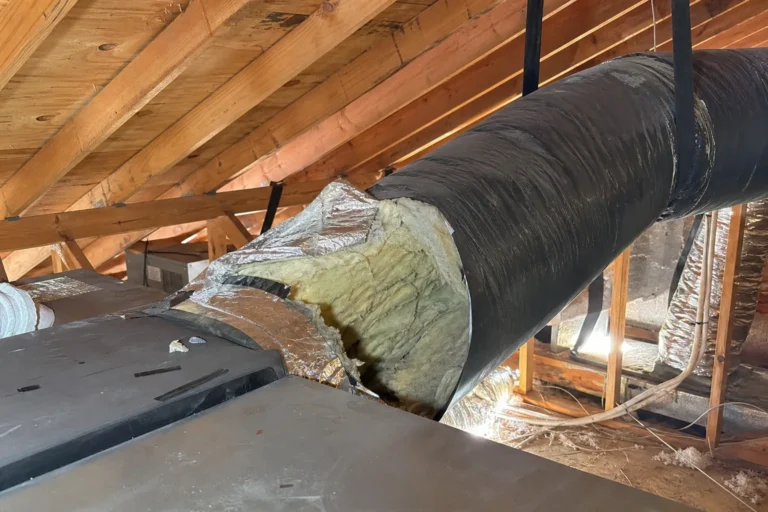
As an HVAC contractor, we pay attention to ductwork, disconnected runs, crushed flex duct, and supply leaks. Even great insulation cannot fully mask duct problems. If we see something that is hurting comfort, we will point it out and explain what it means.
When the equipment itself is struggling, HVAC troubleshooting and diagnostics can help separate insulation issues from system issues.
You can prepare in a few simple ways before we arrive. A little prep makes the day smoother and helps keep your home clean. You do not need to do much, but a few steps help.
If the attic hatch is in a closet, it helps to clear the closet floor.
Some homeowners use the attic like a bonus storage room. That is common in Pasadena homes. Insulation can still be improved, but we may need to create or maintain a walkway path.
Ask yourself, do you want maximum coverage, or do you want to keep a large storage zone. We can talk through a practical balance. If storage layout forces duct routing changes, air duct installation may be relevant for rework.
After installation, you should watch comfort patterns and a few key areas. Insulation changes how your home behaves. Many homeowners notice rooms feel steadier and drafts reduce. Your HVAC may cycle differently too.
If something still feels off, it may be airflow, duct sealing, or thermostat placement. Comfort is a system, not a single part, and thermostat programming sometimes helps after envelope improvements.
Basic upkeep keeps insulation doing its job. You do not need to fuss with insulation every month. Just avoid crushing it with heavy storage, and do a quick visual check after any attic work by other trades.
Pasadena, California has warm summers, mild winters, and plenty of sunny days that can bake attics. Many local homes also have architectural styles that create tricky attic geometry. We approach each home as its own layout. A 1920s craftsman and a newer build in CA do not behave the same, even on the same block.
Attic ventilation and insulation need to coexist. Good attic airflow helps manage heat and moisture, but insulation can accidentally block soffit vents if it is pushed too far into the eaves. We install with that in mind, and when attic airflow needs improvement we may suggest ventilation upgrades.
Homeowners choose Pioneers Heating & Air because we connect insulation to HVAC comfort. Insulation is not a separate world from heating and cooling. If your home is uncomfortable, you need someone who can look at the whole picture.
We are not here to sell you on complexity. We are here to make the house easier to heat and cool. If the system needs ongoing care after comfort upgrades, HVAC maintenance can help keep performance steady.
You will know where we plan to install, what areas need special handling, and what you should watch afterward. If you like photos of the attic conditions, just ask. Most homeowners do, since few people hang out up there for fun.
If the home also has indoor air quality goals, we can discuss options like whole home air purifier installation after the envelope work is complete.
Batt & Roll Insulation Installation in Pasadena is easy to schedule with a quick call. If you want steadier comfort and less strain on your HVAC system, Batt & Roll Insulation Installation in Pasadena is a smart place to start. Call (626) 217-0559 to get started, or reach out through our Contact Us page.
Hot upstairs rooms can point to attic heat, air leaks, duct losses, or airflow trouble instead of an AC problem...
Uneven room temperatures, weak airflow, dust near vents, and long AC cycles can point to leaky attic ducts. Check the...
AC cleaning removes buildup from key cooling parts. Learn the signs that point to cleaning, routine maintenance, or a repair...