Air Duct Repair In Pasadena, CA

Air Duct Repair In Pasadena from Pioneers Heating & Air boosts airflow and comfort with expert duct sealing and fixes. Call today for fast scheduling
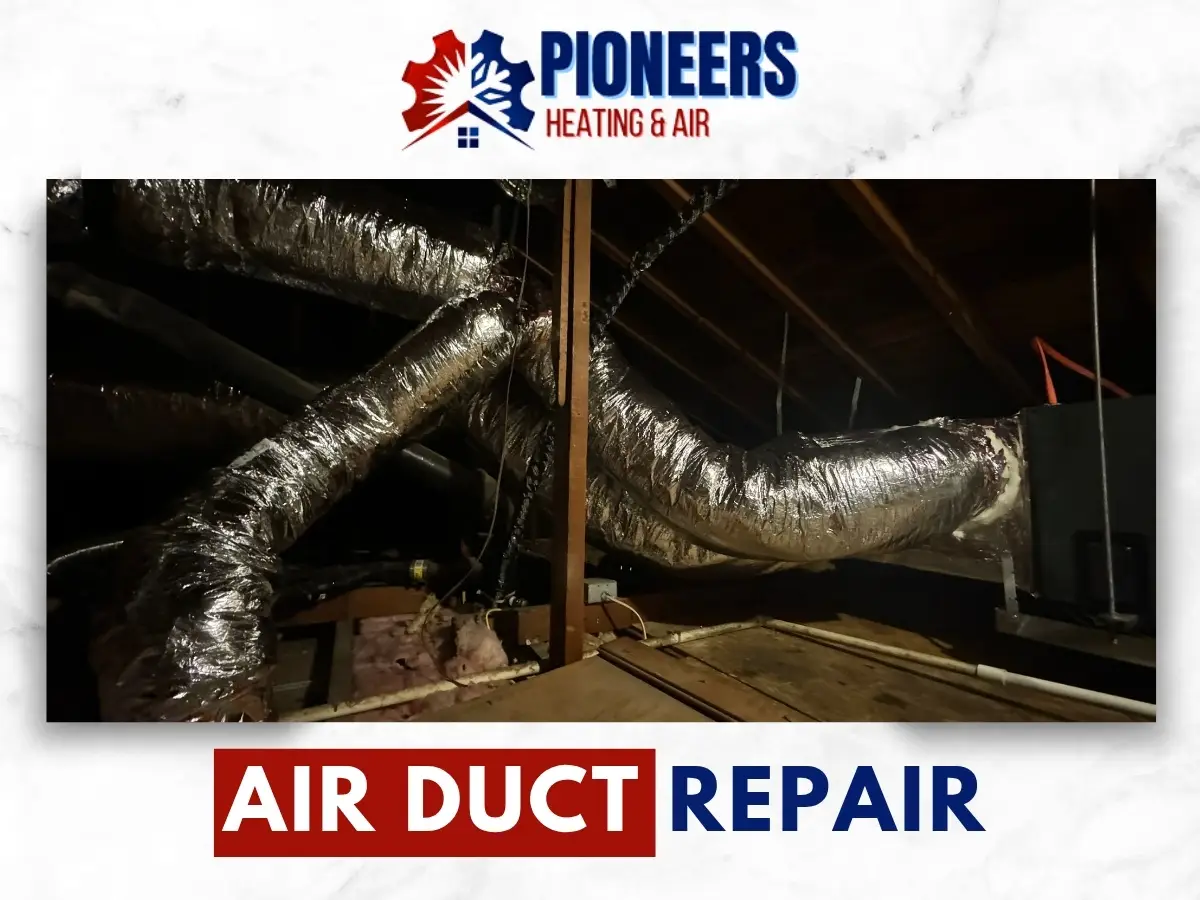
Table of Contents
Air Duct Repair In Pasadena by Pioneers Heating & Air
Air Duct Repair In Pasadena from Pioneers Heating & Air boosts airflow and comfort with expert duct sealing and fixes. Call today for fast scheduling

Air Duct Repair

Air ducts move heated and cooled air through your home, and damage can waste energy and comfort fast. Pioneers Heating & Air handles Air Duct Repair In Pasadena by finding leaks, loose connections, and crushed runs, then fixing and sealing them so air reaches the rooms that need it. Expect clear options, clean work, and steady airflow again.

Need Help? Call Pioneers Heating & Air near you

What air duct repair does

Air duct repair fixes the hidden problems that make your HVAC feel off. Air Duct Repair means restoring the duct system so it delivers the right amount of air to each room. That can include sealing leaks, reconnecting separated joints, repairing torn or sagging flex duct, and correcting poor support that causes kinks.

Why ductwork affects comfort

If your heating or cooling system is the engine, your ductwork is the delivery truck. A strong engine cannot help much if the truck has holes in the side. Duct issues also make thermostats seem wrong, since rooms can heat up or cool down at different speeds and may need airflow balancing.

Where we work

Pioneers Heating & Air works on duct systems in attics, crawl spaces, and within wall chases. We focus on practical repairs that support comfort, airflow, and indoor air quality for homes and many light commercial spaces in Pasadena, California and nearby areas in SoCal.

Signs you may need duct repair

You may need duct repair if airflow is weak, uneven, or noisy. Most duct problems show up in simple, annoying ways. You feel them every day, even if you cannot see the cause.

Look for these common signs

  1. Some rooms feel stuffy while others feel fine.
  2. Airflow from certain vents feels weak, even with the fan running.
  3. The system runs longer than you expect to hit the thermostat setting.
  4. You hear rattling, popping, whistling, or a flap sound near vents.
  5. Dust builds up quickly even after cleaning.
  6. Hot or cold spots show up in the same rooms over and over.
  7. Musty smells appear when the blower turns on.
Quick note
Do you find yourself closing vents to push air to other rooms That is a common move, and it often points to duct leaks, poor duct sizing, or damage that needs attention. If the comfort issue keeps returning, start with ductwork inspection and confirm whether duct sealing is needed.

Common causes of duct damage in Pasadena

Duct damage often starts with age, movement, and poor support. Ductwork lives in rough spaces. Attics can get very hot, crawl spaces can be damp, and both can shift with time. Even good duct systems can loosen or wear out, especially in CA homes with older layouts.

Common causes we see around Pasadena, CA

  • Loose joints and failed seals Tape dries out, adhesive fails, or a connection was never sealed well to begin with and may need duct sealing.
  • Crushed or kinked flex duct Storage boxes, foot traffic, or tight turns can pinch the duct and choke airflow, sometimes leading to air duct replacement for short sections.
  • Disconnected runs A joint can separate after vibration, settling, or prior work in the attic and may require air duct repair.
  • Sagging duct lines Flex duct needs proper support. Without it, the duct sags, airflow slows, and dust can collect, sometimes calling for air duct maintenance.
  • Rodent or pest damage Small tears and openings can happen, especially in attic duct runs and can raise the need for duct sanitizing after repairs.
  • Old, brittle insulation and jacket tears The outer layer can rip and expose insulation, which can shed and reduce efficiency, sometimes paired with attic air sealing.
A quick laugh that still hurts a little ducts do not heal themselves. If they could, half of our attic visits would be unnecessary.

How we diagnose the problem

Our visit starts with locating the problem, not guessing. Airflow issues can come from several places, so our first job is to confirm what is actually wrong. We take a methodical approach and explain what we find in plain language, and when needed we coordinate with HVAC troubleshooting and diagnostics.

During a typical service visit, we

  1. Listen to your concerns and note which rooms feel wrong.
  2. Check supply and return vents for obvious blockages and damage.
  3. Inspect accessible duct runs in the attic, crawl space, or utility areas using a focused ductwork inspection.
  4. Look for leaks and separations at joints, boots, plenums, and branch lines that may require air duct repair.
  5. Check duct support and routing to spot kinks, sagging, or tight bends that can benefit from airflow balancing.
  6. Review HVAC operation so duct repairs match system airflow needs and align with overall HVAC inspection.
If you can show us specific problem rooms, that helps. Which room is always the last to cool down in summer Which hallway gets chilly in winter Small details speed up the diagnosis.

Repairs we perform to restore airflow

We repair, reconnect, and seal ducts to restore airflow and comfort. Air duct repair is not one single fix. The right solution depends on what failed and where. Our goal is to restore the duct path so air moves smoothly from the air handler to each vent, and back through the return path, and when buildup is present we may recommend air duct cleaning after repairs.

Common air duct repair tasks

Typical work includes

  • Reconnecting duct sections that have pulled apart through targeted air duct repair
  • Sealing leaking joints and transitions with proper materials using duct sealing
  • Repairing small tears and damaged outer jackets, sometimes followed by duct sanitizing
  • Replacing short sections of crushed or deteriorated flex duct with partial air duct replacement
  • Adding or correcting duct supports to prevent sagging as part of air duct maintenance
  • Adjusting duct runs to reduce tight bends that restrict airflow using airflow balancing
  • Securing loose vent boots and register connections, sometimes paired with air duct installation updates for problem areas
We keep the work focused on fixing the problem you have now, while also calling out nearby weak spots. That way you can decide what to handle today and what can wait.

Need Help? Call for Heating & Air Services

Sealing duct leaks

Sealing leaks stops conditioned air from escaping into the attic or crawl space. Duct leaks are one of the most common causes of uneven temperatures. Leaks can dump cooled air into a hot attic in summer, or lose heated air into a cold crawl space in winter. We use repair steps that align with duct sealing best practices.

We seal at the points that matter most

  • Plenum connections near the air handler
  • Branch takeoffs and collars
  • Elbows and transitions
  • Vent boots behind registers
  • Return duct connections that pull unfiltered air

A good seal improves comfort and can also reduce dust. If the return side leaks, the system can draw in attic or crawl space air, and that air often carries particles you do not want in the living space.

Repairing damaged flex duct

Repairing damaged flex duct restores the duct’s shape so air can move. Flex duct works well when it is installed correctly and supported. When it gets crushed, kinked, or stretched too tightly, airflow drops and may require air duct replacement for the affected section.

We look for

  • Pinched spots near framing
  • Sharp turns that collapse the inner liner
  • Long sagging runs that act like a speed bump for air
  • Tears that allow air to leak and insulation to get disturbed

If a small section is the problem, we focus on that section. If multiple runs are failing, we will explain what we see and why it matters.

Fixing return duct problems

Fixing return duct problems can stop hot, dusty air from sneaking in. Return ducts matter as much as supply ducts. If return airflow is restricted or leaking, your system can struggle, and rooms can feel stuffy. These issues often show up during HVAC inspection and can be resolved with careful air duct repair.

Return side repairs may include

  • Sealing gaps at the return plenum with duct sealing
  • Repairing return box connections
  • Correcting collapsed return flex duct
  • Securing loose grilles and frames

Does your system sound louder than it used to Return restrictions can increase noise, since the blower works harder to pull air back.

Symptoms and likely duct issues

Small duct problems can cause big comfort issues in real homes. A duct leak the size of a small coin can still matter, especially if there are several leaks. A single disconnected run can make one room feel like it is not even connected to the HVAC system. For deeper verification beyond this guide, start with ductwork inspection.

Connect symptoms to likely duct issues

What you notice What it often points to
One room is always warmer or cooler Disconnected branch, crushed flex duct, or leak near that run
Whistling at a vent Air leak at a joint, loose boot, or gap at the register connection
Dust increases after the system runs Return leaks, torn duct jacket, or disturbed insulation near duct runs
System runs long cycles Duct leakage, poor airflow, or restricted return path
Rattling or flapping sound Loose duct section, torn liner, or unsecured connection

This table is not a diagnosis, but it helps set expectations. We confirm the actual cause by inspecting the system and matching the repair plan to your home’s needs in California.

How long repairs can take

Timing depends on access, damage type, and how your ductwork is laid out. Many duct repairs can be completed in a single visit, especially if the damaged areas are easy to reach. Some take longer when access is tight or when multiple issues show up along the same run, and in a few cases we may recommend air duct replacement for lasting results.

Factors that can slow work down

  1. Limited attic or crawl space access and low clearance.
  2. Ducts buried under insulation or routed through tight framing.
  3. Multiple failed connections across several branches.
  4. Older duct layouts that have been modified over time.
  5. Rodent damage spread across more than one area.

We will tell you what we can complete right away and what may need an additional visit. Clear expectations matter, since nobody wants a surprise attic marathon.

Safety in attics and crawl spaces

Safety matters because attics and crawl spaces can be risky. Ductwork is often located where footing is bad, temperatures swing, and electrical or structural hazards exist. Homeowners can spot obvious issues, but climbing around to patch ducts can create new problems. When something feels off, start with HVAC inspection and let a trained technician confirm the cause.

Stop and call a pro if you notice

  1. A strong burning smell when the system runs.
  2. Visible mold-like growth on insulation or duct surfaces.
  3. Damaged electrical wiring near ducts or the air handler.
  4. Signs of animals where you would need to work.
  5. Major duct collapse that is restricting airflow a lot.
Simple homeowner check

If you want to do a quick check yourself, keep it simple. Look for disconnected ducts near the attic hatch, torn outer jackets, or duct runs that are flattened. Do not step on drywall ceilings. They do not appreciate surprise visits.

Pioneers Heating & Air

How to prepare for your appointment

You can prepare your home in a few simple steps before we arrive. A little prep helps us get to the ductwork faster and keeps your home cleaner. If you are also planning air duct cleaning, preparation helps that service go smoothly too.

Before your appointment

  1. Clear a path to the thermostat, air handler, and return grille areas.
  2. Make sure the attic or crawl space access point is not blocked.
  3. Move fragile items away from supply vents if they are on the floor.
  4. Write down which rooms feel worst and at what times of day.
  5. Keep pets in a separate room if they are curious or protective.

Do you know where your return vents are Many people do not, and that is okay. We will point them out and explain why they matter.

What to expect after repairs

After repairs, you should notice steadier temperatures and quieter operation. Once the duct system is reconnected and sealed, airflow should feel more consistent. The system may reach the thermostat setting with less struggle, and problem rooms often improve. If comfort still feels uneven, airflow balancing can fine tune delivery room to room.

What to watch for over the next week

  1. More even airflow from vents in rooms that used to feel weak.
  2. Fewer temperature swings between rooms.
  3. Reduced whistling or rattling sounds.
  4. Less dust movement near vents and returns.
Practical tip for ongoing airflow

A practical tip replace or check your air filter on schedule. A clogged filter can mimic duct problems by restricting airflow, and it can make your system work harder than it should. Keeping up with HVAC maintenance also helps prevent repeat airflow complaints.

Pasadena and Southern California duct challenges

Pasadena homes face duct challenges from heat, older layouts, and tight attic spaces. Pasadena, California has warm summers, cool evenings, and plenty of older homes with additions or remodels. Those changes can leave ducts stretched beyond what they were built for, or patched together over time. In these situations, a mix of air duct repair and duct sealing can restore comfort faster than chasing thermostat settings.

Local situations we see often

  • Older homes with mixed duct types You may have a blend of rigid duct and flex duct from different updates.
  • Attic duct runs exposed to high heat Hot attic air can magnify the impact of leaks.
  • Add ons and converted spaces A room that was once a porch or garage may not have proper duct routing.
  • Tight framing paths Some duct runs take sharp turns that reduce airflow if they are not supported correctly.

If one side of the house always feels different than the other, it is worth checking duct routing and return airflow. Comfort issues are often a duct path issue, not just a thermostat issue. In CA homes, this is especially common after remodels and additions.

Why homeowners choose our team

Homeowners choose Pioneers Heating & Air because we keep the plan simple and the work clean. Duct problems can feel frustrating because you cannot see them from the couch. We focus on showing you what is happening and what we recommend, without pushing you into work you do not need, and we can coordinate duct repairs with HVAC repair when needed.

What you can expect from our team

  • Clear explanations of what failed and where
  • Repair options that match the condition of your ductwork
  • Careful work in attics and tight spaces
  • Respect for your home, vents, and registers
  • Practical tips to keep airflow steady after the repair

If you are tired of playing guess the hot room, we get it. You want your home to feel normal again.

Get air duct repair scheduled

Get Air Duct Repair scheduled with a local HVAC contractor you can reach easily. If airflow is weak, rooms are uneven, or your ducts are noisy, Pioneers Heating & Air is ready to help with Air Duct Repair In Pasadena. We handle repairs, sealing, and reconnects that restore comfort in Pasadena, CA and nearby areas across Southern California.

Related Services

Call (626) 217-0559 to schedule. You can also use our Contact Us page to request Air Duct Repair In Pasadena.

Frequently Asked Questions (FAQs)

Recent Blogs