What Does AC Cleaning Include, and When Is It Worth Scheduling?
AC cleaning removes buildup from key cooling parts. Learn the signs that point to cleaning, routine maintenance, or a repair...
HVAC Troubleshooting & Diagnostics In Pasadena by Pioneers Heating & Air. Fast accurate testing for AC and heat issues. Book your service today now
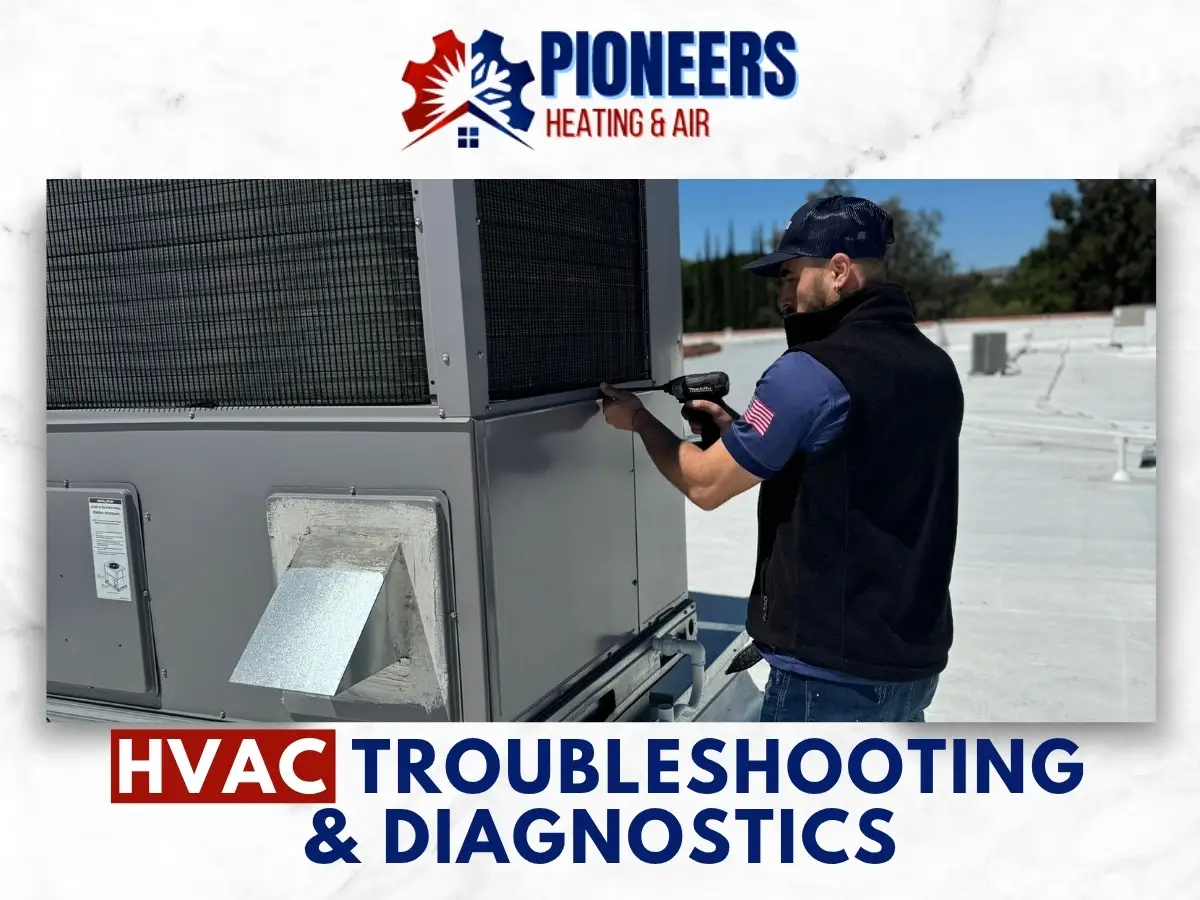
HVAC problems rarely fix themselves, so clear testing is the fastest path to comfort.
HVAC Troubleshooting & Diagnostics in Pasadena means we track down what is actually failing in your AC or heater, then explain what it will take to restore safe, steady operation. Pioneers Heating & Air pinpoints airflow, electrical, and control issues without guesswork, so you can make a smart repair decision in Pasadena, CA in California.
Need Help? Call Pioneers Heating & Air near you
HVAC troubleshooting and diagnostics is the step that turns symptoms into a real answer. HVAC systems can fail in a hundred small ways that feel like the same big problem. A warm house might be a bad thermostat setting, a loose wire, a failing capacitor, a clogged filter, or low airflow. Guessing wastes time and can add damage.
When you are seeing repeated symptoms, diagnostics often pairs naturally with an HVAC inspection so you are not making decisions based on a hunch.
If you are dealing with a no cool call, a heater that will not light, short cycling, loud noises, or weak airflow, diagnostics helps stop the replace random parts cycle. It also helps you understand what is urgent versus what can be planned, including when it is time for HVAC repair versus a longer term plan.

You probably need diagnostics when comfort is uneven, noise is new, or the system keeps shutting off. Small changes can be early warning signs. Catching them early can prevent a full breakdown on the hottest Pasadena afternoon or a chilly winter morning, and it can reduce the chance of needing emergency HVAC services.
Does one room feel fine while the next room feels like a different season? That is often an airflow or duct issue, not a replace the whole unit problem, and it may be solved with ductwork inspection or air duct repair.
Many issues come from airflow limits, electrical wear, controls, or fuel ignition problems. Most breakdowns fall into a few buckets. The trick is proving which bucket you are in before choosing a repair, whether that ends with HVAC maintenance or a targeted component fix.
Some failures stack on top of each other. A dirty filter can cause coil icing, which can then cause low airflow, which can then cause the system to short cycle. That is why testing matters.
Our visit focuses on safe checks, targeted measurements, and clear next steps. Troubleshooting is not just looking at the unit and guessing. We work through the system as a chain. If one link fails, performance drops or the system shuts down to protect itself, and the results help you decide on repair or a longer range plan.
Do you want the quick version or the detailed version when we explain results? We can do either. Some homeowners want bullet points. Others want the full play by play.
We start with the simplest causes, because that is often where the fix is. A system that will not cool might be as simple as a clogged filter or a drain safety switch tripped by a backed up condensate line. A heater that will not start can be a dirty flame sensor or a pressure switch issue. We check the basics first, then move into deeper testing if needed, and we may recommend an HVAC tune up once the immediate issue is resolved.
We use measurements to confirm what the system is doing, not just what it feels like. Comfort is personal, but diagnostics is math and physics. If airflow is low, we look for why. If a motor is failing, it often shows signs under load. If a control is not sending the right signal, we trace it.
We document what we see so you are not left guessing later. You should not have to remember a string of technical terms. We keep it simple and actionable. What failed, what is at risk if it keeps running, and what repair options make sense, including whether HVAC replacement is worth discussing.
Need Help? Call for Heating & Air Services
We troubleshoot both AC and heating systems, plus the controls and ducts that support them. HVAC Troubleshooting & Diagnostics is not limited to the outdoor unit or the furnace cabinet. Comfort depends on the whole system working together, including the duct system and controls such as HVAC zoning setup when present.
If your system is doing something strange, odds are we have seen a close cousin of it. Strange noises, odd cycling, and works sometimes issues are frustrating, but they are usually traceable.
Cooling diagnostics often comes down to airflow, refrigerant circuit behavior, or electrical parts. AC problems often show up fast in Pasadena summers. You notice a house that will not drop below a certain temperature, or you notice sticky humidity indoors, and that is when AC repair begins with proof.
If you see ice, do not keep forcing the system to run. Turn cooling off and switch the fan to On if you can do so safely. Then call for service. Running it iced up can cause more damage, and it may turn a small fix into an AC replacement conversation.
Heating diagnostics usually follows the ignition sequence and safety checks step by step. Heating systems are built to shut down when something looks unsafe. That is good news, even though it is annoying when you are cold, and it is why heating repair should start with testing.
If your heater starts, runs for a minute, then shuts off, that is a classic safety or sensing pattern. Diagnostics can pinpoint which safety is opening and why, and it can clarify whether you need furnace repair or a heat pump focused solution.
Duct and airflow diagnostics matter, because a strong unit cannot overcome weak delivery. A system can be working fine and still feel wrong if the air is not getting where it needs to go. Pasadena homes can have a mix of older duct layouts, additions, and rooms that never quite match the thermostat, so we may combine diagnostics with ductwork inspection.
Here is a simple table that helps connect symptoms to likely airflow suspects.
| What you notice | What it often points to |
|---|---|
| One or two rooms always hotter or colder | Duct balance, duct leaks, or supply routing |
| Weak airflow everywhere | Filter, blower, coil condition, or major duct restriction |
| Whistling at a vent | High static pressure, closed vents, or undersized grille |
| Dusty air right after system starts | Duct leaks, filter fit, or return side gaps |
If you have been closing vents to push air to another room, you are not alone. It feels logical. It can also raise system pressure and create new problems. We can suggest safer ways to improve room comfort, including targeted air duct maintenance.
Some problems are intermittent, and we handle them with careful testing and repeatable steps. Intermittent failures are the ones that make homeowners feel crazy. The system works when the technician arrives, then fails later. We take those calls seriously, and we may recommend follow up HVAC maintenance after the root cause is confirmed.
If your system fails more on very hot days, or only at night, tell us. That detail is often the clue, especially in Southern California and across CA.
Diagnostics can include indoor air and moisture clues, because comfort is not just temperature. In Pasadena, comfort complaints often involve humidity swings, musty odors, or dust patterns. Those are not always air freshener problems, and they may point toward air duct cleaning or duct sanitizing.
If the house feels clammy even when the thermostat says it is cool, you may have short run times, airflow issues, or equipment sizing problems. Diagnostics helps separate feeling from cause, and it helps decide if a full HVAC installation discussion is needed later.
Timing varies, but good testing is faster than repeated callbacks and guesswork. Most diagnostic visits fit into a normal service window, but the real timeline depends on the symptom and system access, including access related to HVAC repair needs.
If we need the system to run for a period to recreate the issue, we will tell you what we are watching and why. That way you are not wondering why we are standing there listening to your unit like it is telling a secret.
Some HVAC symptoms are safety signals, and you should stop and call right away. Your HVAC system uses high voltage electricity, moving parts, and in many homes, natural gas. A cautious pause is the smart move, and it is when emergency HVAC services may be appropriate.
If you are unsure, shut the system off at the thermostat first. If something seems electrical, turn it off at the breaker only if you can do so safely. Then call Pioneers Heating & Air.
For general carbon monoxide safety information, you can also review guidance from the CDC.
You can do a few simple checks before we arrive, and they can speed up the visit. A little prep helps us get to the root cause faster. It also helps you avoid a service call that ends with your thermostat was set to Off. It happens more than people admit, and it can be avoided with basic HVAC maintenance habits.
Do you know where your filter is located, and how long it has been since it was changed? If not, tell us. We can help you find it and pick a practical replacement schedule, and we can align it with a routine HVAC tune up.
After diagnostics, we explain what to watch for so you can avoid repeat problems. Once the system is running again, a little observation can keep it running smoothly, and it supports long term maintenance.
If you notice the same symptom returning, note the conditions. Was it a very hot day in CA? Did you run cooking appliances for hours? Was it windy and dusty outside? Those details can point us to airflow or control causes and may guide a focused thermostat programming adjustment.
Pasadena, California has a mix of older homes, remodeled spaces, and newer builds. That variety can create some repeat themes during diagnostics, and it can shape whether the next step is duct sealing or a system wide adjustment.
If your system struggles mostly in late afternoon, tell us which side of the home gets sun. Comfort problems can be tied to heat gain, duct routing, or equipment run limits, and we may suggest ventilation upgrades when it fits the situation.
Homeowners choose Pioneers Heating & Air because we explain the problem and the fix in plain language. You should not need a translator for your HVAC system. We keep communication simple, show you what we found, and answer your questions without rushing, especially when deciding between repair and replacement.
If you like to learn, we will walk you through it. If you prefer the bottom line, we will keep it short. Either way, you stay in control.
HVAC Troubleshooting & Diagnostics in Pasadena starts with one call and ends with clear answers. If your AC or heater is acting up, do not wait for a full breakdown. HVAC Troubleshooting & Diagnostics in Pasadena helps you move from symptoms to solutions with less stress and fewer surprises, and it can be paired with an HVAC inspection when helpful.
Call (626) 217-0559 to schedule service with Pioneers Heating & Air, or use our Contact Us page to request an appointment.
AC cleaning removes buildup from key cooling parts. Learn the signs that point to cleaning, routine maintenance, or a repair...
An AC that keeps running but leaves rooms warm may have an airflow, coil, duct, thermostat, refrigerant, or equipment problem....
A ductless mini-split may cool a garage, ADU, or sunroom without extending central ductwork, but the room, electrical setup, drainage,...