What Does AC Cleaning Include, and When Is It Worth Scheduling?
AC cleaning removes buildup from key cooling parts. Learn the signs that point to cleaning, routine maintenance, or a repair...
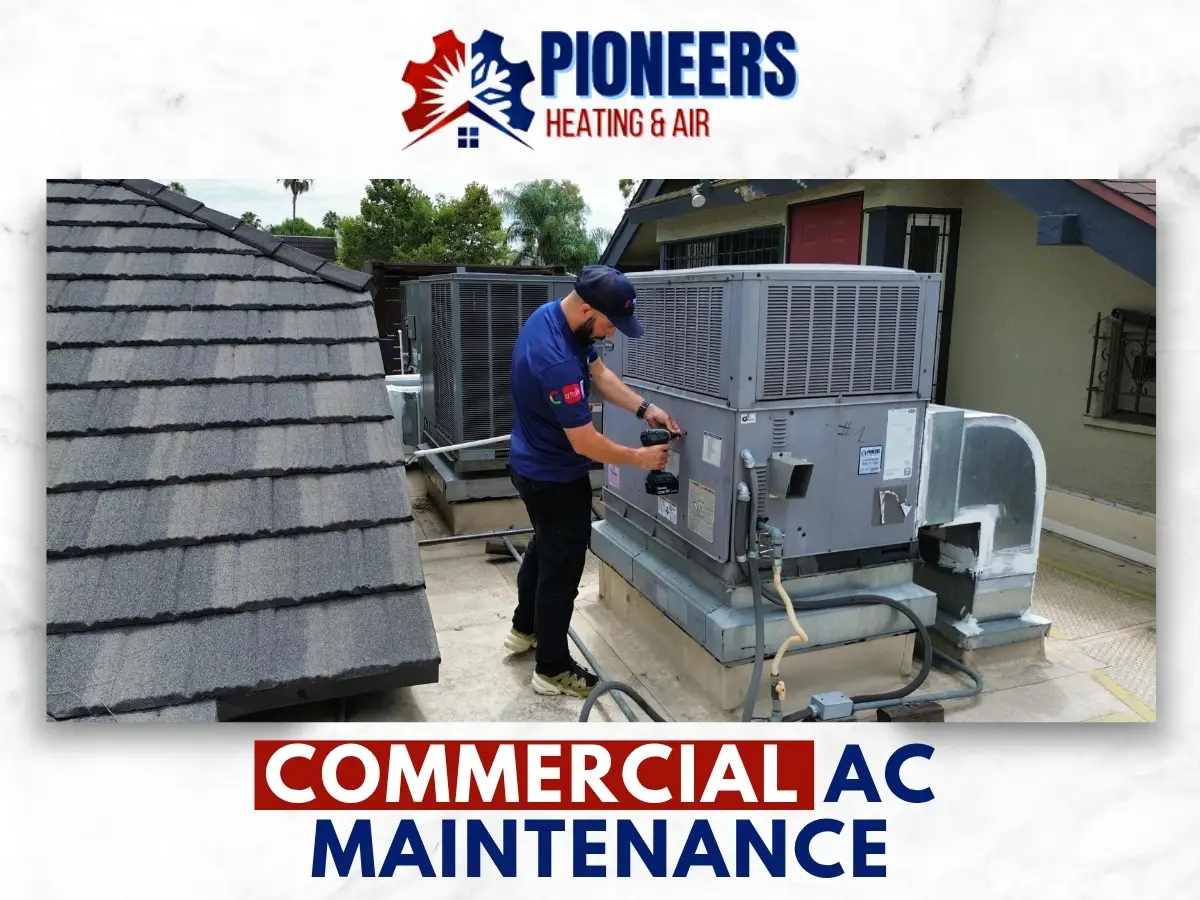
Commercial AC Maintenance that keeps your building cool, steady, and ready for business
Commercial AC Maintenance in Pasadena keeps rooftop units, split systems, and packaged equipment running the way your tenants, staff, and customers expect. Pioneers Heating & Air handles the inspections, cleaning, testing, and small adjustments that prevent surprise shutdowns. For Commercial AC Maintenance in Pasadena, we focus on uptime, comfort, and clear communication from start to finish.
Need Help? Call Pioneers Heating & Air near you
Commercial AC Maintenance is the routine service that helps your system stay reliable during high demand months in Pasadena, CA. Think of it like keeping oil in a car. Skip it long enough, and the problem shows up at the worst time.
For a commercial space, steady cooling affects more than comfort. It impacts productivity, customer experience, and equipment that needs stable temperatures. A well maintained system also tends to cycle more smoothly, which can reduce strain on major parts.
Do you manage one location, or do you oversee multiple suites or tenants. Either way, a consistent maintenance plan makes service calls easier and less urgent, and it works best when paired with timely commercial HVAC inspection and tune up visits.

Commercial systems often give small warning signs before a bigger failure. The trick is catching them early, while the fix is still simple. If the issue feels active right now, commercial AC repair may be the next step.
Even if everything seems fine, maintenance is still worth it. Many issues start with airflow, dirt buildup, or loose electrical connections that do not announce themselves until the first heat wave, and a focused HVAC maintenance plan helps keep those risks lower.
Commercial equipment works hard, often for long hours, and often in dusty or high traffic settings. That workload creates predictable trouble spots. When buildup is a key factor, commercial AC cleaning can be a helpful companion to maintenance.
Pasadena weather can shift fast. A mild morning can turn into a hot afternoon, and a system that is already struggling will fall behind quickly, especially when zoning and distribution are not balanced and commercial duct balancing is overdue.
We keep the visit organized so your space stays usable while we work. We also aim to reduce surprises by explaining what we find in plain language. When we spot issues outside a maintenance scope, we may recommend commercial HVAC troubleshooting and diagnostics to pinpoint the cause.
We begin by asking a few direct questions. Are certain zones warmer. Do issues happen at a specific time of day. Has anything changed with occupancy or hours.
If you have a facilities log, it helps. If you do not, no problem. We can still create a simple service record going forward, and if controls are part of the issue we may suggest commercial HVAC control and zoning setup support.
Airflow is the foundation of cooling. If air cannot move well, the system will not perform, even with perfect refrigerant charge. In some buildings, a ductwork inspection is the missing piece behind recurring airflow complaints.
Have any returns been blocked by new shelving, displays, or a remodel. It happens more than you would think.
Need Help? Call for Heating & Air Services
Moisture management matters in commercial buildings. When drains clog, you can get water damage, odor complaints, and shutdowns triggered by safety switches. If buildup is severe, we may recommend targeted AC cleaning alongside the maintenance visit.
If a coil is packed with debris, the unit may still run, but it will run hot, loud, and long. That is like jogging in a winter coat.
Most no cooling calls trace back to electrical parts that are worn or connections that are not tight. Commercial equipment also sees heavier cycling during business hours and warm afternoons, which is why commercial HVAC system maintenance is so important for reliability.
We stay focused on safe testing practices. If we find a condition that calls for a repair visit or a shutdown, we explain why and what comes next, including when commercial emergency HVAC services may be appropriate.
We close out by checking operation under normal conditions and sharing what we found. You should know what was serviced, what looks worn, and what to keep an eye on. If the system shows signs it is nearing end of life, we can also discuss commercial AC replacement planning.
If you manage multiple units, we can also help you keep names or labels consistent. That makes future service faster and less disruptive, especially when coordinating commercial rooftop unit services across a site.
Commercial properties are not all the same. A small office with one rooftop unit has different needs than a restaurant space with heavy heat load and long hours. When a site has multiple system types, commercial package unit services and other specialized support may be part of the plan.
Not sure what cadence fits your building. A quick walk through and a review of your runtime patterns usually makes it clear, and we may recommend a baseline HVAC inspection to start.
| Building Use | Typical Runtime | What Usually Drives Maintenance Frequency |
|---|---|---|
| Office suites | Moderate | Comfort consistency, filter condition, tenant reports |
| Retail | Moderate to high | Door traffic, varying occupancy, thermostat changes |
| Restaurants | High | Heat load from cooking, grease and airflow demands |
| Medical and labs | High | Tight comfort needs, filtration, reliable operation |
We will suggest a plan based on what we see, not on a generic script, and we can coordinate it with commercial HVAC system integration needs if your site uses shared controls.
Most maintenance visits are straightforward, but a few factors can slow things down. Planning ahead reduces downtime and repeat trips. If access issues have caused missed service in the past, we can help you set a steady schedule through commercial HVAC system maintenance.
If your building has special access requirements, tell us during scheduling. We would rather plan for it than play hide and seek with keys, and we can align the plan with commercial split system services when applicable.
Commercial AC systems are not a good place for let me just take a quick look. Electrical risks and fall risks are real, and some issues get worse when the unit keeps trying to start. If you suspect an active failure, start with commercial HVAC system repair support.
If a unit is short cycling or making harsh noises, turning it off can prevent additional damage. If you are unsure which switch controls it, call (626) 217-0559 and we can guide you safely, or dispatch emergency HVAC services when needed.
Pioneers Heating & Air
A little planning helps us work faster and helps you keep tenants comfortable. If airflow complaints are common, pairing the visit with commercial air duct maintenance can help stabilize comfort across suites.
Do you have a maintenance contact on site. Having one point of contact saves time, especially in multi tenant buildings, and it also helps if we need to coordinate commercial thermostat installation access later.
Good maintenance is not just what happens during the appointment. It is also how the building is operated day to day. Many comfort issues in California buildings come back to airflow and distribution, so staying consistent between visits matters, and airflow balancing can be a smart follow up when hot and cold spots persist.
If your space gets dusty, filters can load quickly. A filter that looks kind of gray is often already restricting airflow more than you think, and scheduling periodic commercial air duct cleaning can help reduce how fast debris returns.
Pasadena has a mix of older commercial buildings and newer developments. Each can create maintenance issues that are easy to miss without regular checks. If your building has older distribution, air duct repair or control adjustments may be part of stabilizing comfort.
If you have tenants complaining that it is always warmer after 2 pm, that is a useful clue. It often points to rooftop heat load, coil condition, or airflow limitations, and sometimes to duct leakage where duct sealing can help.
You need a contractor who respects the building, the tenants, and your time. Our goal is to keep your system predictable, so you are not juggling emergency calls during business hours. We support ongoing comfort through services like commercial HVAC system maintenance and targeted commercial AC maintenance visits.
We also know that commercial comfort complaints can be political. One suite is freezing, another is sweating, and someone always just bumped the thermostat. We keep it calm, check the facts, and work the problem using a practical process that may include HVAC troubleshooting and diagnostics.
Commercial AC Maintenance in Pasadena is easiest when it is planned, not rushed. If you are noticing uneven temperatures, long run times, or repeated service calls, it is time to get the system checked and cleaned. If the unit is already failing to cool, consider scheduling AC repair as well.
Call (626) 217-0559 to schedule Commercial AC Maintenance. You can also request service through our Contact Us page.
AC cleaning removes buildup from key cooling parts. Learn the signs that point to cleaning, routine maintenance, or a repair...
An AC that keeps running but leaves rooms warm may have an airflow, coil, duct, thermostat, refrigerant, or equipment problem....
A ductless mini-split may cool a garage, ADU, or sunroom without extending central ductwork, but the room, electrical setup, drainage,...