Why Upstairs Rooms Stay Hot With AC
Hot upstairs rooms can point to attic heat, air leaks, duct losses, or airflow trouble instead of an AC problem...
Commercial Blown In Attic Insulation Installation In Pasadena by Pioneers Heating & Air. Fast, clean installs to cut heat gain and energy costs. Call now

Commercial blown in attic insulation is a fast way to reduce heat gain through the roof and help your HVAC run less.
For commercial blown in attic insulation installation in Pasadena, Pioneers Heating & Air adds loose fill insulation across your attic floor and around key trouble spots. This service helps stabilize indoor temps, limit hot spots, and support lower operating strain for many Pasadena, CA buildings.
Need Help? Call Pioneers Heating & Air near you
Commercial blown in attic insulation installation covers adding the right insulation layer where your building loses the most heat.
A lot of commercial buildings in Pasadena and nearby California cities gain heat through the roof for long stretches of the year. Attics often become the hottest room in the building, even if no one ever goes up there. That heat pushes down into offices, retail areas, and tenant spaces.

Blown in attic insulation uses loose material installed with a blowing machine. It fills around framing and covers wide attic floors quickly. It also helps reduce air movement through small gaps when paired with smart air sealing steps.
If your building has rooftop HVAC units, duct runs in the attic, or long ceiling spans, attic insulation can make a noticeable difference. The goal is simple. Reduce heat transfer, reduce HVAC runtime, and improve comfort. If you want the attic plan to align with equipment performance, start with an HVAC inspection to see where the strain is coming from.
Commercial buildings usually choose blown in insulation because it fills irregular spaces better than many batt installs. Batts can work in certain attics, but commercial attics are rarely neat. You may have electrical runs, low clearance corners, odd framing, old patchwork insulation, or mixed materials. Blown in insulation spreads evenly across those areas.
It also allows targeted depth adjustments. If one section has less clearance or needs extra attention near a mechanical chase, we can account for it. This helps avoid thin spots that turn into hot spots later.
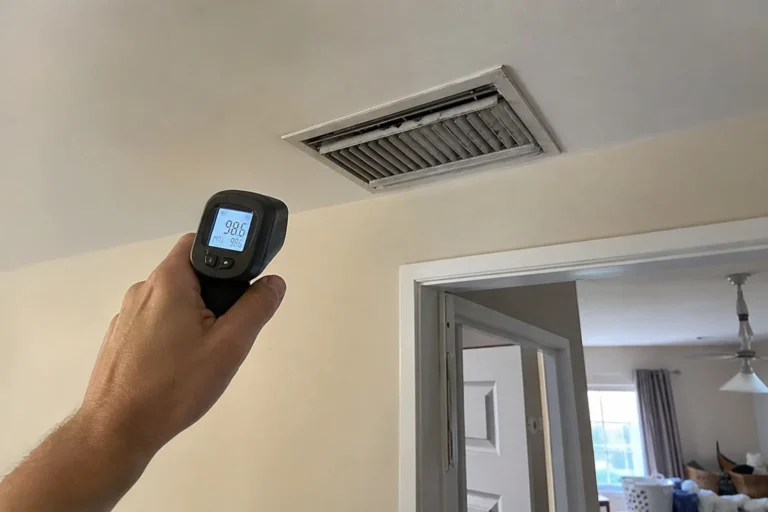
Do you have rooms that always feel warmer than the rest, even with the thermostat set right. That is often a ceiling and attic issue, not an HVAC sizing issue. If airflow is part of the complaint, commercial duct balancing can help confirm what is distribution and what is heat gain.
Attic insulation supports HVAC performance by cutting the temperature swing above the ceiling. Your HVAC system fights the building envelope all day. If the attic is blazing hot, your ceiling becomes a warm surface that radiates heat down. The HVAC responds by running longer and cycling harder. If you are seeing long cycles, pairing insulation work with commercial HVAC inspection and tune up can help you measure the change.
Insulation is not a replacement for HVAC maintenance, duct repairs, or airflow balancing. It works best as part of a practical plan. We help you decide what matters most for your building, including options like HVAC maintenance and airflow balancing.
You may need attic insulation if you see uneven comfort, high run time, or hot ceiling surfaces. Commercial properties often show the same few symptoms when attic insulation is thin, disturbed, or missing. Many owners and facility managers notice the building never catches up during warm afternoons.
If you are seeing two or more of these, the attic deserves a closer look. In some buildings, an attic review pairs well with ductwork inspection to catch leakage and disconnected runs.
Insulation problems often come from settling, old work, roof changes, or foot traffic in the attic. Blown in insulation can settle over time. Older insulation may be thin to begin with. Sometimes it has been pushed aside by electricians, cable installers, or anyone working above the ceiling.
Commercial attics also get used as a shortcut for running new lines. Each trip can create paths and bare lanes if no one restores coverage afterward. If your attic needs cleanup before new material goes in, commercial attic insulation removal may be the right first step.
Pasadena conditions make attic heat control a real operational issue for many commercial spaces. Pasadena, CA buildings often see strong sun exposure, warm afternoons, and large roof surface area. Many commercial roofs soak up heat for hours. Even after the sun dips, the attic can stay hot.
Then attic temps can push comfort complaints during peak hours. Insulation helps slow that heat transfer. It also helps your HVAC keep up without chasing the thermostat all day. If the attic also traps heat due to weak exhaust, consider commercial attic ventilation upgrades as part of the plan.
Need Help? Call for Heating & Air Services
Our process starts with a site walk and attic review so we can install the right amount in the right places. Every commercial building is different. We start by learning how your space is used, what problems you are seeing, and what areas get complaints. Then we look at attic access points and the current insulation conditions.
If something looks unsafe or outside the scope of insulation work, we tell you plainly. No drama. Just facts and options. For broader building comfort planning, our team can also support commercial HVAC troubleshooting and diagnostics.
We install blown in insulation with clean, controlled placement that protects critical attic components. Loose fill insulation is installed with a blowing machine that breaks up and fluffs material while placing it. The goal is even coverage, proper depth, and clean transitions near edges and equipment.
We keep the work focused. We also keep you updated if we run into surprises. If air leaks are a major driver, commercial attic air sealing can be scheduled as a coordinated scope.
Air sealing is often the quiet hero because insulation cannot stop moving air by itself. Insulation slows heat transfer. Air leaks move heat and moisture fast. If warm attic air leaks into conditioned spaces through gaps, insulation alone will not fully solve comfort issues.
We focus on practical sealing steps that make sense for your building. The goal is to stop the big leaks first. That is where you get the most real world improvement. If you also suspect leakage in the distribution system, duct sealing can work alongside attic improvements.
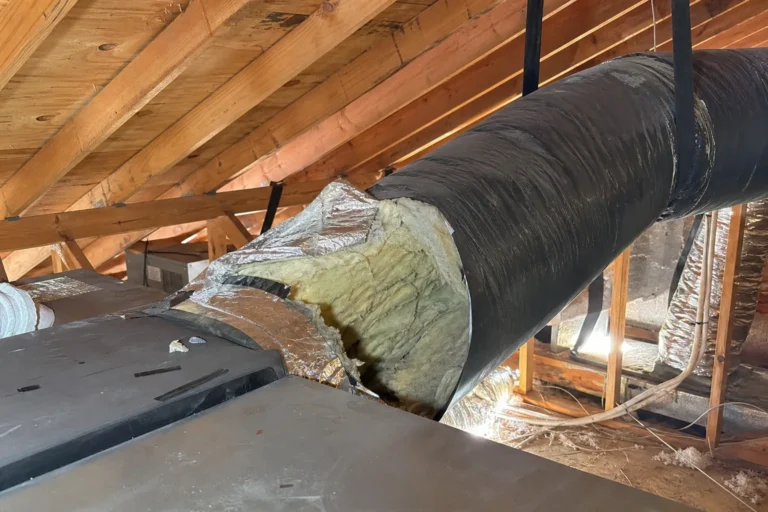
We work around ducts and mechanical areas because duct losses in a hot attic can hit comfort hard. Many commercial buildings have ductwork above the ceiling or in attic cavities. If ducts are leaking, poorly supported, or missing insulation, you can lose a lot of conditioned air before it reaches the space.
We do not bury problems and hope they go away. If duct issues are visible, we flag them and talk through next steps. When repairs are needed, commercial air duct repair may be the best follow up.
Material choice and depth depend on attic layout, usage, and what is already in place. Commercial attics can include multiple sections with different needs. Some areas may be low clearance. Some may have heavy mechanical runs. Some may already have decent coverage with a few weak lanes.
Here is a quick, simple guide to how options tend to differ.
| Factor | Lower depth approach | Higher depth approach |
|---|---|---|
| Best for | Mild problem areas, limited clearance | Hot top floors, strong sun exposure, long HVAC run time |
| Comfort impact | Moderate | Stronger, more noticeable in problem zones |
| Risk to vents and access | Lower if clearance is tight | Needs careful detailing to avoid blocking vents and access |
We recommend what fits your building and the issues you want to solve. We also consider access needs for future trades, since someone always needs to run one more cable. If you are replacing old material rather than adding to it, commercial attic insulation replacement may be the right scope.
Our work stays organized by keeping access routes and serviceable areas clear. Commercial attics are not just empty space. People need to access junction boxes, VAV controls, duct dampers, and other components over time. A good install accounts for that.
A cleaner attic stays safer and easier to service later. If your project also needs an insulation approach using batts in select areas, we can compare it with commercial batt and roll insulation installation.
Most projects can be completed quickly, but access and attic conditions can slow things down. Time on site depends on attic size, how many sections we must reach, and how much prep is needed. Tight access hatches, high ceilings, and limited staging space can add time.
We coordinate with you so the install fits building hours and avoids disruptions where possible. If comfort issues are urgent, ask about commercial emergency HVAC services for fast triage while the envelope work is planned.
Safety comes first because attics have real hazards that building staff should not have to guess about. Commercial attics can hide sharp nails, open junctions, fragile ceiling areas, and tight spaces with poor footing. If someone is not used to attic movement, a quick check can turn into a ceiling repair.
If your team needs to access the attic for other reasons, ask us what to watch for after insulation is installed. We want the space to stay serviceable and safe. If you suspect a comfort or safety issue tied to equipment, commercial HVAC system repair may be part of the solution.
Pioneers Heating & Air
You can prepare for installation by planning access, clearing staging space, and sharing building priorities. Preparation helps the project move smoothly. It also reduces the chance of someone interrupting work to find keys, ladders, or locked access rooms.
If you manage multiple tenants, it helps to ask which suites complain most on hot afternoons. That clue often lines up with the weakest attic coverage. If zoning complaints are common, commercial HVAC control and zoning setup may also be worth reviewing.
After installation, you should watch comfort patterns and HVAC runtime, not just the thermostat setting. The goal is steadier indoor conditions. Many building owners notice fewer hot spots and less late day heat creep after proper attic insulation coverage.
If a problem zone still struggles, the next step may be duct sealing, airflow balancing, or thermostat zoning review. Insulation helps, but it cannot fix a closed damper or a duct leak the size of your fist. Consider follow up like commercial air duct testing if performance is still unclear.
Pasadena commercial properties often have mixed use layouts that require careful insulation planning. Many buildings in Pasadena include retail on the first level and offices above, or multiple tenant build outs over the years. That can lead to odd attic sections and separated ceiling cavities.
We take time to understand the building layout. That helps us place insulation where it matters, not just where it is easy. When ventilation and heat buildup are part of the remodel story, ventilation upgrades can support the overall plan.
Pioneers Heating & Air focuses on practical building comfort because insulation and HVAC should support each other. As an HVAC contractor, we look at attic insulation through the same lens as airflow and equipment performance. If your HVAC is working hard, we want to know why. If your building envelope is leaking heat, we want to tighten it up in smart ways.
We keep things simple. Fix the obvious losses. Improve comfort. Reduce unnecessary runtime. If your next step is equipment planning, we can also help with commercial HVAC system maintenance in CA and across the broader California service area.
Commercial blown in attic insulation installation in Pasadena is a smart next step when your building fights afternoon heat and uneven temperatures. If you want help planning this work, Pioneers Heating & Air is ready to assess your attic, explain what we see, and complete a clean install that supports your HVAC system. For service, call (626) 217-0559.
Commercial blown in attic insulation installation works best when you treat the attic as part of the whole system. Your roof, attic, ducts, and HVAC equipment all affect comfort. If one part is out of balance, tenants feel it fast. Blown in insulation is often the most direct way to reduce roof driven heat gain without changing the building daily operations. For support that ties comfort to equipment behavior, HVAC troubleshooting and diagnostics can help clarify what is envelope and what is mechanical.
If those answers point to the attic, it is time to take a look. Call (626) 217-0559 to schedule service with Pioneers Heating & Air in Pasadena, California.
If you want a broader comfort plan beyond insulation, we can coordinate improvements across HVAC, ductwork, and indoor air priorities for Pasadena, California and the greater CA area.
To schedule commercial blown in attic insulation installation, contact us through the Contact Us page and we will coordinate a site walk in Pasadena CA. You can also call (626) 217-0559.
Hot upstairs rooms can point to attic heat, air leaks, duct losses, or airflow trouble instead of an AC problem...
Uneven room temperatures, weak airflow, dust near vents, and long AC cycles can point to leaky attic ducts. Check the...
AC cleaning removes buildup from key cooling parts. Learn the signs that point to cleaning, routine maintenance, or a repair...