What Does AC Cleaning Include, and When Is It Worth Scheduling?
AC cleaning removes buildup from key cooling parts. Learn the signs that point to cleaning, routine maintenance, or a repair...
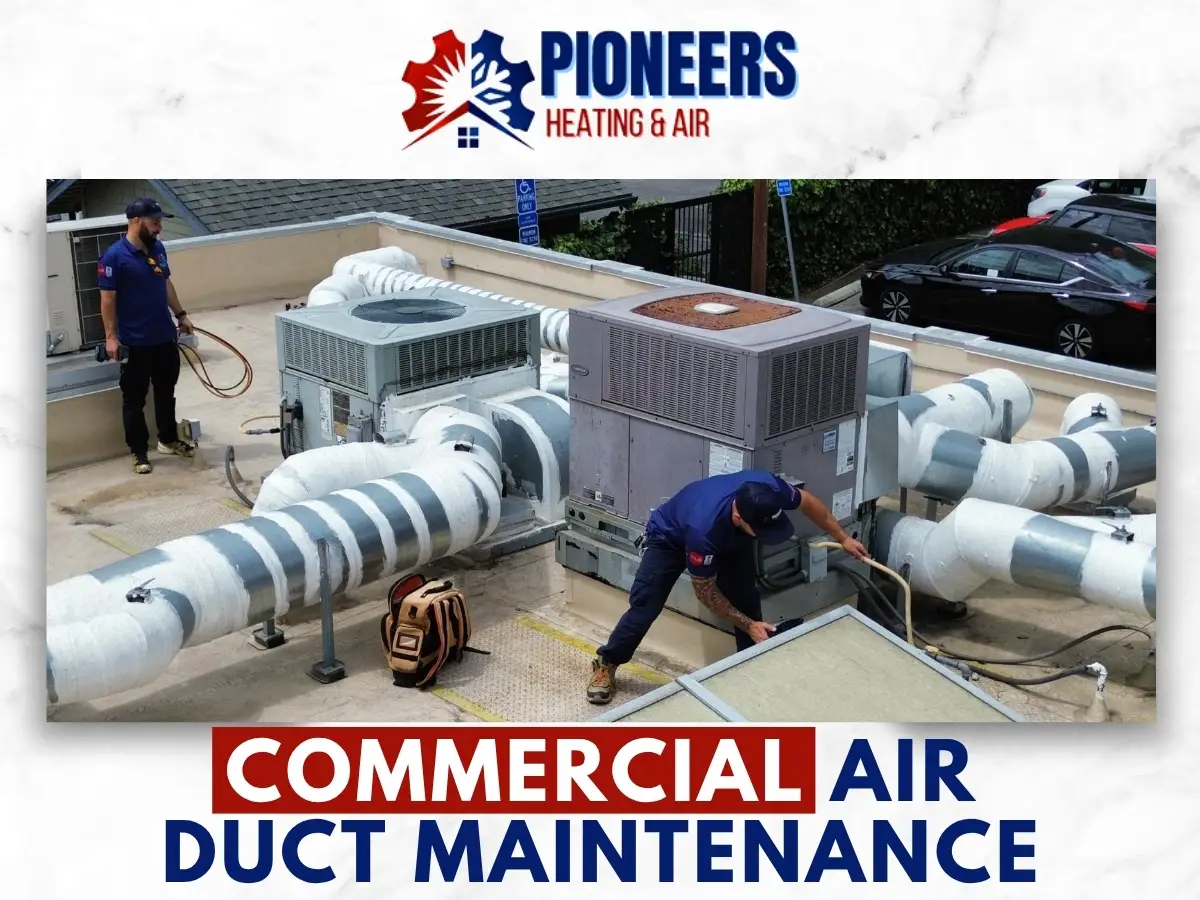
Commercial air duct maintenance keeps your building’s air moving cleanly and your HVAC system working the way it should. Pioneers Heating & Air handles Commercial Air Duct Maintenance in Pasadena for offices, retail, and light industrial spaces, focusing on airflow, cleanliness, and control issues that waste energy and annoy tenants. Call (626) 217-0559 or visit Pioneers Heating & Air online.
Commercial air duct maintenance covers inspection, cleaning support, airflow checks, and repairs to the duct system. Ducts are the delivery routes for heated and cooled air. If those routes leak, collapse, clog, or pull in dust, the whole building feels it. Commercial air duct maintenance helps keep air distribution steady, supports indoor air quality, and reduces strain on fans, coils, and filters.
Need Help? Call Pioneers Heating & Air near you
For most businesses, this service includes a practical review of duct condition and air distribution, along with recommendations for next steps like ductwork inspection details, duct sealing, or targeted fixes.
Some buildings need a light touch, like tightening connections and improving filter fit. Others need more, like sealing long duct runs or correcting return air problems that keep certain rooms stuffy.
When dust and comfort complaints keep returning, pairing maintenance with commercial air duct testing or commercial duct balancing can help confirm what is driving the symptoms.

You may need duct maintenance if your space has uneven temperatures, stubborn odors, or rising dust. If people keep adjusting thermostats but comfort never improves, the duct system is a prime suspect. The ductwork is also a common place for hidden issues that do not show up until complaints pile up, and an HVAC inspection can help connect comfort complaints to airflow realities.
Do you have one conference room that is always too warm, even when the rest of the office is fine. That is often a duct balance or return air issue, not a thermostat issue, and it may point to airflow balancing needs.
Many duct problems come from air leaks, poor sealing, aging insulation, and changes to the space. Commercial buildings change over time. Tenants build offices, add walls, move racks, and block returns with storage. The HVAC system keeps running, but the duct design might no longer match the layout, which is why commercial air duct repair recommendations often follow maintenance findings.
A simple example. a small retail back room becomes a stockroom packed to the ceiling. Returns get blocked. The front of the store starts feeling muggy. It is not magic. It is airflow, and correcting return paths can work alongside ventilation upgrades when the space use has changed.
Our visit focuses on finding what is actually happening in your ducts, then fixing what makes sense for your building. We start with what people feel and what the system is doing. Then we work backward through the duct paths, looking for the spots that create noise, dust, comfort issues, or wasted airflow, and we coordinate next steps with services like commercial HVAC inspection and tune up when it supports the overall plan.
We keep disruptions low. Nobody wants a ladder parked in the middle of a lobby during lunch rush. We plan access routes and timing with you, and if HVAC issues appear beyond the duct system we can discuss commercial HVAC troubleshooting and diagnostics.
Duct cleaning support is recommended when buildup is present, but sealing and airflow fixes often matter just as much. Dust in ducts can be real, and it can also be a symptom. If a return is pulling dusty ceiling air or a filter is bypassing, cleaning alone will not keep the ducts clean. We look for the why so the results last longer, and we can coordinate with commercial air duct cleaning when it fits the situation.
If your ductwork has more gaps than a picket fence, the best filter in the world will still have a bad day.
Commercial duct sealing stops conditioned air from leaking into ceilings, chases, and wall cavities. Leaks waste airflow and can pull in dust from above the ceiling. In many commercial properties, the duct system runs through areas nobody sees, so small issues can grow for years. When sealing is the right move, we align it with commercial air duct repair priorities to keep airflow stable.
Sealing is not about making everything airtight like a submarine. It is about controlling where air goes so the system can do its job, and it often pairs well with commercial duct balancing once leaks are reduced.
Need Help? Call for Heating & Air Services
Airflow balancing helps fix rooms that are always too hot, too cold, or too stuffy. Balancing is about matching airflow to the needs of each zone or room. In commercial buildings, this is often the difference between constant complaints and a quiet workday, and it ties closely to airflow balancing fundamentals.
Does your breakroom smell like yesterday’s lunch longer than it should. Weak exhaust and poor return airflow can trap odors and humidity, and a targeted ventilation upgrades plan can help when the building use has shifted.
Duct insulation and condensation control help prevent sweating ducts, ceiling stains, and comfort problems. In warm months, duct surfaces can sweat if insulation is damaged or missing. This is especially common above ceilings where you will not notice until a tile stains, and it may show up during a broader HVAC maintenance plan.
If condensation risk is present, we focus on correcting insulation issues and improving airflow where needed. We also check for return air problems that can increase humidity in the ceiling plenum, and we may recommend commercial HVAC system maintenance if broader system factors are contributing.
Access and safety planning keep your staff, tenants, and customers out of the work zone. Commercial spaces have more foot traffic, more schedules, and more rules. We respect that. We also take access seriously because ductwork is often above ceilings, in mechanical rooms, or near electrical and fire protection systems, and we coordinate with your team similarly to how we plan commercial emergency HVAC services access when urgent issues arise.
If we see signs of a larger issue, like damaged duct sections or severe debris, we will talk through options and next steps without pushing you into a rushed decision, including whether commercial air duct replacement is a better long term solution than repeated patching.
The time needed depends on building size, access, and how much of the duct system is reachable. A small office suite with accessible ducts moves faster than a multi tenant space with tight ceiling plenums. Access drives the pace. So does how many comfort zones you have, and in some cases a broader commercial HVAC inspection and tune up can be scheduled nearby to reduce repeat visits.
We will tell you what we can do in the available window and what may need a second visit, including when it makes sense to schedule commercial air duct installation changes for access or layout updates.
A simple maintenance schedule helps prevent repeat issues and keeps complaints from piling up. Commercial ductwork does not need constant attention, but it does need consistent attention. A routine plan helps you catch small issues before they become loud ones, dusty ones, or expensive ones, and it supports the benefits of commercial HVAC system maintenance over time.
| Task | Typical timing | What it helps with |
|---|---|---|
| Visual duct and diffuser check | 1 to 2 times per year | Comfort issues, loose diffusers, obvious leaks |
| Filter fit and rack check | At each filter change | Dust control, airflow stability |
| Return air pathway review | 1 to 2 times per year | Stuffy areas, odor control |
| Duct sealing and repair review | As issues are found | Energy waste, uneven airflow |
| Cleaning support planning | As needed | Post construction debris, buildup, odor sources |
Your building may need a different rhythm. A gym, a restaurant space, and a medical office all load filters and ducts differently, and pairing this with commercial AC maintenance can help keep the whole system steady in California and also across CA seasons.
Preparing your site before we arrive makes the visit smoother and keeps your day on track. Small prep steps can save a lot of time. They also reduce disruption for employees and customers, and they support smoother commercial HVAC system maintenance coordination.
If you have building plans or previous HVAC notes, those can help. If you do not, we can still work with what we see, and we may suggest HVAC troubleshooting and diagnostics if the symptoms point beyond ductwork.
Pioneers Heating & Air
After service, simple habits help keep ducts cleaner and airflow steady. Ductwork is part of a system. What happens at filters, returns, and supply diffusers affects how the ducts stay over time, and this supports the value of routine HVAC maintenance.
If a room changes use, like converting storage into office space, tell your HVAC contractor. That small change can shift airflow needs a lot, and it may indicate a need for HVAC zoning setup adjustments.
Pasadena, CA buildings often face duct challenges tied to older construction, tenant turnover, and dust from busy corridors. Pasadena has a mix of older commercial properties and updated tenant spaces. Older buildings may have aging duct insulation, patched duct runs, and returns that pull from ceiling spaces. Busy streets and frequent foot traffic can also raise dust levels in retail and office entries, which is why commercial air duct maintenance planning often needs to account for access and tenant schedules in California.
If your building has multiple tenants, we can help you prioritize the worst zones first. That keeps the work focused and avoids chasing every diffuser in the building on day one, and we can align follow ups with commercial HVAC system repair if system issues show up during the duct review.
Pioneers Heating & Air handles commercial duct maintenance with clear communication and practical fixes. You need a contractor who can work around business hours and explain issues in plain language. We take notes, show you what we see, and focus on actions that improve airflow and cleanliness, not busywork, and we can coordinate with commercial HVAC system integration needs when controls and distribution have to work together.
If you manage a property, you already juggle enough. We aim to make the duct side of HVAC simpler, and if there is an urgent comfort failure we can discuss emergency HVAC services options.
Commercial air duct maintenance in Pasadena is easier to schedule when you tell us where the problems show up most. If you want fewer comfort complaints and cleaner airflow, start with the areas people notice every day. Tell us which rooms run hot, which ones feel stale, and when odors are worst. That helps us zero in faster and avoid guesswork, and it can also guide whether ductwork inspection scope should be expanded.
For commercial air duct maintenance in Pasadena, call (626) 217-0559 or schedule through our Contact Us page. If you are dealing with uneven airflow across suites or recurring dust near vents, we can help you get a clear plan and steady results.
AC cleaning removes buildup from key cooling parts. Learn the signs that point to cleaning, routine maintenance, or a repair...
An AC that keeps running but leaves rooms warm may have an airflow, coil, duct, thermostat, refrigerant, or equipment problem....
A ductless mini-split may cool a garage, ADU, or sunroom without extending central ductwork, but the room, electrical setup, drainage,...