What Does AC Cleaning Include, and When Is It Worth Scheduling?
AC cleaning removes buildup from key cooling parts. Learn the signs that point to cleaning, routine maintenance, or a repair...
Get Commercial Thermostat Installation In Pasadena by Pioneers Heating & Air. Smart controls, zoning, wiring and setup for reliable comfort. Call today
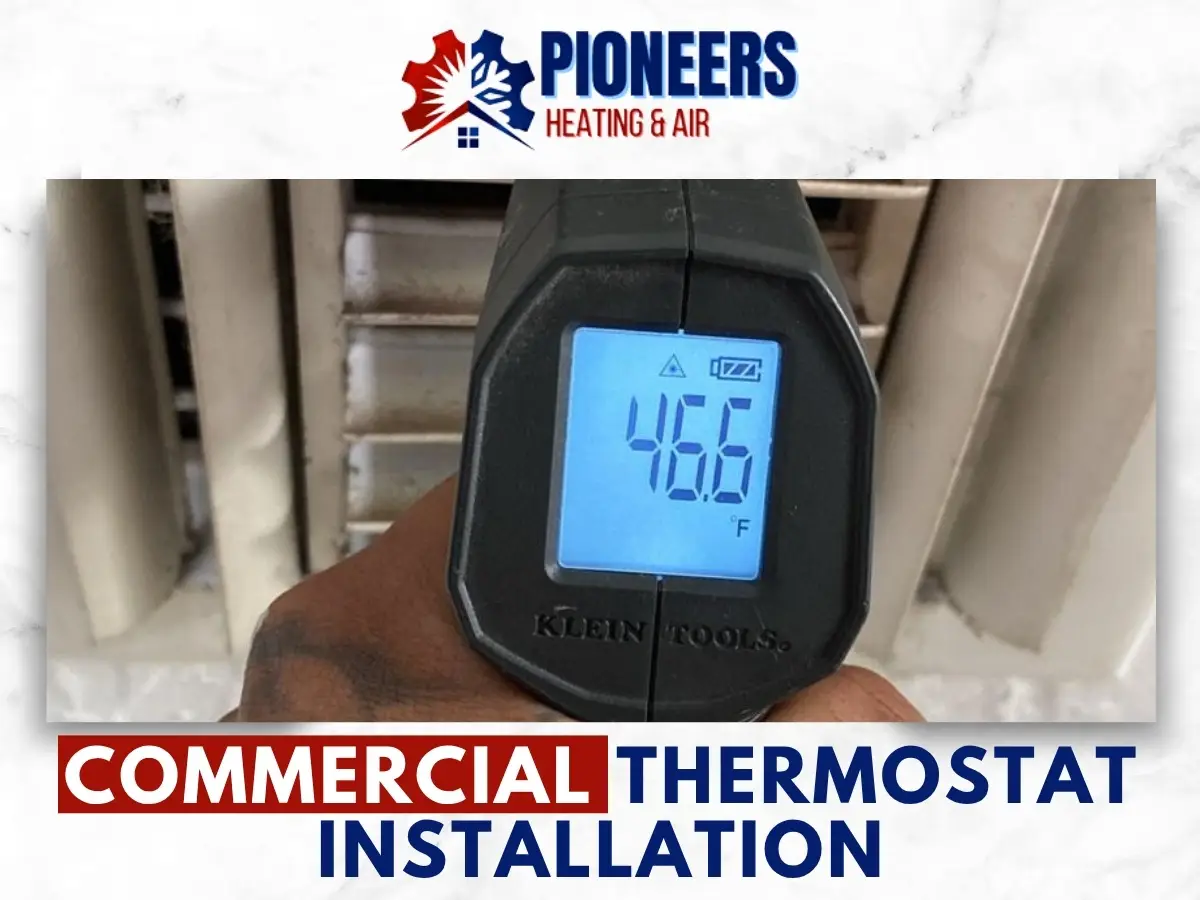
Commercial thermostats control comfort, schedules, and energy use across your business, and the install needs to match your HVAC system and wiring. Pioneers Heating & Air handles Commercial Thermostat Installation in Pasadena for offices, retail, and multi tenant spaces, including setup, zoning coordination, and testing. For commercial thermostat installation in Pasadena, call (626) 217-0559 or visit Pioneers Heating & Air online.
Need Help? Call Pioneers Heating & Air near you
A commercial thermostat is the brain that tells your rooftop unit, split system, or heat pump what to do and when to do it. If the brain is confused, the building feels it. Rooms run hot or cold, equipment cycles too much, and staff starts playing thermostat games.
Commercial Thermostat Installation is not just swapping a wall control. The right install checks power needs, wiring, equipment compatibility, sensor placement, and programming. It also accounts for how your building is used. A quiet office and a busy storefront do not run the same schedule, even in the same zip code.
Do you want simple and stable, or do you need deeper scheduling, remote access, and multiple zones. We will help you choose a control plan that matches the building and the people inside it, and we can coordinate with commercial HVAC control and zoning setup when needed.

Commercial thermostats come in a few types, and the right fit depends on the equipment and the space. Many business owners hear smart thermostat and assume it works everywhere. Some do. Some do not. Commercial controls can be basic or advanced, but they must match the HVAC system and its control board.
If your building has more than one unit, you also need a clear plan for who controls what. Otherwise, you get the classic commercial problem where Unit A fights Unit B, and the hallway becomes the weather.
You may need a new thermostat when comfort complaints become routine. Thermostats fail in quiet ways. The screen may still work while the sensor drifts or the wiring connection loosens. Sometimes the thermostat is fine, but it is installed in a bad spot and never had a chance.
If you are hearing it is freezing in the back and it is stuffy up front in the same hour, it is time to take a closer look.
Many thermostat problems are caused by placement, wiring, and system match issues. A thermostat can only respond to what it senses. If it senses the wrong thing, it makes the wrong calls. That is not the thermostat being bad. That is the install being off.
A thermostat upgrade without correcting these root issues can feel like buying new shoes and keeping the rock in your sock.
If airflow is the root cause, correcting the control alone may not fix the problem. In those cases, we may recommend commercial duct balancing or duct evaluation to support the new settings.
Our visit focuses on system compatibility, correct wiring, and clear operation. We start by learning how the building is used and what is not working today. Then we match the control plan to the HVAC equipment and the comfort goals, with support from commercial HVAC inspection and tune up when appropriate.
We keep it practical. You should know how to change a schedule, adjust a setpoint, and read basic alerts. You should not need a special decoder ring. If you want help beyond install, we also provide commercial thermostat programming.
Need Help? Call for Heating & Air Services
Smart features can help a business run smoother, but only if they are configured well. Remote access is useful. Scheduling is useful. Alerts are useful. Random settings are not. Where deeper building wide logic is needed, we can align settings with commercial HVAC control and zoning setup.
Zoning is a bigger topic. If your system uses dampers, sensors, and zone boards, the thermostat must coordinate with them correctly. If your zoning is really multiple rooftop units serving different areas, the control plan still matters. We can help you avoid the common issue where one area feels great and the next area feels like a different season, and we can check underlying performance with commercial rooftop unit services or commercial split system services.
Thermostat wiring and power details matter more in commercial buildings. Commercial wiring can be simple or it can be a patchwork from years of changes. The thermostat does not care why the wires are odd. It just needs correct connections and stable power. If the issue points beyond the control, we may recommend commercial HVAC system repair.
If a thermostat is losing power, rebooting, or acting possessed, it is often a power or wiring issue. We solve the cause, not just the symptom, and we can verify overall operation with HVAC troubleshooting and diagnostics.
A clear schedule setup reduces after hours run time and comfort complaints. A thermostat schedule should match real building use, not a guess from years ago. Pasadena businesses often have early arrivals, late closings, and weekend events. A schedule that ignores that will be overridden constantly. If after hours run time is tied to equipment issues, commercial HVAC system maintenance can help reduce repeat problems.
Who should have access to changes. That matters, too. If everyone can change everything, the schedule becomes a suggestion, not a rule.
Remote sensors help when the thermostat location cannot represent the whole space. A thermostat on the wrong wall can cause nonstop complaints. Moving it is sometimes possible. In other cases, remote sensors are the better answer, supported by careful commercial thermostat programming and configuration.
A sensor plan can also reduce thermostat tourism, where people wander the building hunting for the magic wall control.
You can expect most installations to fit within a normal service window, with a few common delays. Many commercial thermostat installation jobs are straightforward when wiring is clean and equipment access is simple. Some take longer because commercial buildings have layers of controls or because the thermostat location needs to change. If we uncover broader system concerns, we may suggest commercial HVAC system replacement planning or other next steps.
We will explain what we find and what the next step should be. Clear expectations beat surprises.
Safety comes first, and some thermostat issues are not DIY friendly. A thermostat looks simple, but it connects to live electrical systems and control boards. A wrong move can blow a fuse, damage a transformer, or create a control short that takes the HVAC offline. If comfort is critical and the system goes down, commercial emergency HVAC services may be the right path.
If your business relies on steady comfort for staff and customers, it is not the place for trial and error.
Preparing a few details ahead of time helps the installation go smoother. You do not need to do much, but a little prep saves time and reduces confusion. If you are also planning broader HVAC work, we can coordinate timing with commercial HVAC system installation or service visits.
Got a photo of the current thermostat and the HVAC unit label. That can help, but it is not required.
After installation, small habits keep your comfort stable and your system calmer. A thermostat is only as good as the way it is used. Once the setup is correct, the goal is fewer manual overrides and fewer sudden swings. For ongoing reliability, pair good habits with commercial HVAC system maintenance.
If you notice new hot spots after a layout change, the thermostat may still be correct. The airflow may not be, and airflow balancing can be the missing piece.
These quick comparisons help you choose features without overcomplicating the decision. Picking a commercial thermostat can feel like picking a TV. Lots of features, unclear value. This table helps frame common options.
| Need in your building | What to consider | Good fit when |
|---|---|---|
| Basic, consistent comfort | Multi stage or heat pump compatible thermostat | You want stable temps and simple controls |
| Better readings in tricky spaces | Remote sensors | The thermostat location is not representative |
| After hours control and oversight | App or web access, user roles | You manage multiple areas or managers |
| Multiple areas with different needs | Zoning controls or multi unit scheduling | Comfort varies widely across the building |
| Fewer override battles | Setpoint limits and lock settings | Staff keeps changing settings all day |
We can talk through what matters for your space so you are not paying attention to features you will never use. If you need help beyond install, ask about thermostat programming and ongoing support.
Pasadena, CA can swing from cool mornings to warm afternoons, especially in shoulder seasons. That can confuse schedules and staging if the thermostat is not configured right. Sun exposure also changes block by block, and a thermostat near a west facing wall can feel like it is living in a different city by 3 p.m. For a broader system check, schedule an HVAC inspection.
A good control setup makes these shifts easier to manage without constant tinkering. In Southern CA and across California, stable programming and correct staging can also reduce wear that leads to commercial AC repair calls.
Businesses choose Pioneers Heating & Air because we keep the process clear and the system working as expected. You need a thermostat that supports the way your business runs. You also need an install that respects the equipment and prevents repeat issues. We focus on clear communication, correct configuration, and testing that confirms the system responds the way it should, aligned with commercial HVAC system repair best practices when repairs are part of the picture.
Do you want one person to control everything, or do you need a few trusted users. We will set it up in a way that makes sense for your team, and we can recommend a follow up commercial HVAC system maintenance plan if you want fewer surprises.
If your building has uneven temperatures, constant overrides, or a thermostat that seems to have a mind of its own, it is time to fix the control point. We handle commercial thermostat installation for commercial HVAC systems with careful wiring, setup, and real testing, and we can coordinate related work such as commercial AC maintenance when it supports better control.
Book your commercial thermostat install in Pasadena, California by contacting us directly. For commercial thermostat installation in Pasadena, call (626) 217-0559 or reach out through our Contact Us page.
AC cleaning removes buildup from key cooling parts. Learn the signs that point to cleaning, routine maintenance, or a repair...
An AC that keeps running but leaves rooms warm may have an airflow, coil, duct, thermostat, refrigerant, or equipment problem....
A ductless mini-split may cool a garage, ADU, or sunroom without extending central ductwork, but the room, electrical setup, drainage,...