

New ductwork can change your home more than you might think. With proper air duct installation, you can feel steadier temps, stronger airflow, and fewer hot or cold rooms. You can also hear less whistling and rattling. If the ducts are sized right and sealed well, your HVAC system stops working like it is trying to breathe through a straw. Still, some problems depend on the AC or heater itself, not the ducts. Contact Us
Why ducts matter more than most people think
A lot of homeowners focus on the AC unit or the furnace. That makes sense. Those are the big metal boxes that get all the attention. But your ductwork is the delivery truck. If the truck has holes or the route makes no sense, the packages show up late, damaged, or not at all. Contact Us
Ducts do three big jobs:
- Move the right amount of air to each room
- Keep that air from leaking into the attic or crawl space
- Do it without loud noise or huge pressure strain
When ductwork is old, bent, crushed, leaky, or the wrong size, comfort gets weird. You can have a strong system and still feel miserable.
What actually improves after a good air duct installation
Let’s talk about the changes you can expect when ductwork replacement is done right, with proper HVAC duct sizing and tight duct sealing.
1) More even comfort from room to room
If you have a bedroom that feels like a toaster and a living room that feels like a cave, your ducts might be the reason.
New ductwork can help by:
- Sending more air to the rooms that need it
- Reducing air loss in the attic
- Fixing long duct runs that starve far rooms
- Balancing airflow so each room gets its share
Think of your duct system like a sprinkler layout. If half the hoses have holes, your lawn looks patchy.
2) Better airflow at the vents
When ducts are too small, kinked, or packed with turns, airflow drops. You feel it right away. The vent barely blows. You stand there with your hand out like you are checking for a ghost.
With correct duct sizing and cleaner routing, you often get:
- Stronger airflow in distant rooms
- Faster cool down and warm up
- Less need to crank the thermostat
3) Less noise, less drama
Noisy ducts usually come from pressure problems or loose parts.
After new ductwork, homeowners often notice:
- Less whistling at supply vents
- Less “oil can” popping sounds from sheet metal
- Less rattling from loose joints
- Less whooshing from air trying to force its way through a tight path
A quiet system is not just nice. It can be a clue that static pressure is under control. For more on static pressure and air distribution concepts, see Static pressure (Wikipedia).
4) Fewer dusty smells and attic funk
Leaky return ducts can pull air from places you do not want, like an attic. That air can carry dust, insulation bits, and odd smells.
With solid duct sealing, you can reduce:
- Dust coming from hidden gaps
- Musty odors after the system starts
- Allergens getting pulled into the return path
This does not make your home sterile. It just stops the HVAC from shopping in the attic for “new air.”
5) Better system health and steadier run times
Duct problems can make your equipment work harder. It is like driving with the parking brake half on.
When ducts are sealed and sized right, the system may:
- Cycle more normally
- Hit the thermostat set point more smoothly
- Put less strain on the blower motor
This is not magic. It is basic airflow physics.
What duct replacement can solve, and what still depends on the equipment
Ductwork replacement can fix a lot, but not everything. Here is a clean way to think about it.
Problems ductwork replacement often fixes
- Hot and cold spots caused by weak airflow
- Low airflow from crushed, kinked, or undersized ducts
- Leaks that waste air into the attic or crawl space
- Noisy vents tied to pressure and poor routing
- Rooms that never feel “connected” to the rest of the house
- Return air problems caused by leaky return paths
Problems that may still be HVAC equipment issues
- AC not cooling because of low refrigerant, coil issues, or compressor problems
- Heater not warming because of burner, ignition, or heat exchanger issues
- Short cycling from control, sensor, or sizing problems
- Poor humidity control tied to system setup and run time
- High energy bills from old equipment efficiency, not just duct losses
Here is a simple rule of thumb. Ducts move air. Equipment changes air temperature. You need both to behave. Contact Us
Proper sizing and sealing, what “done right” looks like
Homeowners sometimes ask, “How do I know this is not just new metal taped together?”
Good duct installation usually includes:
- Duct sizing based on airflow needs, not guesswork
- Supply and return airflow that make sense together
- Sealed joints, not just taped seams that dry out later
- Smart routing with fewer hard turns
- Secure supports so ducts do not sag over time
- Correct register and grille choices so air can enter and leave rooms
If your system is a band, ducts are the speakers. You can have a great song, but bad speakers still sound rough.
What we usually see in Pasadena, CA homes
Pasadena has a big mix of home styles. Older homes near Bungalow Heaven can have tight chases, odd add-ons, and patched duct runs from past remodels. Some homes have ductwork in the attic that bakes during summer.
A few common patterns we run into:
- Leaky ducts in hot attics that dump cool air before it reaches bedrooms
- Add-on rooms that never got proper supply or return airflow
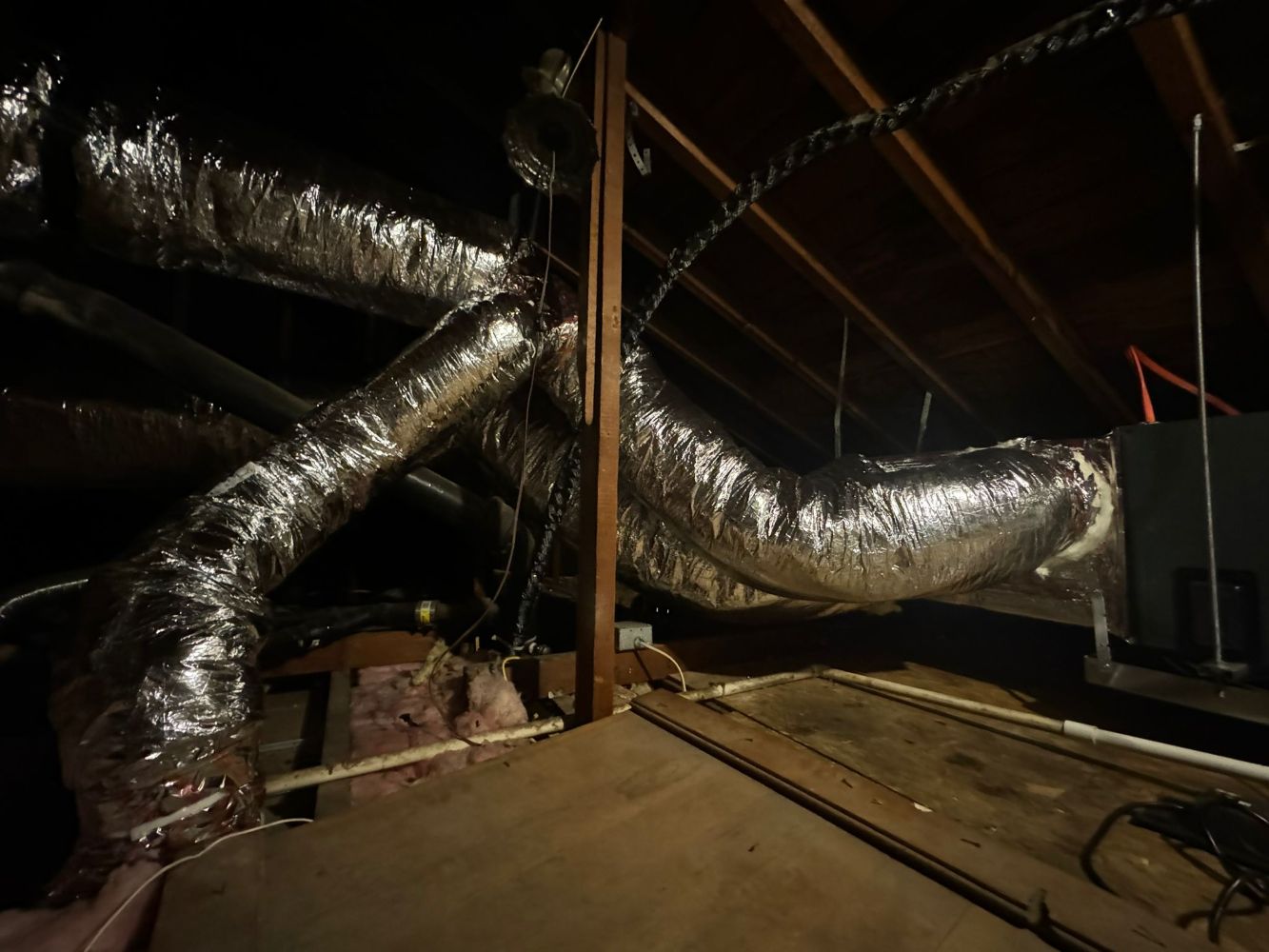
- Old flex duct runs with sharp bends, crushed spots, or long spaghetti routes
- Returns that pull from wall cavities or gaps, which can add dust and odors
If your home is near Colorado Boulevard or close to the 210, you may also notice outdoor dust that sneaks in more when return ducts leak.
Weather in Pasadena, and why ducts feel worse in certain seasons
Pasadena summers can get hot, and attics can get much hotter than the outdoor air. If your ducts sit up there with leaks, the system bleeds cool air into a space you do not live in. That is like filling a bucket with a hole and getting mad at the faucet.
Cooler winter nights can also show duct problems. Warm air leaking into an attic disappears fast, and rooms far from the air handler may feel chilly.
Rain matters too. If you have moisture in a crawl space, leaky returns can pull that damp air into the system. That can bring in musty smells and raise indoor humidity.
Signs your ductwork is the real problem
Some clues point to ducts more than equipment.
Watch for:
- One or two rooms always off, no matter the thermostat setting
- Weak airflow at certain vents, even with a clean filter
- Whistling vents when the system starts
- Dust that returns fast after cleaning
- A system that runs a lot but comfort still feels uneven
- Visible torn flex duct or disconnected sections in the attic
If you ever see insulation stuck to a return grille, that can hint the return side is pulling from places it should not.
Quick troubleshooting steps you can do before calling a pro
These checks will not replace a full inspection, but they can point you in the right direction.
- If one room is hot, then check if the supply vent is open and not blocked by furniture.
- If several rooms have weak airflow, then check the air filter and replace it if it is dirty.
- If vents whistle, then try a lower fan setting if your thermostat allows it, then note which vents are loud.
- If you smell attic or dust when the system starts, then check return grilles for gaps or loose covers.
- If the system is loud near the air handler, then listen for rattling panels or loose duct connections.
- If airflow drops after a few minutes, then shut the system off and call for service, the coil may be freezing and that is not a duct issue.
Safety note. Do not crawl in an attic if it is very hot, and watch your footing. Ceiling drywall is not a walking path. For heat safety guidance, see NIOSH Heat Stress.
Common myths and the real truth
Myth: New ducts always lower energy bills right away.
Fact: Sealed ducts often help, but results depend on how bad the old leaks were and how the equipment runs.
Myth: Bigger ducts are always better.
Fact: Oversized ducts can hurt air speed and mixing, and can make rooms feel stale.
Myth: Duct tape is fine for sealing.
Fact: Many tapes dry out over time. Proper sealing methods last longer.
Myth: If the AC is new, ducts must be fine.
Fact: New equipment hooked to old ductwork can still struggle, like a new engine in a car with flat tires.
Noise changes, what “normal” should sound like
After good ductwork replacement, you should still hear air moving, but it should not sound angry.
Normal:
- A soft rush of air at the vent
- Mild startup sound from the blower
Not normal:
- High pitched whistling
- Metal popping often
- Loud rattles
- A “wind tunnel” sound in one hallway
Noise is a comfort issue, but it is also a clue about pressure.
Airflow balance, why returns matter as much as supplies
A home needs a path for air to come back to the system. Supplies push air in. Returns pull air out.
If returns are weak or missing, you can get:
- Closed doors that “fight” the airflow
- Pressure buildup that reduces supply flow
- Dust getting pulled from gaps and cracks
A simple test. With the system running, crack open a bedroom door. If airflow at the supply vent changes a lot, return air may be limited for that room.
Care schedule to keep new ductwork working well
You do not need to baby your ducts. You just need a simple routine.
Weekly
- Walk through and make sure vents are not blocked by rugs, boxes, or furniture.
- Listen for new whistles or rattles.
Monthly
- Check the air filter. Replace it when it looks loaded, or follow the schedule recommended for your filter type.
- Look at return grilles for dust buildup and vacuum the surface.
Yearly
- Have the HVAC system checked and tuned, including airflow and system performance.
- Ask for a visual duct inspection if you have attic ductwork, especially after roof work or pest activity.
Safety note. If you see damaged duct insulation or suspect pests, let a pro handle it. Gloves and a mask are smart around insulation.
What the installation process usually looks like
Homeowners often worry that ductwork replacement means weeks of holes in ceilings. Most jobs are more organized than that.
A typical process can include:
- Reviewing comfort issues room by room
- Checking duct paths in the attic, crawl space, or garage
- Planning duct sizing and layout
- Removing or abandoning old sections when needed
- Installing new ducts, sealing joints, and supporting runs
- Checking airflow at vents and making small balance tweaks
Good crews keep the goal simple. Air goes where it should, and it stays in the duct until it reaches the room.
FAQs
How long do new ducts last?
Duct life depends on materials, install quality, and attic heat. Sealing, support, and clean routing help ducts last longer.
Will new ductwork make my house cooler right away?
If airflow was the main issue, yes, you often feel a change fast. If the AC has a separate problem, the comfort change may be limited until the system is repaired.
Can duct sealing fix rooms that are always hot?
It can if the issue is air loss, poor balance, or return leaks. If the room has bad insulation, old windows, or high sun load, ducts help but may not be the full fix.
Is duct replacement messy?
Most of the work stays in the attic, crawl space, or mechanical areas. You might see some dust during setup, but a careful crew keeps disruption low.
Why is my system louder after I changed my filter?
A very restrictive filter can reduce airflow and raise pressure, which can add noise. A tech can check static pressure and help you pick a filter that fits your system.
Do I need new ducts when I replace my AC or furnace?
Not always. Still, it is smart to check duct size, leaks, and layout so the new equipment can move air the way it should.
Are flex ducts bad?
Flex duct can work well when installed with short runs, gentle turns, and proper support. Problems start when flex duct is kinked, sagging, or stretched tight like a bungee cord.
Can I check my ducts myself?
You can look for obvious disconnections or crushed sections if you can safely access the area. Avoid stepping through attic spaces without safe footing, and do not disturb insulation more than needed.
If you want air duct installation or ductwork replacement in Pasadena, CA, Pioneers Heating & Air can help you get stronger airflow, steadier comfort, and less noise with proper duct sizing and duct sealing. Call (626) 217-0559 or visit https://pioneersheatingandair.com/ to schedule service and get answers that fit your home. Contact Us